|

|
The weekly newsletter of the Mexico Solidarity Project |
|
Every issue archived online at mexicosolidarityproject.org/archives/ |
|
May 20, 2026 |
|
|
|
A Rose by Any Other Name... Smells as Sweet |
|
Meizhu Lui, for the editorial team |
|

|
US foreign policy is anything but sweet and rosy, but Shakespeare's truth applies. You can call US policy toward Latin America the “Monroe Doctrine,” or you can rename it the “Donroe Doctrine,” but it’s the same old imperialist policy in effect for the last 200 years. As Teri Mattson, an expert on Latin America and the Caribbean, tells us, as much as things change, as much they stay the same.
Leaders of countries to the south of the US can have a stable relationship with the US. How? By carrying out the mafia-style orders of the US government like zealous underlings. They can sell out their own people for their personal gain. For Ecuador, El Salvador, Argentina and Chile — licking Trump’s boots tastes sweet.
What if you refuse US domination? President Teddy Roosevelt famously said back in 1901, “Tread lightly and carry a big stick.” Behind every “negotiation” lies the threat of force — a gun to the head, as in the recent kidnapping of Venezuela’s president, or slow strangulation, as in the economic blockade of Cuba.
Mexico, since 2018, has refused to bow to the US capos; President Sheinbaum has made it more and more clear that Washington does not tell Mexico what to do. But that risks the Big Stick.
Trump treats the US-Mexico border as a one-way street. With Donroe, US military forces can enter Mexico at will, while Mexican migrants are forbidden to set foot in the US. These are two sides of the same “Gunroe” doctrine. As US progressives defend migrants, they must at the same time defend Mexico’s sovereignty. Getting the US boot off Latin America’s neck requires nothing less. |
|

|
A sixth-grade teacher introduced Teri Mattson to pre-Spanish cultures in what is now Mexico and Central America, inspiring 40+ years of travel in the region, including in political and social justice delegations and acting as an election observer. She currently works with the Venezuela Solidarity Network, the SanctionsKill coalition and CODEPINK’s Latin America team. Besides publishing in various left journals, most recently in the LA Progressive, she hosts and produces the YouTUbe program and podcast WTF is Going on in Latin America and the Caribbean. |
|

|
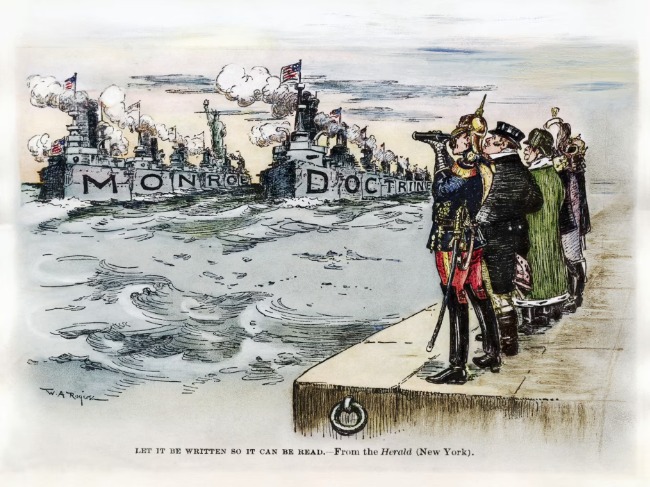
The purpose of the 1823 Monroe Doctrine was to “protect” Latin American countries from colonization by European powers. How does Trump’s ‘Donroe Doctrine’ differ?
It’s not at all new in the foreign policy psyche of the US. The goal is still to keep foreign powers out of the Southern Hemisphere. |
|
|
"Let it be written so it can be read" from the Herald, New York, 1904 |
|
What’s new is that the ‘Donroe Doctrine’ proclaims openly they will enforce this policy by military means, by gunboat diplomacy. No obfuscation — open threats. But rather than keeping out European powers as in the 19th century, today, it’s about stopping China from trading and investing in the region. |
|
And “region” now means “Greater North America” — the Arctic down to the equator and beyond.
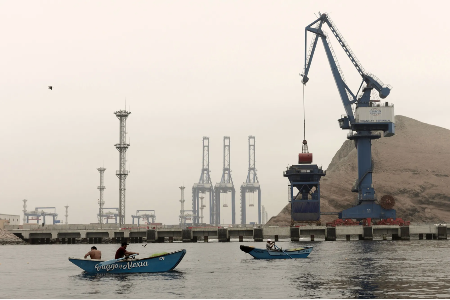
The Chinese port in Peru concerns Washington. They perceive it as dual-use infrastructure that opens another gateway to the Pacific, interrupting US control of the eastern Pacific rim. |
|
|
Fishermen row boats past the Chancay Port in Chancay, Peru.Photographer: Alessandro Cinque/Bloomberg |
|
Mexico’s Interoceanic Corridor of the Isthmus of Tehuantepec, known as the Transamerica Canal, will provide a faster and cheaper overland route between the Pacific and the Atlantic; it’s a rail system that will bypass the Panama Canal, which, even with upgrades, suffers from a water shortage that now limits the weight of ships going through. For the US, these projects make using military action even more necessary to ensure US control over the flow of goods.
What was the response in Latin America to Trump’s pronouncement of this new doctrine?
Of course, they don’t want the US telling them who they can and can’t trade with! They want trade with both the US and China. However, the lack of unity among Latin American nations right now allows the US to play them off against each other.
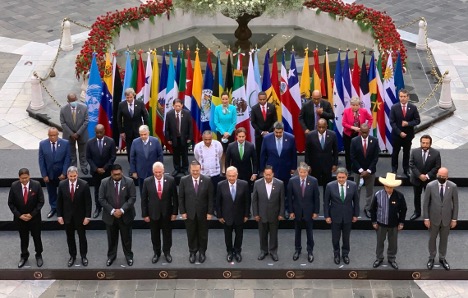
In 2021, Mexico’s president Lopez Obrador headed CELAC, a political and economic bloc created by socialist presidents Hugo Chavez of Venezuela and Fidel Castro of Cuba as an alternative to the US-dominated OAS, the Organization of American States. CELAC includes all countries in the region, except the US and Canada! |
|
|
Latin American Presidents at the CELAC summit in September, 2021: Photo courtesy of the Government of Mexico |
|
AMLO also refused to attend US President Biden’s Summit of the Americas in 2022 because Biden didn’t invite Cuba, Nicaragua or Venezuela. He declared the US had no right to decide who should and should not be included in “the Americas.” His defiance emboldened other nations, and the US Summit turned into an embarrassment. |
|
But after AMLO’s term ended, CELAC began falling apart. The Pink Tide governments had become victims to economic forces beyond their control. These countries had instituted generous social welfare programs subsidized by the sale of resources, mainly oil. When the commodities market crashed in 2006, Venezuela, for example, did not have a diversified economy that might have allowed it to avoid a serious recession. The US took advantage of that. Internal right-wing political parties capitalized on the economic discontent of the populations and won the presidencies of several countries.
Now, the three remaining progressive countries — Mexico, Colombia and Brazil — have allied with each other. They do wield clout, because they have the three largest populations and/or economies. But when the US started killing Latin Americans at will — beginning with the September 2, 2025, attacks on Venezuelan fishing boats — the Latin American and Caribbean states didn’t have the unity to push back.
What does Trump specifically want from Mexico?
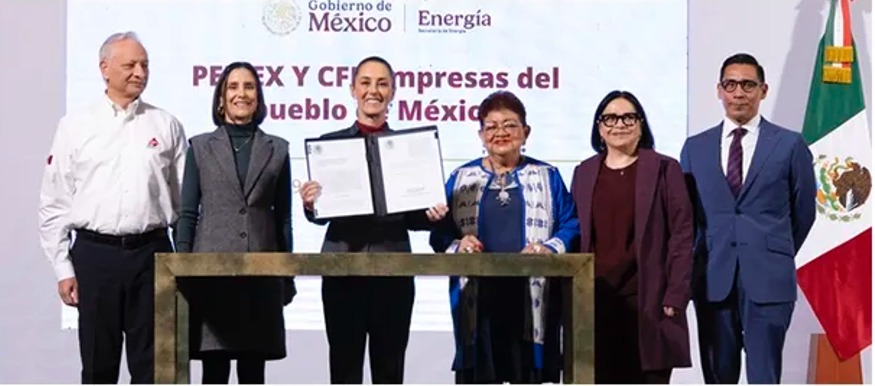
Loyalty! The old PRI politicians colluded with the US to share the spoils of foreign investment regimes, at the expense of the people. That was institutionalized under NAFTA, which was renegotiated under Trump’s first term as the USMCA. One of Trump’s key demands for renegotiation in 2026 will be to re-privatize Mexico’s energy sector. |
|
|
New energy laws provide clarity to the natural gas industry. |
|
While President Sheinbaum needs to maintain the free trade agreement, she will not agree to opening that sector to US companies. Controlling their own energy supply is essential to Mexico’s sovereignty. |
|
Is Mexico uniquely positioned to stand up to the US? Should it refuse to renegotiate the USMCA and refuse to cooperate with the US military?
Mexico and the US share a 2,000-mile border, which can’t be ignored by either country. About 12 million Mexican citizens are living in the US. |
|
The two countries have cooperated militarily to stop cartel activity for many years, and the two economies are tightly intertwined. In many ways, both countries need each other.
However, the US insists that it can tell Mexico what to do for the benefit of US interests — as per ‘Donroe’! The relationship is clearly asymmetrical in terms of economic and military power. But Mexico does have the geography, the population and the economic power to stand up to a bellicose US. In its unique position, it can be a bridge between the US and Latin America/the Caribbean, as we just saw when Claudia Sheinbam’s speech in Spain demanded the end of economic sanctions against Cuba. |
|
|
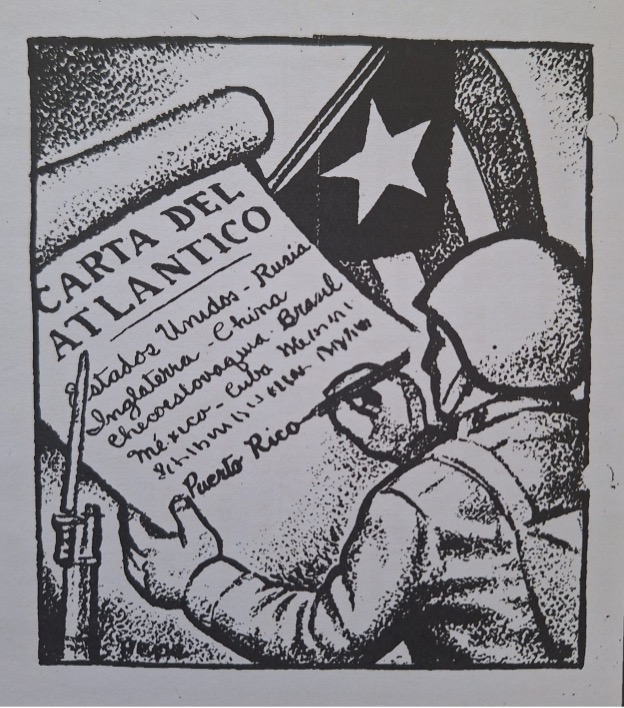
With the "Donroe Doctrine" Trump wants to rearrange Latin America and the Caribbean: Illustration by Brandon Howell, 2026. |
|
Moreover, because Mexico is successfully weaning itself off neoliberal policies that favor private sector companies at the expense of the common Mexican, finally pursuing corrupt politicians and instituting social welfare programs “for the good of all, but first, the poor,” Mexico has a positive standing with peoples around the world. That also is a brake on US hostility. |
|
Sheinbaum stands out in her ability to handle Trump. She’s the voice of reason, a steady and calm keel in turbulent waters. While legitimate questions can be raised about the MORENA government, no one can quarrel with her 70% approval rating among the Mexican people themselves. This enthusiastic support gives her confidence; the people have her back. |
|

|
Sheinbaum and Trump at the Kennedy Center, Washington, December 5, 2025: Kevin Lamarque Pool via Reuters |
|
That’s not to say Mexico won’t have to make some concessions, and they have — but that’s the nature of negotiation. In my opinion, I don’t know of anyone else on the planet who could manage this relationship as well as she is doing.
With “hot” military attacks in Latin America and Iran, should socialists and progressives prioritize support for Mexico, or can it wait?
Colombian president Gustavo Petro got it right. With the US military murdering fishermen, invading Venezuela and kidnapping President Maduro; with US meddling in elections in Argentina, Honduras, Ecuador and other nations; the economic strangling of Cuba and the threats of military intervention to Colombia and Mexico — Petro said, “This is our Gaza. We are being invaded.” Latin America is another front of the same imperialist project.
If we allow the US to overrun and overrule Mexico, it's more likely other regional nations will fall. We can’t ignore the geopolitical restructuring going on country by country across the hemisphere; all the attacks are part of the same overarching project. From Monroe to ‘Donroe,’ the US is bent on impoverishing less powerful countries to enrich its own.
If we are in solidarity with Gaza, we must be in solidarity with Mexico. Now! |
|
WE WILL BE MOVING!
As of the May 27 issue (next week!) the Mexico Solidarity Bulletin will move to a new home on Substack.
Our readership has grown, and we want to provide a better reading experience for our subscribers. As part of the Substack community, you can also access our articles and the Bulletin on your Substack app.
What do you need to do? Nothing! your subscription will be automatically carried over. |
|
|
|
|
NEW! Sign up here for weekly delivery of COMPAÃEROS! |
|
Compañeros is the weekly newsletter of Mexico Solidarity Media, delivering all of our news stories, analyses, interviews and episodes of the podcasts Soberanía and El Taller, the Mexico Solidarity Bulletin, translations from Mexican media, photos and more! |
|

|
Who “owns" art? |
|
|
Activist Vicky Hamlin, a retired tradeswoman, shop steward, and painter, shines the light — in her art and in this column — on the lives of working people and the world they live in. |
|

|
This is a sampling of the many articles and letters in response to the news that Banco Santander has bought the Gelman Collection of Mexican art and plans to move it from Mexico to Spain. These are in the New York Times, the Guardian and an open letter of protest. |
|
Who “owns art?” It’s a common question these days, as access to art schools, galleries, museums and art institutions generally is limited to those who can pay to play. |
|
|
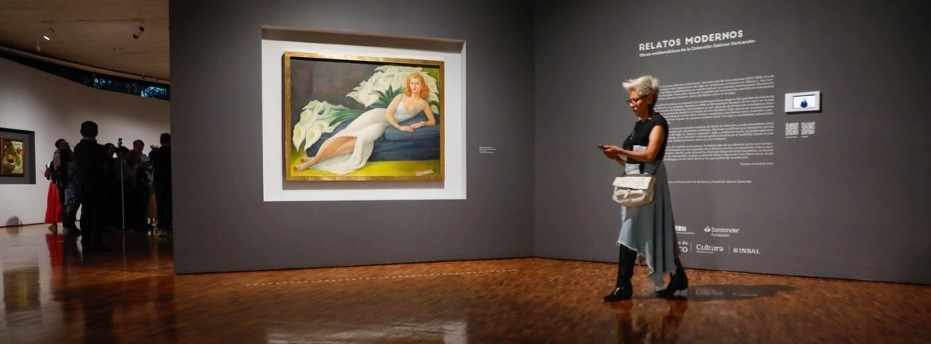
Exhibition of the Gelman Santander collection in the Museum of Modern Art: Photo courtesy of Jornada |
|
Now that AI churns out respectable pieces that can actually feel pretty arty, the “product” becomes even more of a commercial football. The ideas of a national art, of a people’s art and of provenance are turned on their head — provenance being defined as origin, or source: the history of ownership of a valued object or work of art or literature.
The idea is that where a piece comes from is important information, valuable in judging a piece’s true worth, and is actually an intrinsic part of an art piece.
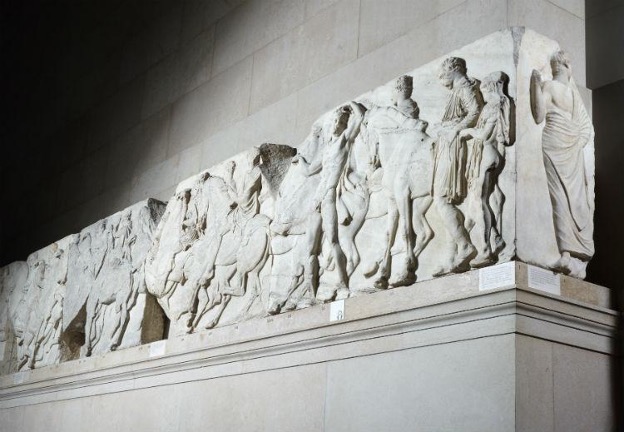
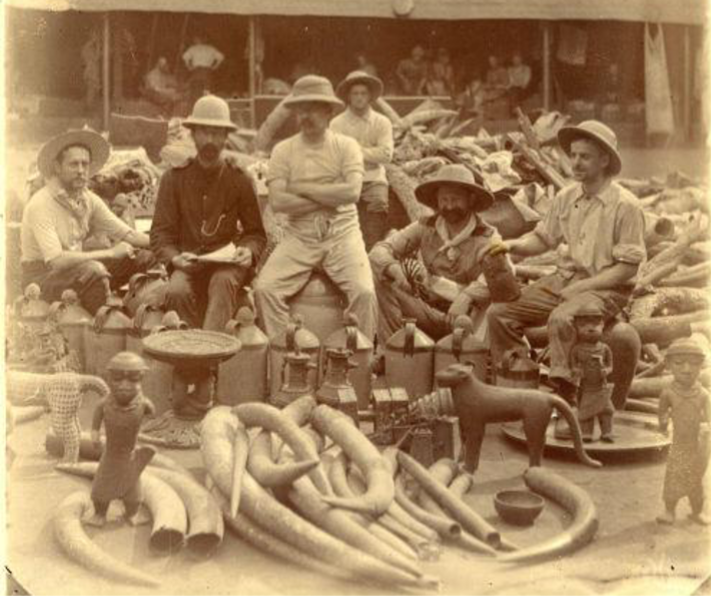
The Benin Bronzes, the Elgin marbles and Nazi looted art are all examples of art ripped apart from its history. |
|
|
Marble relief block from the Parthenon. Athens, 438-432 BC: Photo courtesy of the British Museum |
|

|
German soldiers in front of Palazzo Venezia in Rome in 1944 with a painting taken from the Naples National Archaeological Museum: by Giovanni_Paolo_Panini |
|
|
British soldiers, palace in Benin City with objects looted, 1897. Photograph taken by the principal medical officer for the expedition, Dr. Robert Altman. |
|
When stolen art is returned to the country of origin, it’s celebrated as a moral victory for a nation.
The Gelman collection has been bought and sold many times over because money talks, as we all know. The Gelman Santander collection (as it is named now) reflects a pretty comprehensive list of chapters in Mexico’s national history. It’s not just a litany of single artworks — all together it’s an iconic representation of a long story, developed over time, and these pieces are the end product of the historical contributions of many people.
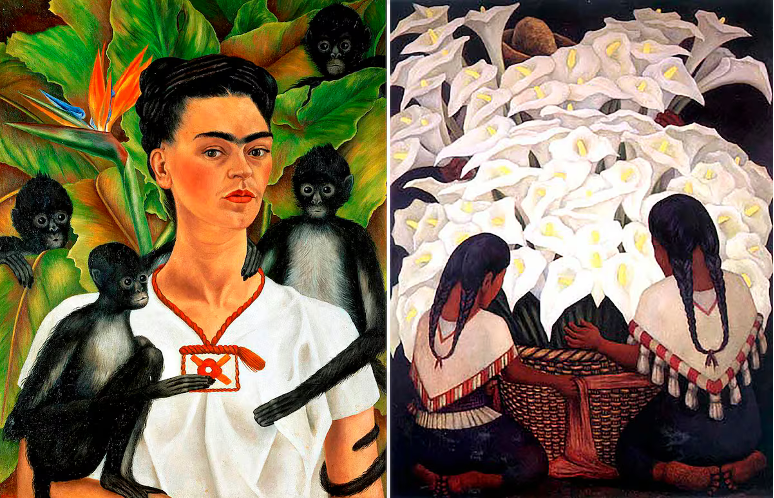
Frida Kahlo became one of the most famous artists in history (well, after she died, anyway) because of the story of the tumultuous times she lived in. |
|
|
Self-portrait with monkeys by Frida Kahlo, Mexico, 1943 and Calla Lily Seller by Diego Rivera, Mexico, 1943 |
|
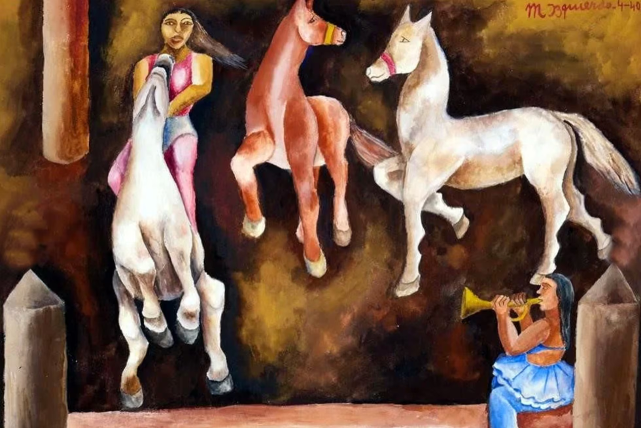
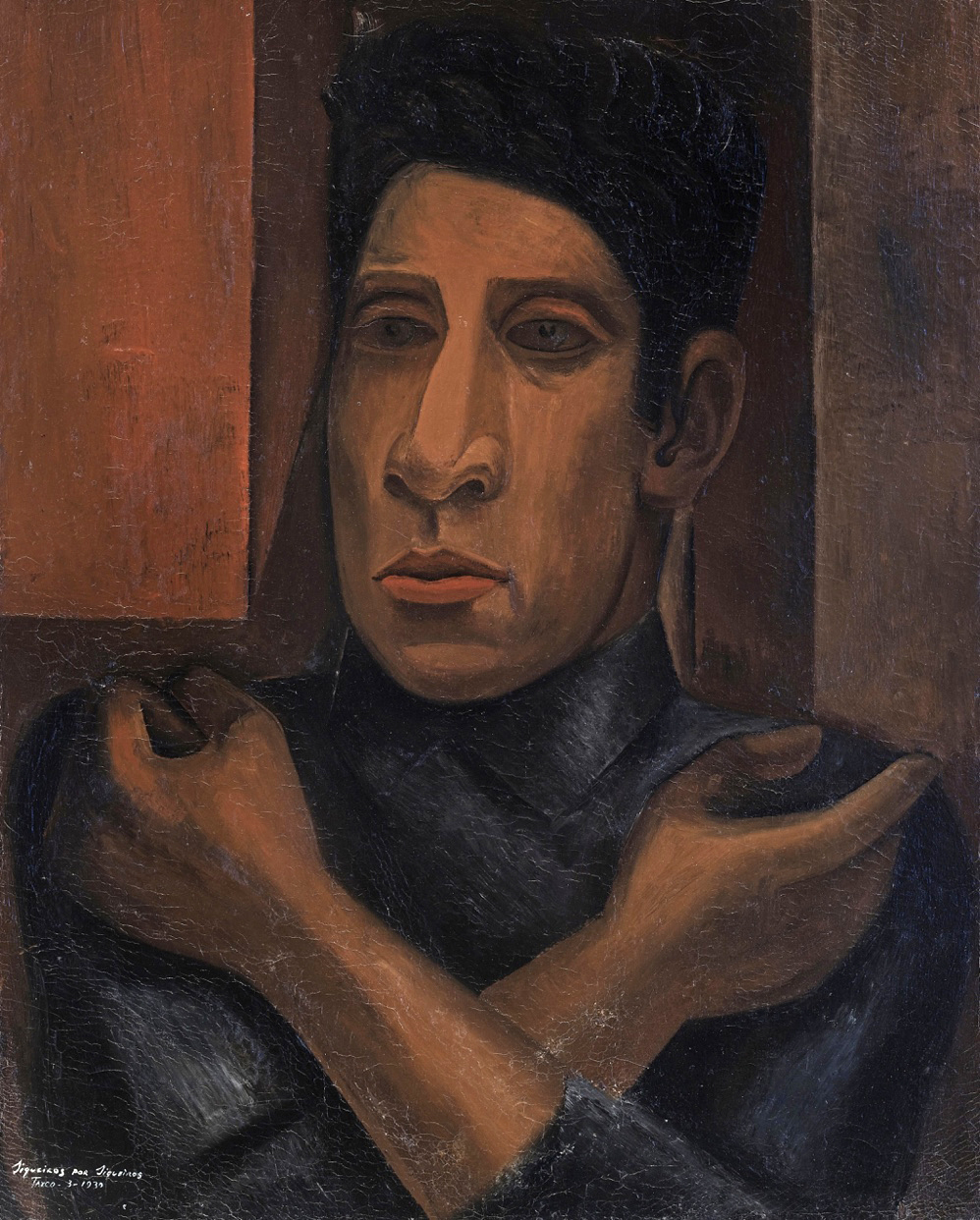
This is true of the artists in the collection, all “A-list” names: Rufino Tamayo, José Clemente Orozco, María Izquierdo, David Alfaro Siqueiros and photographers Lola Álvarez Bravo, Nickolas Muray, and Edward Weston, to name a few. |
|

|
Mexican actor Mario Moreno as his character Cantinflas, painted by Rufino Tamayo: Fundación Santander |
|
|
Work 'Horses in the Circus' (1940) by the Mexican artist María Izquierdo: CORTESÍA |
|
|
Portrait 'Siqueiros by Siqueiros' (1939): Sotheby's |
|
And now Banco Santander gets to use 160 works, including the thirty pieces recognized by Mexican law as national artistic monuments, as lobby decorations for its bank in Spain, if that’s what they decide. |
|

|
Mexican painter Sergio Hernández poses in front of his piece, ‘Embers of Oaxaca’ |
|
|
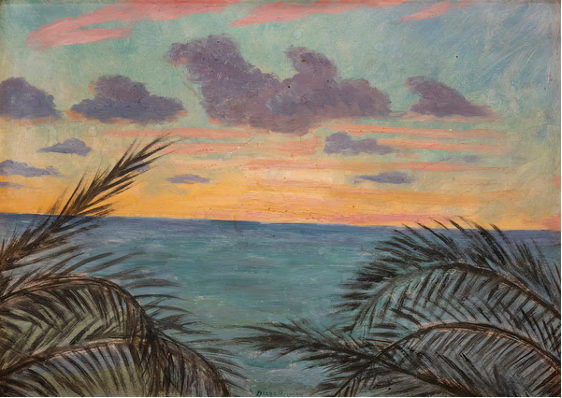
Diego Rivera's 1956 painting, Tropical Sunset Over the Pacific Ocean |
|
Most Mexicans will have no access to this art.
So again, who “owns” art? Not legally, but morally. Art, imho, is not just a thing, not a commercial product, but the end of a process, a development, a story. A nation’s pride, the culmination of struggle, the defeats and victories, a people’s identity. That’s why the people of Mexico care so deeply about this. |
|
Sign up for a free Mexico Solidarity Bulletin subscription!
And check out:
*MEXICO SOLIDARITY MEDIA: Our website for current news and analysis in English *COMPAÑEROS: NEW! Sign up here for Mexico Solidarity Media’s weekly newsletter *¡SOBERANÍA! (Sovereignty): For entertaining exposés of events in Mexico in English, catch our podcast with José Luis Granados Ceja and Kurt Hackbarth. *Sin Muros with English subtitles: José Luis and Kurt host a weekly TV show on Canal Once that analyzes Mexico-US relations with English subtitles.
Drop a line to meizhului@gmail.com |
|

|
Recent news reports and commentaries, from progressive and mainstream media, |
|
Ali Rampling, Teachers in Mexico planning to strike during 2026 World Cup New York Times. “The fight isn’t just for teachers; it’s for all workers whose right to a dignified retirement is threatened today,” the CNTE said. “There’s nothing to celebrate today when millions of workers are condemned to meagre pensions.”
Alexia Villaseñor, Agroproductores anuncian marcha en CDMX; continúan con problemas para comerializar granos básicos La Jornada. A finales del año pasado, los productores llevaron a cabo diversas movilizaciones y protestas en SEGOB, e hicieron cierres en diversos puntos carreteros en todo el país, que concluyeron con mesas de negociación con ambas dependencias para buscar mejoras en la comercialización, precios de garantía para todos los productos, el tema del financiamiento con la construcción de una banca de desarrollo que atienda a todo el sector agropecuario, la salida de los granos básicos del T-MEC y la seguridad en carreteras.
David Bacon, On May Day, Farmworkers and Their Children Defy Poverty and Deportations Barn Raiser. Hundreds of farmworkers, students and community activists make their voices heard. Ernesto Núñez, Morena lanza desde Chihuahua su contraofensiva bajo el lema de la defensa de la soberanía El País. La cúpula del partido oficialista se ha congregado en el estado fronterizo gobernado por la panista Maru Campos para rechazar la injerencia extranjera.
Mexico's Sheinbaum says Pemex CEO Rodriguez leaving Reuters. Sheinbaum said Rodriguez had originally taken the job on the condition he only serve a year and âa half in the ârole, a request she â was now honouring.
Los Comités de Cuenca Río Sonora piden una reunión con la presidenta Claudia Sheinbaum Fábrica de Periodismo. Las comunidades afectadas por el derrame de Grupo México en el Río Sonora exigen el seguimiento a procesos de justicia.
Jose Olivares, U.S. Agencies Will Operate From Surveillance Tower in Chihuahua, Despite Recent Unauthorized CIA Presence in the Mexican State Drop Site. Chihuahua officials will share intelligence data from surveillance cameras, license-plate readers, drones, and helicopters with U.S. agencies.
Mario Bravo, Tenemos derecho a vivir con dignidad: América del Valle Desinformémonos. En 2002, el Frente de Pueblos en Defensa de la Tierra de Atenco (FPDT) detuvo el proyecto de un megaaeropuerto que se construiría en sus tierras de cultivo. La factura no tardó en cobrársele al grupo campesino: en mayo de 2006, Atenco fue sitiado por 700 elementos de la hoy extinta Policía Federal Preventiva, más mil 815 agentes municipales y estatales, en un brutal operativo violatorio de derechos humanos.
Pablo Meriguet, Sheinbaum to forgive debts for tens of thousands of small farmers People’s Dispatch. According to Sheinbaum, the program’s goal is to provide financial relief to thousands of farmers who owed money to the [Mexico’s now defunct] National Fund for Agricultural, Rural, Forestry, and Fisheries Development – debts that were unpayable in most cases.
Liberan los adeudos de más de 41 mil agroproductores a Financiera Nacional La Jornada. Fueron beneficiadas 11 mil 763 mujeres. Los casos judicializados se frenarán, detalló el INDEP. |
|
|
|

|
The Mexico Solidarity Project brings together activists from various socialist and left organizations and individuals committed to worker and global justice. We see the 2018 election of Andrés Manuel López Obrador as president of Mexico as a watershed moment. AMLO and his progressive Morena party aim to end generations of corruption, impoverishment, and subservience to US interests. Our Project supports not just Morena, but all Mexicans struggling for basic rights, and opposes US efforts to undermine organizing and Mexicoâs national sovereignty.  Editorial committee: Meizhu Lui, Bruce Hobson, Agatha Hinman, Victoria Hamlin, Courtney Childs, Pedro Gellert.  To give feedback or get involved yourself, please email us! |
|
Subscribe! Get the Mexico Solidarity Bulletin in your email box every week. |
