|

|
The weekly newsletter of the Mexico Solidarity Project |
|
Every issue archived online at mexicosolidarityproject.org/archives/ |
|
April 08, 2026 |
|
|
|
Colorado: The Border Crossed Us |
|
|
|

|
Bill Gallegos, veteran Chicano liberation activist, environmental justice leader and revolutionary socialist, introduces our Bulletin this week. |
|
|
|
|
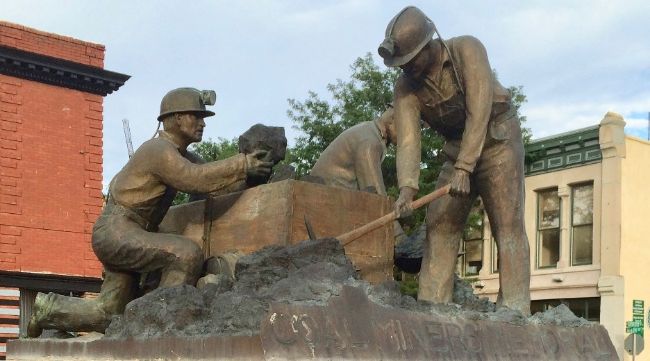
Coal Miners' Memorial bronze statue: Photographed by Mark Hilton, July 22, 2016 |
|
Elena Aranda and Jorge de Santiago are my paisanos — fellow citizens of Aztlán, the land of northern Mexico that was stolen by US military force and annexed in 1848. The tens of thousands of Mexicans who lived there — like my family in southern Colorado and northern New Mexico — were rooted in the land, in one of the most fertile and naturally beautiful areas of the world.
As Elena and Jorge so eloquently describe, that US conquest was followed by decades of land theft, labor super-exploitation (my grandfather Leandro worked in the Colorado coal mines at the age of 12), suppression of our language and culture (I grew up when we all felt the need to call ourselves “Spanish”), educational and housing segregation, and denial of the right to vote.
My familia was heavily involved in the movement to unionize the coal mines (the owners of the mine included the Rockefeller family), and their names — both Maés and Gallegos — are inscribed on a miners monument in Trinidad, Colorado. We had family members at the infamous “Ludlow Massacre” in 1918 when the Chicano and Italian miners went on strike and were thrown out of their dilapidated company housing. That didn’t stop them. They built a tent city and continued fighting. The mine owners then recruited an army of thugs who fired machine guns into the tent city, murdering more than two dozen people, mostly Chicano and mostly women and children.
I learned this history from family cuentos when I was growing up. From that horrible drama, a resistance movement for our liberation arose, and it’s the tradition I stand on today as a proud Chicano revolutionary and socialist. The wonderful organization, El Centro AMISTAD, also has roots in our nearly 200-year history. Gracias Elena, Gracias Jorge! |
|

|
History, Culture and Mental Health |
|
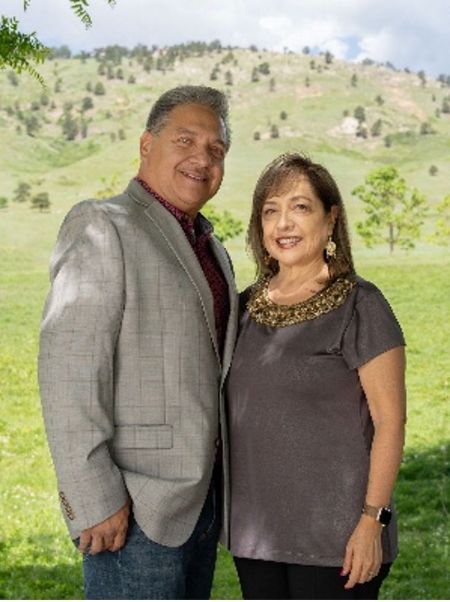
Jorge de Santiago of Guadalajara Mexico, has been dedicated to advocacy, leadership development and community organizing in Mexican and Latino communities in Boulder, Colorado, since 1988. He has worked on local, state, and national legislation to create systems responsive to community needs. On the board of Boulder County Public Health, he elevated the voices of Latinos in public health decision-making. As the Executive Director of El Centro AMISTAD, he has overseen its growth as a community-rooted, culturally responsive organization. |
|
|
Elena P. Aranda currently serves as AMISTAD's Director of Education and Equity Programs. As a psychotherapist, she has created models of individual, family, group and community intervention that take into account her immigrant community's barriers to mental and emotional well-being. She has collaborated with researchers focused on pregnant and postpartum women experiencing depression with the Reneé Crown Wellness Institute at the University of Colorado at Boulder. |
|
In 1848, after the US annexed Colorado, what happened to the Mexican people who lived there?
Elena: Many of them lost everything — including the usefulness of their spoken language and the land that they tilled, and those two losses are connected. It was easy to transfer Mexicans’ property to Anglo settlers when all the documents were in English and there was no translation. After losing their farms, many moved farther north to earn a living. Annexation left a pain that continues into the present. |
|
|
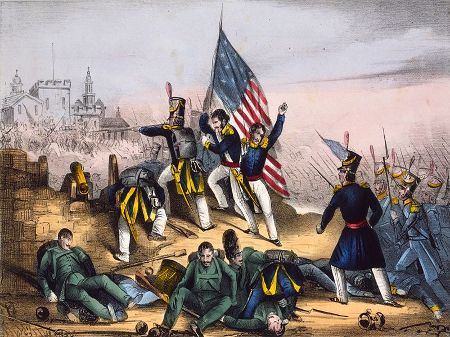
The Mexican-American war ended with the Treaty of Guadalupe Hidalgo . US Library of Congress, Public Domain |
|

|
This treaty, February 2, 1848, ended the war between the US and Mexico. Mexico ceded 55 percent of its territory, including California, Nevada, Utah, New Mexico, most of Arizona and Colorado, and parts of Oklahoma, Kansas, and Wyoming. Mexico relinquished all claims to Texas and recognized the Rio Grande as the southern boundary with the United States. |
|
Jorge: Some small towns in southern Colorado were ignored — the Mexicans living there didn’t realize they now lived in a different country! I met a 100-year-old guy, and for him little has changed. Up to now, these towns have never lost Mexican culture and still use Spanish for everything.
How did you both decide to make Colorado your permanent home?
ELENA: I’m originally from Guadalajara, Jalisco, and I hold a master’s degree in psychology. When I was visiting Boulder, their public health department offered me a position as a counselor specializing in substance abuse. I felt a commitment to stay and serve my community.
Moving forward professionally was painful — I was from another country, and I had a Spanish accent. I had to work harder to prove myself. I experienced hurtful microaggressions like, “You don’t look Mexican —you’re lucky to look white like us,” or “How can you work with people in the United States if you were trained in Mexico?” It was difficult, but I kept telling myself, “I’m going to stay the same Elena!” I won’t let anyone shame me or change who I am.
Jorge: I first came to Boulder 38 years ago, at 21, with a tourist visa and a dream to build something of my own. I brought the traditions that shaped me, and I shared my culture by teaching Mexican dance and folklore. I was on my own in the US, but I welcomed the challenge, determined to create my own path with courage, independence, and hope.
When Anglos heard me speaking Spanish, they looked at me with disapproval; I felt I didn’t belong. And honestly, not much has changed over the years. That hierarchy is still there; we still feel pushed to the margins. But instead of silencing me, it gave me clarity. So many in our community shared my experience, and so I felt a responsibility to show up for others. So, I worked with immigrant boys and parents — to support them and remind them that they are seen, valued and not alone.
Why did you found El Centro AMISTAD?
Jorge: Carolyn Bininsky, Laurel Herndon and Ricardo García founded El Centro AMISTAD in 2001 — not me! — and hired me as a center administrator. A couple of months later they named me executive director. Sounds big, but it was a one-person operation for a decade! Elena and I had gotten married in 1998, and she joined me as a volunteer providing support for women. This April, AMISTAD will have supported our immigrant community in Boulder County for 25 years! |
|
|
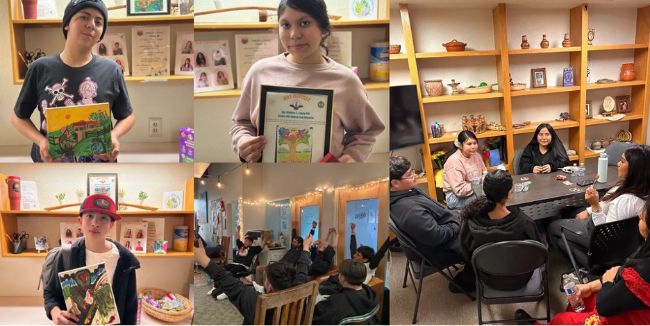
Who We Are: El Centro AMISTAD |
|
AMISTAD is the Alianza Multicultural de Inmigrantes Sirviendo a Todos con Ayuda para los Derechos, a center advocating for immigrant rights. In the beginning, we worked for legislation at the state and national levels — for example, to allow undocumented people to get driver’s licenses. But nothing was really happening on immigration reform; it was depressing! We had no funding, and I was sick from stress. We needed to regroup.
Elena: To get funding, we had to dump the raised fist in our logo. We couldn’t even say “social justice” to funders! |
|

|
AMISTAD logo, hands together |
|
Our new logo had circles of people joining hands, and our mission was described as promoting “equity” in health, education and quality of life. The image and words are different — but the meaning to us is the same! |
|
Since 2013, new programming has focused on health and wellness. We still advocate for immigration reform, but now we’re having a more direct impact on our Spanish-speaking community.
How do you work differently from traditional health providers?
We emphasize women — the bridge to everyone else! In diabetes prevention, it’s the mother who modifies the diet for the whole family, who takes the kids to play sports. Also, because they do all the housework plus go to a job every day, they need a space where they get support for themselves.
We’re bicultural, not just bilingual; providers who speak Spanish are not enough. For example, one woman asked me why her bilingual Anglo therapist “is pushing me to become a citizen,” as if that were the solution. In fact, becoming a citizen isn’t easy, and it doesn’t protect you from discrimination and exploitation — key factors that affect mental well-being.
In our new program, Compañeras, we gather women in one space where everyone is equal — PhDs, profesoras, lideres, comunitarias, amas de casa, new immigrants, everyone! Our principle is “sharing” — whether a PhD or a housewife, share what you know! We have an annual Women’s Summit where a huge diversity of women come together in that spirit of sharing.
We train women from the community in mental health; formal degrees aren’t required. No forms or red tape — just immediate support then and there. |
|

|
Dialectical Behavior Therapy (DBT) /Getty Images |
|
Our methodology is based on Dialectical Behavior Therapy (DBT) and Behavioral Activation, not on formal diagnoses but on understanding root causes — how society hurts individuals who are different or without access to resources and healthcare. We emphasize building strong support networks and healing within the community. |
|
Recently, on learning about the Mexico Solidarity Project (MSP), you decided to form a chapter. How does that relate to your programs?
You can’t have good mental health if you don’t know who you are and where you come from, and that’s where the MSP can make a difference.
We have so little good information about what’s going on in Mexico, and many Mexicans here have a deep-rooted mistrust of government. In the MSP we can provide clear and honest information about the recent changes in Mexico. We can discuss the government’s efforts to prioritize the well-being of the people — especially the historically underserved.
For Mexicans here, this can sound unfamiliar, even difficult to believe, given past experiences.
Our community also needs to know what resources Mexico will provide if they get deported or return home and to understand how US-Mexico relations affect them here in the US. Young people have to take back their culture. As we get older, we must pass the torch to future Mexican-American leaders.
MSP’s strength is that individuals from both countries are participating in it and can learn from each other, organize across the border, and appreciate our common heritage. An MSP chapter can help Boulder County Mexicans be proud of our history, proud of being Mexican and proud of the progress happening in Mexico today. |
|
|
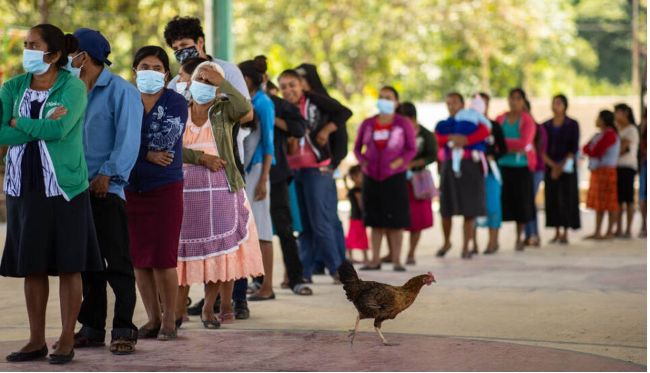
Ayahualtempa, Mexico: Voters line up for their turn to cast their ballots at a polling station on June 06, 2021; 93.5 million citizens voted today in the largest election in the country’s history. Photo: Hector Vivas/Getty Images: From Mexico Solidarity Bulletin, May 26, 2021 |
|
|
NEW! Sign up here for weekly delivery of COMPAÃEROS! |
|
Compañeros is the weekly newsletter of Mexico Solidarity Media, delivering all of our news stories, analyses, interviews and episodes of the podcasts Soberanía and El Taller, the Mexico Solidarity Bulletin, translations from Mexican media, photos and more! |
|

|
The Wetbacks |
|

|
Ernesto Galarza (1905-1984) was a Mexican-American labor organizer, activist, professor, poet, writer, storyteller and a key figure in the history of immigrant farmworker organization in California. He worked to win better living conditions and greater educational opportunities for working-class Mexicans. |
|
Listen. Pardon, Sir, that we come to bother you. We are ashamed, but necessity obliges us. Only a little moment we will take from you. Our difficulty is this: We three companions worked for a Patron on a ranch this side of Niland. To us he promised fifty cents an hour and one whole loaf of bread, some beans and milk, perhaps. And he disposed that we should sleep beneath a tree and to take water from the ditch. We cut the weeds and lifted up the melon vines until last Friday, when the Patron excused himself to see a doctor for the throat in San Diego. He advised us to stay beneath the tree because he said it is the law that such as us will lose our wage if the Immigration apprehends us on the public road. Three days, Sir, we passed beneath the tree and drank the water from the ditch until the necessity and the hunger animated us to leave behind our sad situation. Thanks to God, the Immigration was not up the road and someone told us you might give us counsel. If we could have our wages, Sir, or only such a part as would be just, we would go back to Michoacan. We three companions are from there, a place called Eleven Pueblos, where you have your modest house, Sir. We are grateful for the cooperation. God will repay you.
|
|
Sign up for a free Mexico Solidarity Bulletin subscription!
And check out:
*MEXICO SOLIDARITY MEDIA: Our website for current news and analysis in English *COMPAÑEROS: NEW! Sign up here for Mexico Solidarity Media’s weekly newsletter *¡SOBERANÍA! (Sovereignty): For entertaining exposés of events in Mexico in English, catch our podcast with José Luis Granados Ceja and Kurt Hackbarth. *Sin Muros with English subtitles: José Luis and Kurt host a weekly TV show on Canal Once that analyzes Mexico-US relations with English subtitles.
Drop a line to meizhului@gmail.com |
|

|
Recent news reports and commentaries, from progressive and mainstream media, |
|
USMCA Panel Finds Labor Violations at Orla Mining, Mexico Business News.Camino Rojo, a gold and silver mine in Zacatecas operated by Canada-based Orla Mining, committed a severe denial of labor rights by interfering in union activities, using coercion and intimidation to force workers away from Los Mineros and toward a company-preferred union.
“El litio mexicano salió de la lógica del saqueo: ahora es patrimonio del pueblo”: Violeta Núñez en La Base América Latina Diario Red. La decisión de convertir al litio en un recurso estratégico coloca a México en el centro de una disputa geopolítica atravesada por intereses mineros, el T-MEC y la transición energética.
William Savinar, Mexico City sex workers say World Cup construction hurting their income Courthouse News Service. Bike path and pedestrian walkway construction is underway for the World Cup on one of Mexico City's major thoroughfares — but not everyone is buying in.
José Manuel Fuentes García, Mexicanos muertos en manos del ICE “se suicidaron” o tuvieron “complicación médicas” Sin Embargo. Bajo la política migratoria de Trump, 14 mexicanos fallecieron en manos del ICE. Se detuvieron a más de 177 mil connacionales, durante la gestión de la exsecretaria de Seguridad Nacional, Kisti Noem.
Sheinbaum Backs Use of Venezuelan Funds for President Maduro’s Defense Telesur English. Mexican President Addresses Ongoing Legal Proceedings in New York.
Beatriz Guillén, Los agricultores y transportistas de México confirman “un paro indefinido” en 20 Estados a partir del lunes El País. El Frente Nacional por el Rescate del Campo Mexicano y la Asociación Nacional de Transportistas en México iniciarán bloqueos carreteros para protestar por “la inseguridad” y la “falta de financiamiento”.
Oscar Lopez, Mexican art world protests over plan to send Frida Kahlo masterpieces to Spain The Guardian. Cultural figures sign open letter asking government for clarity on how long landmark collection will remain abroad.
Gustavo Leal F., 18 meses de la política de salud-Sheinbaum La Jornada. Los primeros 18 meses de la administración Sheinbaum trabajan sobre un lienzo heredado sin cambio.
Caroline Tracey, Alejandro Cartagena’s Mexico in Flux The Nation. Reminiscent of the New Topographics, the photographs of Cartagena and others captures a country in the midst of a geographic transformation.
Zosimo Camacho, Más de mil 100 zonas de sacrificio: los desastres ambientales de México Luces Del Siglo. Mil 142 sitios contaminados, más de 10 millones de metros cuadrados de suelo envenenado, comunidades enteras condenadas a una vida de enfermedad y precariedad… |
|
|
|

|
The Mexico Solidarity Project brings together activists from various socialist and left organizations and individuals committed to worker and global justice. We see the 2018 election of Andrés Manuel López Obrador as president of Mexico as a watershed moment. AMLO and his progressive Morena party aim to end generations of corruption, impoverishment, and subservience to US interests. Our Project supports not just Morena, but all Mexicans struggling for basic rights, and opposes US efforts to undermine organizing and Mexicoâs national sovereignty.  Editorial committee: Meizhu Lui, Bruce Hobson, Agatha Hinman, Victoria Hamlin, Courtney Childs, Pedro Gellert.  To give feedback or get involved yourself, please email us! |
|
Subscribe! Get the Mexico Solidarity Bulletin in your email box every week. |
