|

|
The weekly newsletter of the Mexico Solidarity Project |
|
Every issue archived online at mexicosolidarityproject.org/archives/ |
|
March 04, 2026 |
|
|
|
Cuba’s Fall Would Hurt All Radical Projects |
|
Meizhu Lui, for the editorial team |
|
|
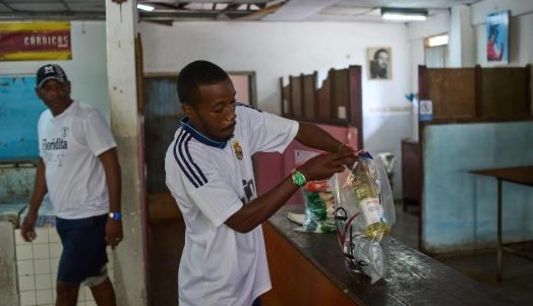
State-run bodega manager Roberto Roman fills bags with donated Mexican humanitarian assistance to be delivered to a family in Havana, Cuba, Thursday, Feb. 19, 2026 (AP Photo/Ramon Espinosa) |
|
Ninety miles from the US shore, Cuba’s people are staring at an impending US-made catastrophe. Next to water, the liquid most necessary for life as we know it is oil. Trump’s “Donroe” doctrine has forced Venezuela and Mexico, the two major suppliers of oil to Cuba, to stop oil shipments. In two weeks, Cuba could well be without electricity. The intended result: the end of a socialist experiment that has inspired anti-capitalist resistance around the world.
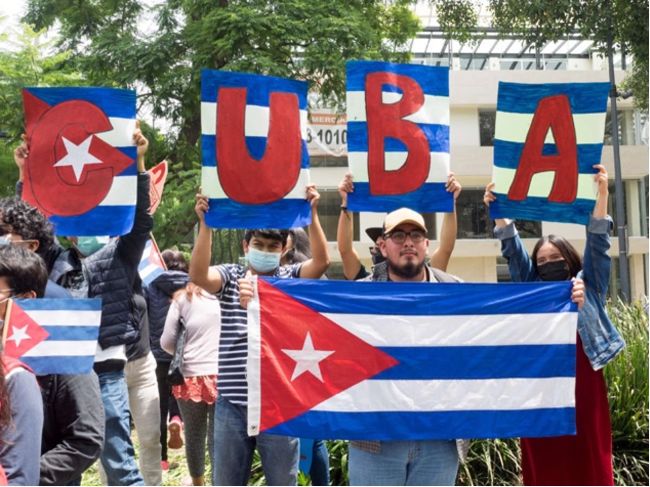
As Pedro Gellert, a longtime activist in solidarity with Cuba, tells us, Mexico is the one nation that has never blinked in its support for Cuba. It understands that if Cuba loses its sovereignty, Mexico will find it harder to defend its own.
Why does the US hate Cuba? Unlike Venezuela, Cuba doesn’t have any natural resources that interest the US. But Cuba has against all odds withstood US military and economic pressure since 1959. Punishment is not enough; it must be destroyed. Just as Haiti must pay in dollars and blood in perpetuity for having the gall to overthrow the slave-owning class, Cuba’s destruction must serve as a lesson to Latin America and the Caribbean: resistance to US domination is futile.
Like Cuba, Mexico has a revolutionary project of social transformation. Corrupt oligarchs finally have been made to pay back taxes, an amount huge enough to uplift the poor. Nationalization of energy puts the government in control of Mexico’s own natural resources. But its radical experiment is also being threatened.
The sovereign right of Cuba and Mexico to determine their own path must be defended — and not just for their sake. There is no line between the fight against ICE brutality in the US and the resistance to white imperialist domination in Latin America. If the Cuban revolution is defeated, Mexico and the people of the US will find it harder to win their own transformational demands. |
|

|
Why Mexico Stands Up for Cuba |
|
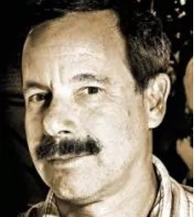
Pedro Gellert, a rank-and-file Morena activist, has been involved in international solidarity efforts with nations that range from Cuba to Vietnam to Palestine. Gellert formerly edited the Morena Internacional newsletter and has been summarizing and translating the presidential mañaneras for seven years. Active with the Mexico Solidarity Project since it began, he has helped it broaden its reach. |
|
|
We’re seeing a humanitarian catastrophe. What do you hear from Cubans?
The savage US blockade cuts off oil and thus electricity, making life unbearable in Cuba, almost impossible. |
|
|
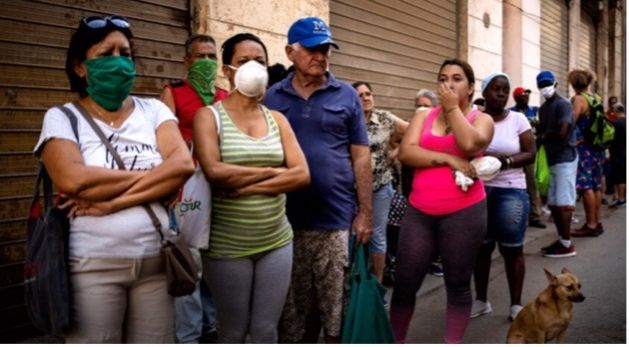
Desperately needed food, medicine and medical equipment from the US get to the Cuban people during a historic crisis: (Photo courtesy of US Embassy in Italy) |
|
They have closed schools, and teachers are attempting to teach virtually, with students tuning in by cellphone. But in some areas you can only get electricity to charge your cellphones for four hours a day — and those hours might be in the middle of the night. Families have to get up and accomplish everything that requires electricity for the whole day in that four-hour window: charge phones, wash clothes, prepare food and so on.
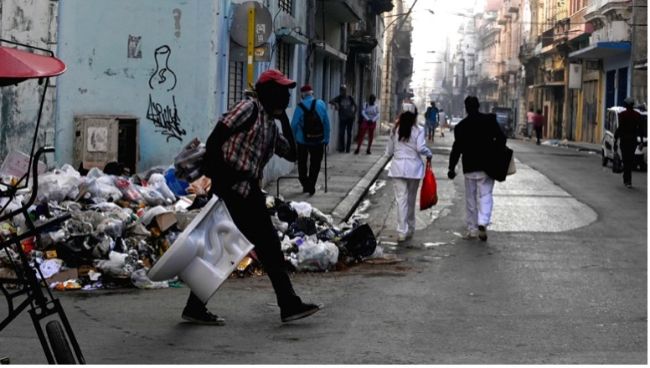
If you live anywhere above the first floor, it takes electricity to pump water upward. So you can’t use a toilet, shower or faucet. In Havana, garbage collection isn’t the highest priority for energy use, so garbage is overflowing. That brings rats, mosquitoes — and disease. This is a conscious US policy designed to inflict misery on the people. |
|
|
Residents of Havana walk next to piles of refuse on a street in the downtown area of the Cuban capital on Monday, 17 Feb, 2026: Al Jazeera: Norlys Perez/Reuters |
|
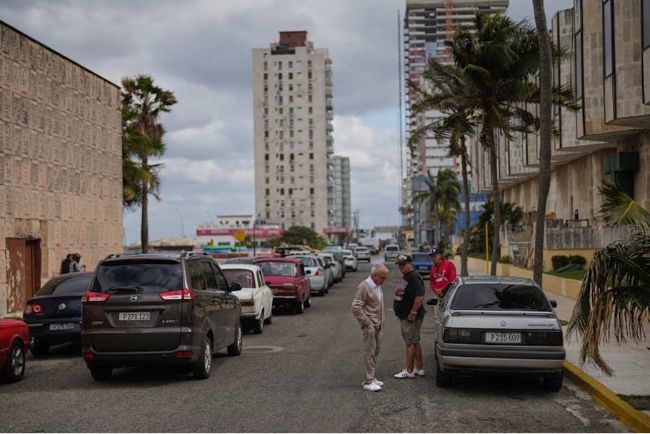
The larger economy? A big source of revenue was tourism, particularly from Canada. But now, Canada has canceled flights because they can’t refuel in Cuba for the flights back. And if you go as a tourist, the hotels are also experiencing blackouts — and forget getting transportation to go anywhere! |
|
|
Drivers wait in line to fill up at a gas station in Havana, Cuba, Tuesday, Jan. 27, 2026. (AP Photo/Ramon Espinosa) |
|
In addition, the White House has made pawns out of tourists to the US. Because of the Visa Waiver Program, citizens of France, Spain, Great Britain and many other countries haven’t needed a US visa to visit. But now, if they have visited Cuba, they must navigate the red tape of the visa process.
It’s dire. As of February 20, Cuba has about two weeks left of electricity.
When the Cuban socialist revolution took power in 1959, what was the reaction in Mexico?
Mexico knew about the dictator Fulgencio Batista, who tortured and killed his opposition and who had ties with the US Mafia and US corporations. Everyone welcomed his defeat. The Cuban Revolution gave rise to a new generation of Mexican radicals, who saw a small country that faced down US imperialism and that was building a society to serve the common people. Even the Mexican bourgeoisie and its party, the PRI, were glad to see Batista overthrown.
When US President Kennedy ordered the invasion of Cuba in 1961, Mexico opposed the invasion. |
|
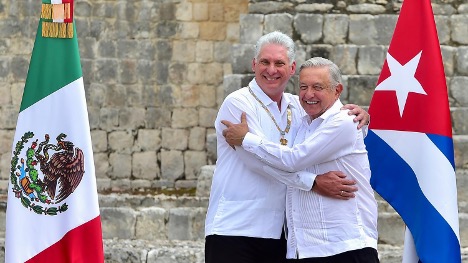
Mexico is exemplary in its defense of Cuba. It’s the only country in Latin America that has never broken relations with Cuba. When the US moved to expel Cuba from the Organization of American States in 1962, Mexico disagreed. When Biden didn’t invite Cuba to his Summit of the Americas in 2022, President Lopez Obrador refused to participate. |
|
|
On February 11, 2023, Mexican President Andrés Manuel López Obrador awarded Cuban President Miguel Díaz-Canel Mexico’s highest medal of honor for foreigners, the “Order of the Aztec Eagle,” for his work in strengthening relations between the two countries. Photo: AMLO/Twitter |
|
But the reactionary PRI party, which willingly collaborated with the US, ruled Mexico. Why did they always support Cuba?
The Mexican-American War of 1846 to 1848, which is called the Intervención Estadounidense en México, or the US Intervention in Mexico, ended with the annexation of nearly half of Mexico’s territory. Since then, the annexation has been a part of Mexicans’ deep-rooted anti-imperialist consciousness, and that’s true for the whole population. It sees the defense of Cuba’s sovereignty, from 1959 to now, as the defense of Mexico’s own sovereignty.
Generally, the PRI was progressive in foreign policy while reactionary in domestic policy. Their defense of Latin American revolutionary nationalism was popular — some sections of the Mexican left viewed the PRI as the progressive wing of the bourgeoisie. It brought them support from the global left as well.
But that policy was a fig leaf for their own suppression of any dissent to their corrupt authoritarian rule and their support for US capital.
Did Mexico provide more than statements of support for Cuba? And how has Cuba helped Mexico?
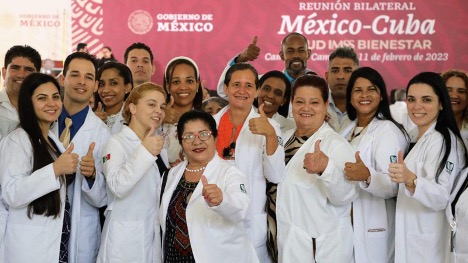
Let me start with the second question. First, for years Cuba has sent doctors to underserved parts of Mexico, particularly indigenous communities in the southern region. |
|
|
|
|
Cuban doctors risked their lives in Mexico during the COVID crisis. Cuba also opened its medical schools to Mexican students. This medical assistance was not only for Mexico but for many countries of the global South, earning admiration, gratitude and political support. It was said, “The US sends soldiers, Cuba sends doctors.” |
|
An exemplary program was Operación Milagro, or Operation Miracle, begun in 2004 in partnership with Venezuela’s socialist government under Hugo Chávez. The program sent Cuban doctors to the global South, where 90% of visually impaired people live, providing free eye care. They served over four million people in 34 countries.
Second, Cuban educators conducted literacy campaigns in poor areas of Mexico. These programs consolidated support for Cuba; the people saw Cuba as representing a new kind of society that cares for the poor.
Mexico helping Cuba’s economy? They paid for those doctors and educators. The health and literacy programs are free to the people served, but the governments pay for them.
But under Trump’s threats, countries in Latin America and the Caribbean are canceling the agreements that bring in Cuban doctors —another blow to the Cuban economy and to the health of those countries’ populations.
Given that Mexicans are in solidarity with Cuba, how did they react to president Sheinbaum's decision to stop the shipment of oil?
The people blame Trump, not Sheinbaum. She’s made clear that she wants to send oil, but Trump’s threatened 80% tariffs on Mexican exports would devastate Mexico’s economy, and she cannot take that risk.
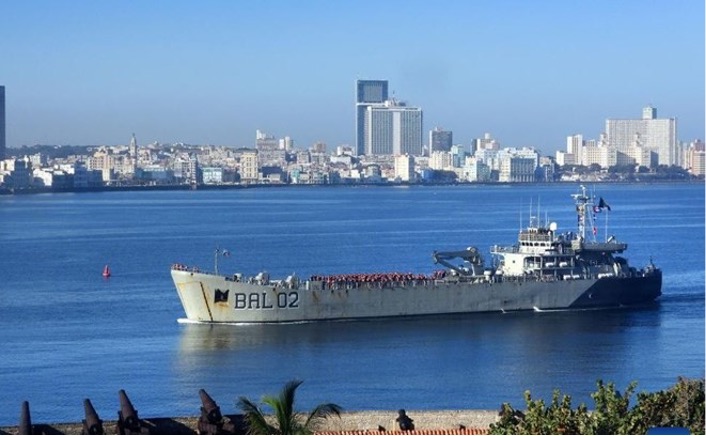
Instead, Mexico has embarked on a massive campaign of humanitarian aid. In Mexico City, under Mayor Clara Brugada’s leadership, all city legislators will donate one month’s salary to support Cuba. |
|
Morena offices in every state are collection points for donations — and the Mexican government has guaranteed shipment. The government itself donated and sent the first shipment, and more is on the way. |
|
|
Mexican aid ship docks at Havana port, Cuba, February 12, 2026. Photo: Xinhua |
|
Mexico’s three interventions in this Cuban crisis include providing humanitarian aid, pressuring for no US interference and pushing other countries, particularly Spain, to send oil. Sheinbaum has also offered to mediate between the US and Cuba on the condition that Cuban sovereignty is not negotiable.
What does the US want?
Cuba’s main revenue-generating “exports” are tourism and medical and professional services. Cuba isn’t Venezuela; it doesn’t have a lot of natural resources the US wants — this economic asphyxiation is purely political. Since 1959, Washington has punished this small nation, which has the courage, the creativity and the staying power to refuse to buckle under to US imperialism. The US can’t allow this rejection of capitalism and imperialism — its destruction is the price it must pay for thumbing its nose at the US behemoth.
And that’s why those of us on the left must do all we can to defend Cuba. |
|
|
paragraph of Voices text |
|
paragraph of Voices text |
|
caption text |
|
caption text |
|
caption text |
|

|
NEW! Sign up here for weekly delivery of COMPAÃEROS! |
|
Compañeros is the weekly newsletter of Mexico Solidarity Media, delivering all of our news stories, analyses, interviews and episodes of the podcasts Soberanía and El Taller, the Mexico Solidarity Bulletin, translations from Mexican media, photos and more! |
|

|
Fight Crime, with Intelligence and Sovereignty |
|
|
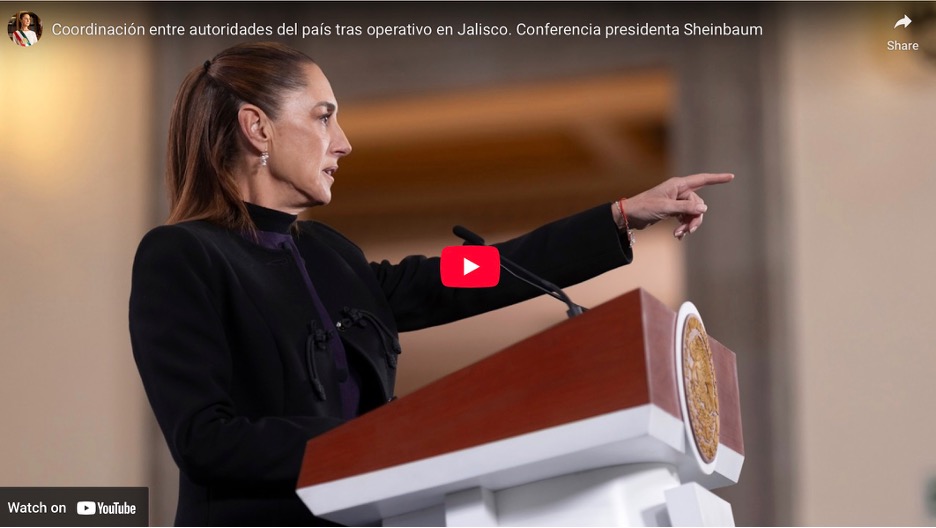
Screenshot of the video of Claudia Sheinbaum's mañanera, Feb. 23, 2026 |
|
Every day, President Claudia Sheinbaum gives a morning presidential press conference, or a mañanera, and Mexico Solidarity Media posts English-language summaries, translated by Mexico Solidarity’s Pedro Gellert. The following summary was posted February 23, 2026. It has been lightly edited for brevity.
|
|
The Ministry of National Defense (SEDENA) reported that the location of Nemesio Oseguera Cervantes, known as “El Mencho,” resulted from intelligence operations in Tapalpa, Jalisco. A SEDENA statement recalled El Mencho’s criminal history since the 1990s and his status as a priority target, with outstanding rewards offered in Mexico and the United States.
President Claudia Sheinbaum reported that the country woke up [the morning after the capture.—Ed.] without highway blockades by organized crime, thanks to coordination between federal forces and state governments. She emphasized that the operation was planned and executed exclusively by Mexican federal forces, with US collaboration limited to intelligence sharing. Operational responsibility, Sheinbaum affirmed, rested fully with national institutions.
The Minister of National Defense, Ricardo Trevilla Trejo, reported that more than 80% of the 23,000 weapons seized during the current administration are of US origin, a similar proportion to the arms confiscated in the operation against “El Mencho.” The minister stressed that the National Security Strategy is based on four pillars: addressing root causes of crime, strengthening the National Guard, intelligence, and coordination.
(In the past, the government didn’t address the root causes of crime, no National Guard existed — only corrupt federal police — and it bought massive amounts of arms from the US. Today, Sheinbaum has insisted that the US prevent drug addiction and stop the export of guns. SEDENA has also upgraded their intelligence and forensic capacities, so employing the military is no longer the ONLY tool in their toolbox, as it was during the “War on Drugs.” —Ed.) |
|
paragraph of Reflections text |
|
paragraph of Reflections text |
|
paragraph of Reflections text |
|
caption text |
|
caption text |
|
caption text |
|
caption text |
|
caption text |
|
Sign up for a free Mexico Solidarity Bulletin subscription!
And check out:
*MEXICO SOLIDARITY MEDIA: Our website for current news and analysis in English *COMPAÑEROS: NEW! Sign up here for Mexico Solidarity Media’s weekly newsletter *¡SOBERANÍA! (Sovereignty): For entertaining exposés of events in Mexico in English, catch our podcast with José Luis Granados Ceja and Kurt Hackbarth. *Sin Muros with English subtitles: José Luis and Kurt host a weekly TV show on Canal Once that analyzes Mexico-US relations with English subtitles.
Drop a line to meizhului@gmail.com |
|

|
Recent news reports and commentaries, from progressive and mainstream media, |
|
Carlos Acuña, Airbnb se acelera en CDMX rumbo al Mundial de Futbol Fábrica de Periodismo. Cada dos días, tres viviendas desaparecen del alquiler tradicional.
David Bacon, Mexican President Claudia Sheinbaum and the San Quintín Justice Plan The Nation. Field workers’ highway blockades send a warning to Mexico’s president.
Rafael Ramírez, Campesinos y transportistas piden a FIFA no hacer el Mundial en México El Sol de México. Organizaciones agro y de transporte alertaron que las condiciones de violencia y la falta de mercado para granos básicos generan un escenario de incertidumbre que podría coincidir con el torneo.
Nicholas Keung, Migrant farm workers’ class-action suit against Canadian government certified Toronto Star. Canada’s SAWP allows agricultural employers to hire temporary foreign workers from Mexico and participating Caribbean countries for up to eight months a year. Between 30,000 and 40,000 seasonal migrants come to work in Canada via the program each year.
Fallo de la Corte de EU anularía bloqueo petrolero contra Cuba; Sheinbaum revisa retomar envío de crudo Educa Oaxaca. “La amenaza de los aranceles a México por el envío de petróleo fue basada en la Ieepa. Pero la Suprema Corte fue contundente al declarar que esa ley de poderes no autoriza al mandatario a imponer aranceles. Eso correspondería al Congreso de Estados Unidos, explicó el abogado José Pertierra, quien durante más de cuatro décadas ha litigado asuntos de política hacia Cuba en tribunales estadunidenses.
Ieva Jusionyte, How the United States Arms the Mexican Cartels Rolling Stone. ATF agents who shared their experiences during interviews conducted by a congressional committee admitted they knew that the only way they would learn the whereabouts of the guns they let go would be when Mexican law enforcement recovered them at crime scenes.
Acerca de la violencia de la guerra contra el narco El Machete. El narcotráfico en México nació, creció y se desarrolló bajo el auspicio de los EEUU. Durante décadas las agencias de inteligencia estadounidenses, principalmente la CIA y la DEA, convivieron, negociaron, armaron y apoyaron a diferentes carteles de la droga en Colombia y México.
Ximena González, Whose stories matter? I Would Prefer Not To. A brief analysis of Canadian media's coverage of Mexico's cartel violence.
Pablo Monroy, México duda en aceptar fábricas de autos chinos Motorpasión México. Mientras tanto, otro país de Latinoamérica le está ganando la carrera: ya tiene 6 plantas y va por la 7. |
|
|
|

|
The Mexico Solidarity Project brings together activists from various socialist and left organizations and individuals committed to worker and global justice. We see the 2018 election of Andrés Manuel López Obrador as president of Mexico as a watershed moment. AMLO and his progressive Morena party aim to end generations of corruption, impoverishment, and subservience to US interests. Our Project supports not just Morena, but all Mexicans struggling for basic rights, and opposes US efforts to undermine organizing and Mexicoâs national sovereignty.  Editorial committee: Meizhu Lui, Bruce Hobson, Agatha Hinman, Victoria Hamlin, Courtney Childs, Pedro Gellert.  To give feedback or get involved yourself, please email us! |
|
Subscribe! Get the Mexico Solidarity Bulletin in your email box every week. |
