|

|
The weekly newsletter of the Mexico Solidarity Project |
|
Every issue archived online at mexicosolidarityproject.org/archives/ |
|
March 25, 2026 |
|
|
|
Electoral Reform: Who Gets the Power? |
|
Meizhu Lui, for the editorial team |
|
|
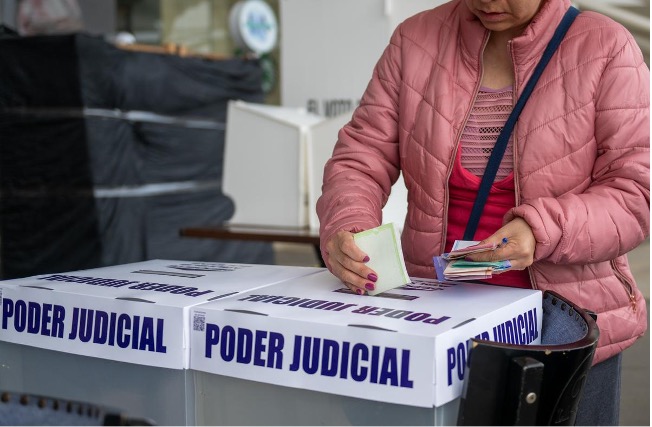
Mexico held a historic election in which voters chose the country’s judges for the first time: Wikimedia Commons |
|
The US puffs itself up as the most democratic country in the world. But it was founded by white men of means — or, as an African American friend used to say, by mean white men — who decided that only they should vote and determine the country’s course. No women. No Native Americans, the original peoples on the land. And certainly no enslaved people from Africa.
This is the America that Trump wants, that he thinks will “Make America Great Again.” Why is he proposing the electoral reform bill he calls, with his usual hyperpatriotic bullshit, the “SAVE America Act”? He claims that nefarious foreign voters are stealing the elections from upstanding white citizens. But noncitizens are already barred from voting, and the Department of Justice says that in 24 years, only 77 cases of noncitizen voters have been documented!
In stark contrast, Mexican President Sheinbaum’s electoral reform proposal gave voters more electoral power and cut funding for bureaucratic machinery. Mexican voters are disgusted at the corruption that enters government through the patronage appointment system. As Hidalgo Victoria explains to us, when 40% of congressional representatives in the lower house are appointed, not elected, and when public dollars get funneled into INE and party bureaucracies instead of being spent on services for the people, it’s a no-brainer that electoral reform must be on the table.
Simply having elections is not the measure of democracy — participation by the people is! To counter those white men of means and those who want to exert power OVER the rest of us for their own gain, we, the people, must exert what electoral power we have. We can kick out the legislators that vote for the SAVE Act in the US and those that voted against Sheinbaum’s reforms in Mexico. |
|

|
Mexico Promises Electoral Reform |
|
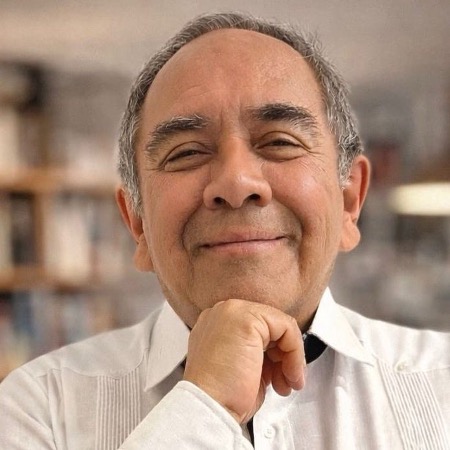
Hidalgo Armando Victoria Maldonado is a lawyer, political analyst and public policy consultant to legislators and local governments. He specializes in electoral processes, fiscal federalism and the rights of migrants. A scholar of emerging social phenomena, reforms to the Mexican state and power dynamics in North America, his work is distinguished by a critical, humanistic and data-driven approach. |
|
|
When did the last electoral reform take place, and did these reforms succeed in making the system more democratic? |
|
Yes, but they didn’t finish the job. In 2014, a constitutional reform replaced the Federal Electoral Institute (IFE) with the National Electoral Institute (INE). Under the old system, each of the 32 states had its own electoral institute, which created many opportunities for corruption. |
|
|
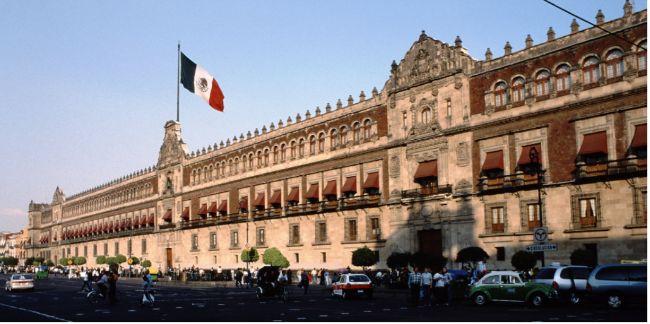
National Palace, Mexico City, seat of the National Executive |
|
With the new centralized system, the INE has offices throughout the country, and they administer both local and federal elections. Like the Federal Electoral Institute (IFE) did, the INE registers national political parties — in Mexico, only registered parties can run candidates for public office — and organizes the elections, ensuring fairness and verifying results.
Every 10 years, based on census data, the INE draws the boundaries of the 300 electoral districts to ensure that they all contain the most equitable number of voters possible. The country is also divided into five large regions; the plurinominal legislators, which are appointed by parties, represent those multi-state regions.
Why did President López Obrador propose a new reform?
To make the electoral system more democratic, he proposed a significant Constitutional reform: the elimination of the “plurinominal system,” a system based on proportional representation of the parties. Currently, 32 of the 128 senators and 200 of the 500 deputies of the lower house — the Chamber of Deputies — are allotted to political parties in proportion to the votes they got in the regions. |
|
|
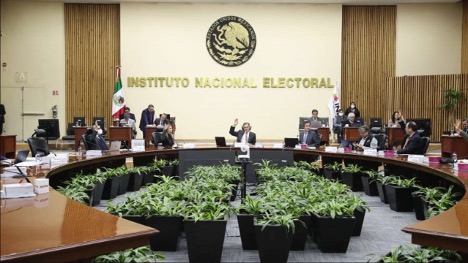
Debate at the INE: courtesy of Igor Vivero Ávila: Latinoamerica21 |
|
For example, even if none of a party’s candidates won seats outright in the districts, if that party got 10% of the overall votes in the multi-state district, it would have 10% of the plurinominal seats to appoint. This gives minority parties more voices in Congress. |
|
AMLO also wanted to cut costs. His proposal would have cut the INE's bloated budget, including the amount of funds allocated to the parties. The INE provides political parties with federal funds both for operating expenses and also for their candidates’ campaigns.
But AMLO’s constitutional reform, requiring 66% approval, didn’t pass. Therefore, he pivoted to "Plan B,” a piece of legislation requiring only a simple majority to succeed. It did win approval. But then, the Supreme Court, composed of judges appointed by the former PRI government, invalidated the reform. |
|
This was part of its systematic abuse of power to obstruct AMLO's political agenda.
AMLO didn’t give up. He had a "Plan C.” He urged citizens to elect enough legislators from Morena and its coalition parties to reach the 66% necessary to pass constitutional reforms. And the voters did just that! |
|
|
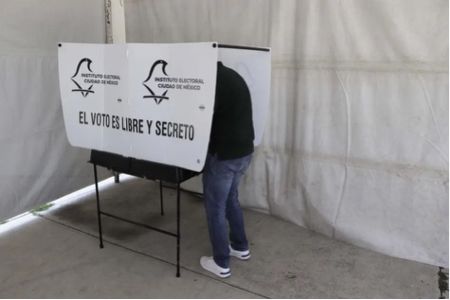
A voter casts a ballot in Mexico City, June 6, 2021: Gerardo Vieyra/NurPhoto: AP |
|
AMLO's term ended before constitutional reforms could be put on the table, but following President Sheinbaum's inauguration, the legislature enacted 17 major constitutional reforms, including the election of Supreme Court justices and other judges.
However, the reforms didn’t include electoral changes. Therefore, President Sheinbaum's reform proposal of March 2026 fulfills AMLO's and also her own campaign promise. If you ask Mexican citizens, the vast majority want an electoral reform, both to save money and to put an end to corruption in the plurinominal system.
So how did the reform propose to end corruption in the “plurinominal” system?
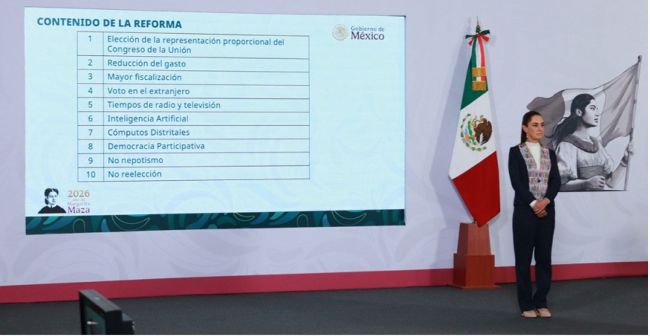
Sheinbaum chose not to eliminate proportional representation. Instead, she proposed that those legislators be elected by popular vote rather than appointed by party leaders. |
|
|
Mexican President Claudia Sheinbaum presents her electoral reform on February 25. |
|
Since they were appointed, those legislators were often friends, family members or business partners rather than persons qualified or known to the public. Her proposal removed that privilege from party leaders by making the positions in the lower house popularly elected ones, from lists that the parties would provide. She proposed eliminating the 32 Senate plurinominal positions since all the other Senate seats are directly elected.
Where would the budget savings come from?
First, from the elimination of 32 senators. Second, the INE budget would be cut by 25%, and the cuts would mainly decrease the money allocated to political parties. Currently, fully 40% of the INE's budget, or 6,000 million pesos, is allocated to political parties! Another 4,000 million are for the organization of elections, and another 4,000 million are for the issuance of voter credentials, used widely as an ID card.
The vote on the constitutional proposal to reform the electoral system failed in the Mexican Congress on March 11. What next?
The rejection of the reform was disappointing, although not unexpected. Morena's coalition partners, the Authentic Labor Front, or FAT, and the Green Party, broke with Morena and voted against it. They want to keep the economic resources and the power of appointment they have always enjoyed.
Claudia has now put forward a "Plan B” with content that differs from Plan A. It would transform the structure and costs of more than 2,000 municipalities, as well as the 32 state congresses, addressing the marked disparities among them both in number of members and in operating expenses.
Some states and cities with small populations have large numbers of high-paid governing bodies; the reform would cap the number of members in those bodies at 15 and limit the amounts they can spend. The savings would pay for programs benefiting the people of that community. Claudia has pointed out that some local officials earn up to seven times more than their counterparts in other states. This proposal is likely to pass.
Both the United States and the Mexican right will denounce this reform as an attack on democracy. What is the response to this?
Even before Claudia formally presented her reform proposal, some right-wing sectors already called it the "Maduro law," equating President Sheinbaum and President Maduro of Venezuela as anti-democratic leaders. |
|
|
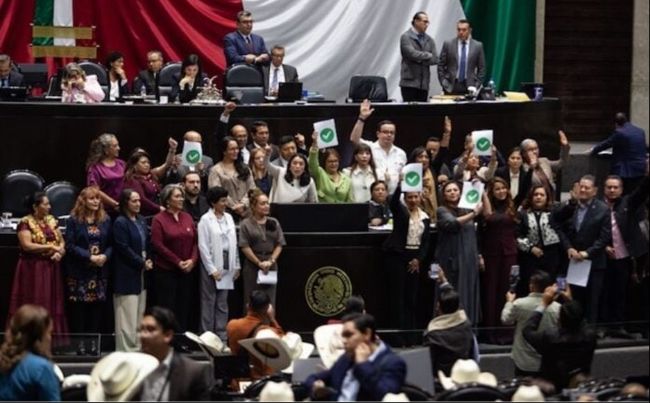
The Morena bloc in the Chamber of Deputies was strong enough to pass the proposed budget without support from the opposition: Andrea Murcia/Cuartoscuro.com |
|
But I want to point out that Morena is precisely the party that would have lost the most if Sheinbaumâs original reform proposal had been passed! Morena holds the most elected representatives in Congress and the most plurinominal seats, meaning it currently has the right to receive the greatest allocation of funds from the INE and to appoint the greatest number of plurinominal legislators. That President Sheinbaum and Morena are promoting these reforms demonstrates their firm commitment to fiscal responsibility and the strengthening of democracy. |
|

|
NEW! Sign up here for weekly delivery of COMPAÃEROS! |
|
Compañeros is the weekly newsletter of Mexico Solidarity Media, delivering all of our news stories, analyses, interviews and episodes of the podcasts Soberanía and El Taller, the Mexico Solidarity Bulletin, translations from Mexican media, photos and more! |
|

|
Adequate Housing is a Human Right |
|
The following article by Atzayacatl Cabrera appeared originally in the March 17, 2026, edition of El Sol de México. It has been edited for length and clarity.
“All individuals must have a certain degree of legal protection against eviction, harassment, or other threats, regardless of their form of housing tenure,” reads President Claudia Sheinbaum Pardo’s initiative to reform the Housing Law, which arrived at the Chamber of Deputies on Wednesday, March 18. “It doesn’t matter if I’m an illegal occupant; I need and deserve a degree of legal certainty,” said Sánchez Carro, of the Legal Clinic for Housing Rights.
The initiative proposes to make "adequate housing" a human right enshrined in the Constitution. The reform is needed because the previous concept of “dignified and decent housing” — which appears in the Constitution and the 2006 Housing Law — was not reflected in the mass construction of homes over the last few decades.
The initiative defines adequate housing as having seven essential characteristics.
“Security of tenure” guarantees that the occupants of the dwelling have legal protection against forced evictions, harassment or other threats.
“Availability of services, materials, facilities and infrastructure” means, for example, linking the human right to water to housing to ensure that any development, any new housing complex, has guaranteed access to water.
“Affordability” is exemplified in the plan to build 1.8 million homes with affordable prices of around 600,000 pesos. And “habitability” means homes must provide safe structural conditions in the face of seismic risks, tropical storms, hurricanes and so on — frequent problems in Mexico.
The other three essential characteristics are accessibility, location and cultural adequacy.
Regardless of whether a person owns a home, rents it, lives in a housing cooperative, or even resides in an informal settlement, the amendments to the Housing Law would provide some degree of legal protection to all individuals.
|
|
Sign up for a free Mexico Solidarity Bulletin subscription!
And check out:
*MEXICO SOLIDARITY MEDIA: Our website for current news and analysis in English *COMPAÑEROS: NEW! Sign up here for Mexico Solidarity Media’s weekly newsletter *¡SOBERANÍA! (Sovereignty): For entertaining exposés of events in Mexico in English, catch our podcast with José Luis Granados Ceja and Kurt Hackbarth. *Sin Muros with English subtitles: José Luis and Kurt host a weekly TV show on Canal Once that analyzes Mexico-US relations with English subtitles.
Drop a line to meizhului@gmail.com |
|

|
Recent news reports and commentaries, from progressive and mainstream media, |
|
Solidarity Convoy Sails to Cuba with Humanitarian Aid From Mexican Waters, Telesur. The solidarity convoy ship called “Granma 2.0”, sailed from Mexico to Cuba today, March 20, carrying over 30 tons of humanitarian aid to counteract the intensified United States blockade and support the Cuban people.
Ofrece Lula alianza Petrobras-Pemex para explorar el Golfo La Jornada. “Compañera Claudia, ¿Usted sabía que Pemex puede recibir una gran ayuda de Petrobras para explorar petróleo en el Golfo de México?”
USW stands in solidarity with Mexican union after strikers shot on picket line USW. “In the early morning of Wednesday, March 18, striking workers on the picket line suffered an armed attack by a group of men that left four members of the union with gunshot wounds. Disturbingly, the attackers were found to be wearing company uniforms. The attack represents a chilling threat to the right to strike,” said Marty Warren, USW National Director for Canada.
José Romero, El T-MEC: dependencia en un mundo sin libre comercio La Jornada. Desde el TLCAN se prometió desarrollo. Se dijo que la apertura traería crecimiento sostenido, mejores salarios y convergencia con Estados Unidos. Nada de eso ocurrió.
Mexican president condemns deaths of citizens in U.S. custody: "This can't be happening" CBS News. The Mexican government said Thursday that "these deaths are becoming unacceptable" and that officials "won't hold back in using available legal and diplomatic tools to defend the rights" of Mexicans abroad.
CNTE advierte que sin diálogo “no rodará el balón” del Mundial 2026, Desinformémonos. La CNTE advirtió que al intensificar sus protestas durante el inicio de un paro nacional de 72 horas en la capital del país.
Mexico’s Femsa Cuts Jobs After Bid to Become Fintech Powerhouse Fizzles, Bloomberg. The cuts were part of a wave of about 1,300 workers who were let go across various divisions, including retail and Coca-Cola bottling.
Micaela Varela, Sheinbaum pide a Pemex reubicar el colegio cercano a la refinería de Dos Bocas tras el incendio El País. Los padres de los alumnos de la Escuela Primaria Rural Abias Dominguez Alejandro denuncian riesgos para la salud por la contaminación del aire
Sonia Corona, Mexico’s economy secretary: ‘Our vision in the USMCA is to reduce dependence on other regions’ El País. Greer revealed in December that among the issues of interest to the United States regarding Mexico are economic security and guarantees that Mexico will not be used by countries like China as a gateway to the U.S. market; labor conditions in Mexico; and the restrictions the Mexican government has placed on energy companies entering the electricity and oil sectors.
Alito Moreno se alinea con Israel en plena tensión internacional El Soberano. El encuentro con la embajadora de Israel en México ocurre en un contexto internacional marcado por conflictos y cuestionamientos a la política exterior israelí, lo que ha generado críticas hacia el priista por su posicionamiento. |
|
|
|

|
The Mexico Solidarity Project brings together activists from various socialist and left organizations and individuals committed to worker and global justice. We see the 2018 election of Andrés Manuel López Obrador as president of Mexico as a watershed moment. AMLO and his progressive Morena party aim to end generations of corruption, impoverishment, and subservience to US interests. Our Project supports not just Morena, but all Mexicans struggling for basic rights, and opposes US efforts to undermine organizing and Mexicoâs national sovereignty.  Editorial committee: Meizhu Lui, Bruce Hobson, Agatha Hinman, Victoria Hamlin, Courtney Childs, Pedro Gellert.  To give feedback or get involved yourself, please email us! |
|
Subscribe! Get the Mexico Solidarity Bulletin in your email box every week. |
