|

|
The weekly newsletter of the Mexico Solidarity Project |
|
Every issue archived online at mexicosolidarityproject.org/archives/ |
|
April 15, 2026 |
|
|
|
Gender Violence: A Historical Through-Line |
|
Meizhu Lui, for the editorial team |
|
|
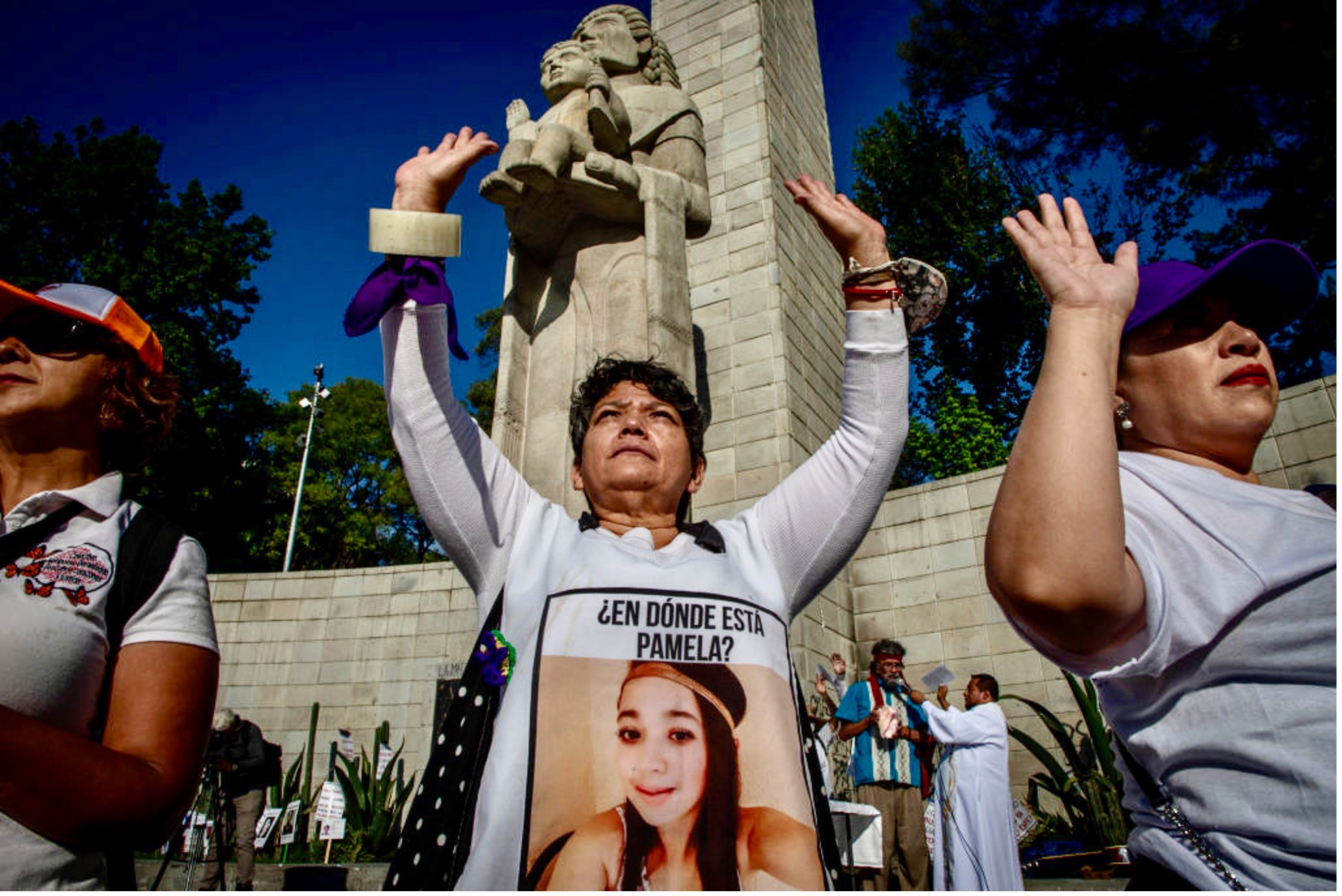
Mexican mothers protest violence on Mother's Day: Jair Cabrera Torres: photo alliance via Getty Images |
|
I’m one of the approximately 30% of women worldwide who have experienced physical violence due to our gender. The resilience of women during periods of harsh repression and war is often noted; I think it’s because so many of us have lived through periods of personal terror where the home becomes a prison and the one we expect to protect us abuses us instead. Fear, and how to cope with it, becomes woven into the rhythm of our daily life.
Thirty percent of women is not just a terrible number because it affects so many, but because it means gender violence is accepted as natural, as something that we cannot stop. Pablo Piccato, an expert on violence of all kinds, notes that gender violence is a constant throughout history — a through line, an undercurrent — during “peacetime” as well as in times of other kinds of violence.
In today’s world, death, destruction and war have also become normalized. So many peoples and nations are riven by violence that it seems like the natural human condition. The central issue for our time is to unpack the different kinds and reasons for violence in order to address them, which Pablo Piccato’s work helps us do.
Piccato names women and trans people as the cutting edge of those who refuse to accept that violence is unstoppable. Through their voices, we now know that gender violence is not about sex and is not “natural” male behavior; this can permit interventions to prevent abuse. Speaking up, speaking together and using our lived experience as the basis for understanding can get us to the real roots of violence.
Recognizing that violence is neither normal nor natural can give us hope for a different world. |
|

|
The Uses of Violence in Mexican History |
|
Pablo Piccato, a professor at Columbia University, specializes in Mexican history. He has worked on the political and cultural history of Mexico and on the history of crime. He’s the author of several books, including A History of Infamy: Crime, Truth, and Justice in Mexico, which won the María Elena Martínez Prize in Mexican History in 2019. His newest book is A Brief History of Violence in Mexico. |
|

|
Your new book on the history of violence in Mexico is timely with popular attention so focused on cartel violence in Mexico. How do we approach the issue of violence in Mexico?
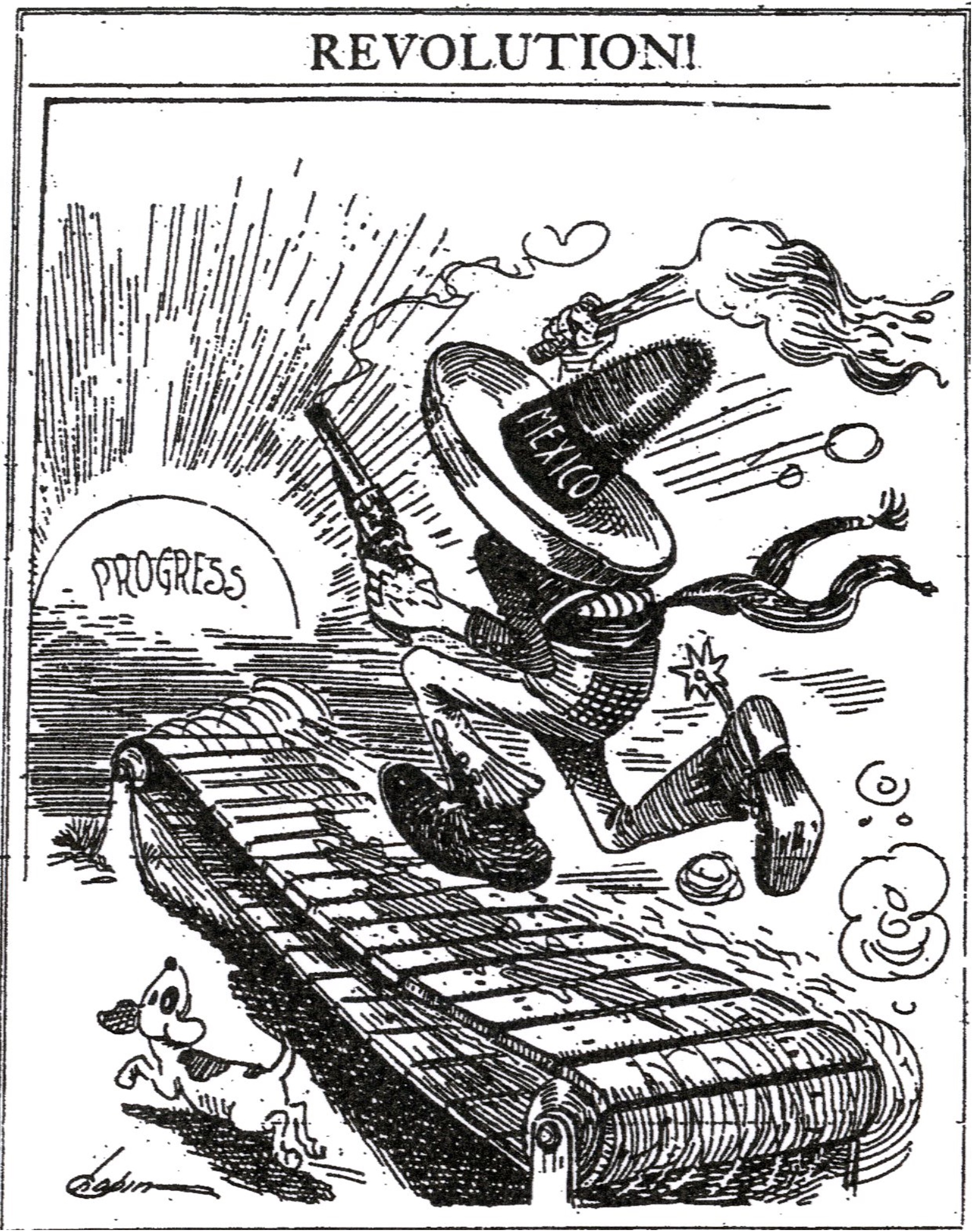
In the US, a prevalent stereotype is that Mexico is an inherently violent country where cartels rule. |
|
Historically, violence in Mexico arose in various places and times and for different reasons, but it’s not true that “Mexicans are a violent people.” As in other countries, violence is part of the many ways people interact socially, and it’s also a historical phenomenon, a tool used by social forces to achieve their goals. |
|
|
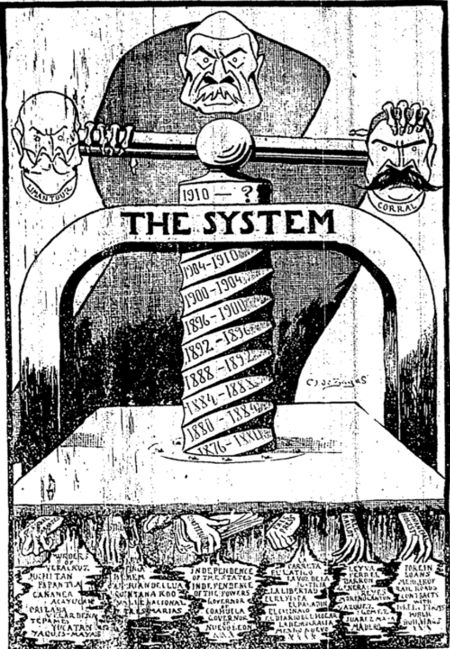
Porfirio Díaz cranking the lever of despotism: Regeneración, 1910 |
|
|
1910 stereotype cartoon in US press of Mexican violence and backwardness: Wikimedia |
|
Concentrating on the 20th and 21st centuries, each chapter in my book describes a different form of violence. The first describes revolutionary violence. During the Mexican Revolution, begun in 1910, anger at Porfirio Diaz’s dictatorship boiled over into armed rebellion. It was sparked by a member of the ruling class but spread into rural areas, which had their own grievances. |
|
|
|
A second chapter describes the agrarian violence of peasants against the abuses of their landlords, and a third describes religious violence when anticlerical government forces confronted Catholics. Succeeding chapters discuss how politicians institutionalized criminal violence and became administrators of violence in the mid-century in order to make money from illegal activities. In the 1960s and 70s, a new generation of leftists fought a guerrilla war against a repressive government. The current era of cartel violence is just the latest historical form. The last chapter focuses on gender violence, which has been a constant throughout Mexican history.
How did these forms of violence differ?
To make comparisons, I focused on features that can be traced over time.
I looked at changes in material infrastructure — technology, transport, communications. What weapons existed and what was their availability? For example, the invention of the machine gun allowed for much more destructive violence. |
|
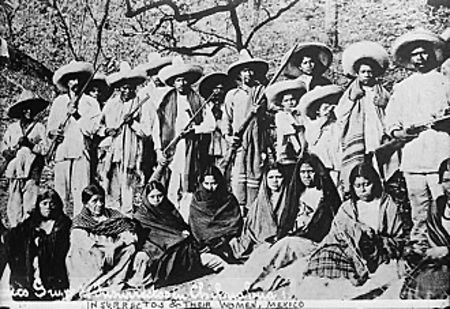
Second, how personal was the violence? When people shot at each other in the Revolution, the opposing forces were anonymous to each other. In the agrarian struggle, it was personal, peasant against landlord.
|
|
|
Insurgents, likely in the state of Morelos, accompanied by their wives: Wikipedia |
|
|
|
I looked at how violence was justified and why it made sense to social actors. Because teachers, mostly women, fought for expanding rights for the poor, Catholics legitimated lynching women teachers. They saw them as agitators against family order.
Whether committed by the right or the left, violence is never irrational, though its effects are unpredictable. When President Díaz Ordaz ordered the massacre of students in Tlatelolco Square in 1968, he just wanted to stop the protests and didn’t foresee its long-term consequences — the emergence of a new generation of left-wing activists and political reformers. |
|
|
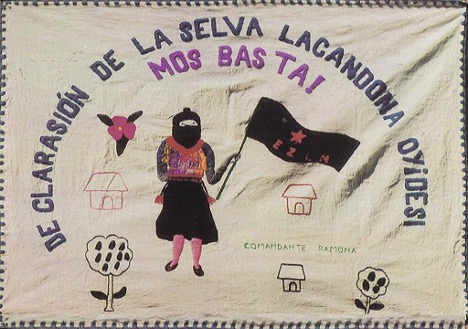
Embroidery made in the embroidery workshop of Nuevo Guadalupe Tepeyac: 1984, First declaration of the Lacandon Jungle: Photo: CEDOZ Archive |
|
Some say that all violence is a result of class struggle. Or that all violence is the result of the state; Max Weber theorized that the state holds a monopoly on all legitimate violence. I disagree. Sectors of the population can deem some violence legitimate, such as lynching Blacks in the US under Jim Crow. I found that there’s no simple formula; violence appears for many reasons. |
|
Often acts of violence are not recorded. What research materials did you use?
Especially for the earlier periods, I had to dig into archives and other sources because victims were often unwilling, ashamed or afraid to report violent crimes. I used many kinds of sources, including books of fiction and movies with elements of truth that reflected the historical moment. I found that it wasn't until the 1980's that victims became more willing to share their stories.
Judicial archives were helpful; I read testimonies from victims, perpetrators and witnesses. Political archives provided useful information, such as reports from spies.
I also read tabloid journals, which cater to a broad readership. While often gruesome and pornographic, the stories conveyed useful details such as what weapons were used, where the crime took place, and the behavior of both victim and perpetrator. If you understand their bias, you can cull revealing facts.
What were some of your takeaways?
In looking at the Mexican Revolution, I wondered, “Why would a person pick up a rifle?” There was no single reason; I found both regional and class differences — southern peasants had many grievances different from those of the urban ruling class. Another takeaway was that many studies only focused on the military or the political consequences of the rebellion. But I also looked at how the violence affected civilians; displacement and starvation were forms of violence themselves, as was pervasive sexual violence. |
|
|
|
|
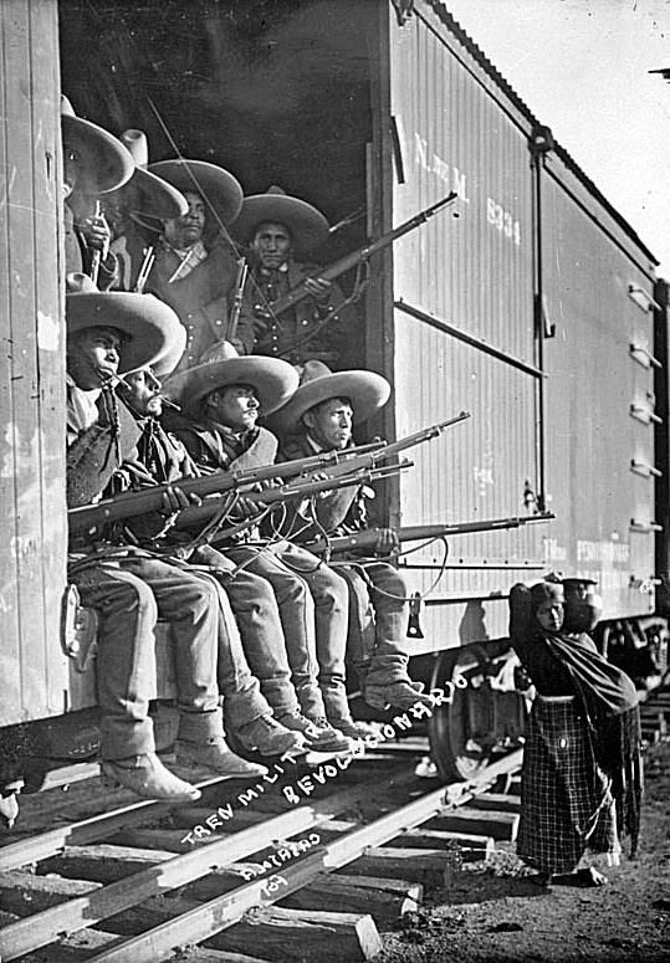
Mexican revolutionaries traveled by train, which were even used as weapons, filled with explosives and then sent into enemy territory to explode: Thought.Co |
|
|
|
In the 1930s, US culture encouraged the growth of better-organized criminal organizations and more violent crimes. The US and Mexican audiences were obsessed with US gangster movies and figures like Al Capone who were portrayed almost like folk heroes.
By the 40s and 50s, “criminal literacy” — knowing how to stay out of trouble — increased. For example, people learned it was better to pay a bribe early — the amount would grow exponentially if you had to pay the judge instead of the local policeman.
In the 80s and 90s, the pistoleros, or gunfighters, and other “experts of violence” graduated into positions where they could use violence more effectively. They became police, bodyguards and FBI agents — they could not only get paid but also avoid arrest. |
|
|
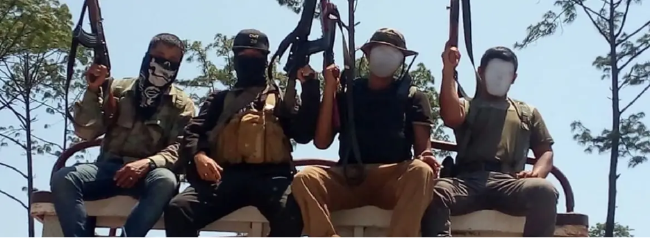
Eduardo Giralt | Professional killers on top of an improvised cladded armor vehicle showing off their rank as ‘masters’ or elites of the turf |
|
As the US demand for drugs grew, the drug trade became an incredibly lucrative business opportunity. The “experts of violence” from the police and military joined in, using extortion, torture and murder. By the 90s, cartels grew powerful enough to turn the tables. Instead of the politicians extorting drug traffickers, cartel leaders created their own armed forces that controlled the politicians.
Gender violence holds a special place in your analysis.
It’s the most important political work against violence today, and it comes from women and trans people. Sexual violence has prevailed throughout our history — but it was always silenced, staying with us because we didn’t talk about it. The big change today is that women and others have brought it into the open. We now know that sexual violence is not about sex; it’s about communication and domination. |
|
|
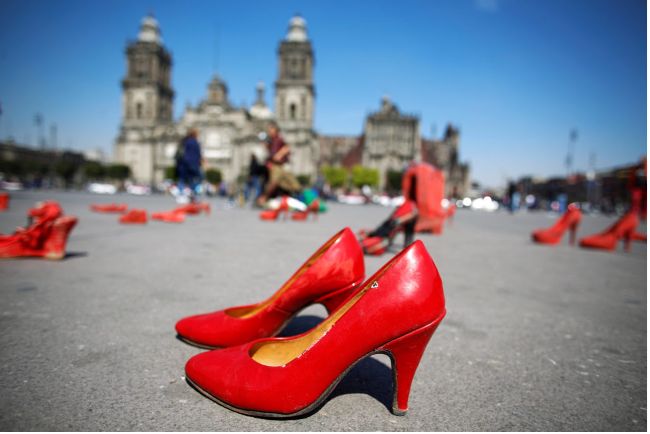
Elina Chauvet's "Los Zapatos Rojos" installation in cities around the world: the shoes stand in for all the women lost to violence: Joshua Barajas: PBS |
|
It is also not “natural” to men, any more than violence is natural to Mexicans. I believe that having a clear understanding of gender violence is necessary to understand other forms of violence. In this moment, understanding violence has never been more important. |
|
|
NEW! Sign up here for weekly delivery of COMPAÃEROS! |
|
Compañeros is the weekly newsletter of Mexico Solidarity Media, delivering all of our news stories, analyses, interviews and episodes of the podcasts Soberanía and El Taller, the Mexico Solidarity Bulletin, translations from Mexican media, photos and more! |
|

|
Kingpins, Generals & Mischaracterizations |
|
|
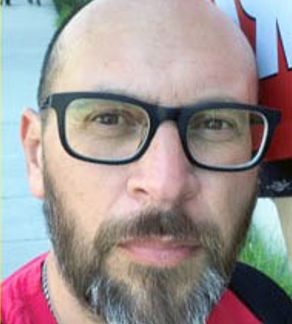
Jesús Hermosillo, a Los Angeles-based trade union researcher, has been a lifelong observer of social justice politics in the United States and Mexico, the original home of his family. His perceptive writing and research have always contested negative mainstream narratives on Mexico. |
|
In a recent episode of UNAM TV talk show Diálogos por la democracia, host John Ackerman interviewed Dawn Marie Paley, a Canadian journalist and author based in Puebla, about her forthcoming book, Generals at the Gates: Military Power and Social Change in Mexico. As viewers learn from the interview, Paley sees little good in what she calls Mexico’s “militarization” under former President Andrés Manuel López Obrador — his use of military institutions for roles historically held by civilians, including in law enforcement, infrastructure development, and state enterprises. In Paley’s view, these changes, left intact by President Claudia Sheinbaum, endanger democracy by concentrating too much power in military hands.
While the question is important, the discussion bypasses contextual factors that might explain AMLO’s rationale for leveraging the military’s resources for civilian goals — the urgent need to rebuild the nation on a tight budget, for instance — and fixates on the perceived shortcomings of Morena’s welfare-state agenda. This lack of nuance raises questions about the book’s analytical depth but aligns with Paley’s past reporting (see her 2021 The Nation article, “AMLO Has Been a Disappointment to the World — for Mexico, He’s Been Far Worse”).
Paley also makes several dubious claims, including that the government continues to fuel violent crime through the kingpin strategy — the decapitation of drug cartels first embraced in 2007 by then-President Felipe Calderón, which we now know largely benefited the Sinaloa cartel—long after AMLO announced its replacement with his “hugs, not bullets” framework, a less confrontational approach in anti-drug enforcement paired with expanded social welfare.
The kingpin strategy “was never abandoned,” Paley states, with little evidence. Aside from last February’s killing of Jalisco cartel boss Nemesio Oseguera Cervantes, “El Mencho” — which was likely Sheinbaum’s effort to preempt a US military intervention — Paley only cites the US arrest of the Sinaloa cartel’s Ismael Zambada García, “El Mayo,” in 2024, and the resulting local crime spike. Her glaring omission of allegations that Zambada was abducted by a rival faction and handed over to US authorities — in what AMLO condemned as an illegal US-led operation—further undermines Paley’s credibility.
Rather than demonstrating the persistence of Calderón-style drug war tactics, Paley retreats to the safety of consensus: “It is empirically proven that the kingpin strategy spreads violence,” she states emphatically — echoing a point already made by AMLO — before citing testimony from Sinaloa residents facing heightened insecurity.
On Ackerman’s mention of a 44% drop in homicides nationwide since Sheinbaum took office, Paley shrugs, suggesting that declines in some high-crime areas may mask overall trends or reflect short-term fluctuations. Then she brings up the “record homicides” under AMLO—evoking right-wing figures who faulted his refusal to militarily confront cartels, ironically enough — in what feels like a grasp at straws. In fact, although daily body counts remained high on AMLO’s watch, per-capita homicides plateaued after he took office in 2018 and fell in 2021, suggesting the stabilizing effect of a new public-security paradigm. |
|
Sign up for a free Mexico Solidarity Bulletin subscription!
And check out:
*MEXICO SOLIDARITY MEDIA: Our website for current news and analysis in English *COMPAÑEROS: NEW! Sign up here for Mexico Solidarity Media’s weekly newsletter *¡SOBERANÍA! (Sovereignty): For entertaining exposés of events in Mexico in English, catch our podcast with José Luis Granados Ceja and Kurt Hackbarth. *Sin Muros with English subtitles: José Luis and Kurt host a weekly TV show on Canal Once that analyzes Mexico-US relations with English subtitles.
Drop a line to meizhului@gmail.com |
|

|
Recent news reports and commentaries, from progressive and mainstream media, |
|
Zedryk RazielElia & Castillo Jiménez, Mexico’s slow and steady return to fracking El País. The announcement comes after months of subtle moves and carefully worded statements meant to prepare the ground without sparking major controversy.
Rolando Ramos, Inaugura Sheinbaum primer Polo del Bienestar en Tlaxcala El Economista. En el evento inaugural, Marcelo Ebrard, secretario de Economía, informó de la creación de 5,000 nuevos empleos vinculados al Polo.
Marissa Revilla, The US Is Dumping Elderly Migrants in Mexico Without ID, Money or Phones truthdig. After living in the U.S. for decades, vulnerable, sick deportees are sleeping on sidewalks and dying in a country they don’t know.
Académicos en México piden reanudar suministro de combustibles a Cuba Telesur. De acuerdo con un grupo de académicos mexicanos, el acatamiento del cerco petrolero estadounidense no solo afecta a Cuba, sino que compromete la soberanía de México y el derecho a la autodeterminación de toda América Latina y el Caribe.
Joshua Carroll, Mexico’s Socialist President to Roll Out Universal Healthcare Novara Media.
Mario Campa, Trump pausó el nearshoring en México, pero no lo mató Sin Embargo. En el largo plazo, el relato del nearshoring podría retornar, pero es incierto si regresará en carne viva en forma de un espectro ambulante.
Mexico’s Sheinbaum Sees No Shift by Peru’s Current President on Diplomatic Ties Telesur. Mexican President Claudia Sheinbaum Pardo said Monday that Peru’s newly installed president, José María Balcázar, has shown no interest in resuming diplomatic relations between the two countries.
Jesús Estrada, "La discusión no es la policía, sino el modelo económico del país", dice Eraclio Rodríguez tras represión contra agricultores La Jornada. “Nos queda claro que es el ejercicio del Estado cuando no tiene voluntad y no tiene argumentos para discutir temas como la salida de los granos básicos del tratado de libre comercio, o detener la especulación de los grandes empresarios.”
Sergio L. Olivares, Daniel Sánchez, & Rommy Morales Mexico Introduces Restoration of Priority Rights for Patent, Utility Model and Industrial Design Applications National Law Review. This change introduces a level of flexibility previously unavailable under Mexican law and aligns the system with international practices, providing a limited safeguard against the loss of priority due to procedural omissions.
¡Viva la huelga obrera en Tornel! La Furia. Este conglomerado industrial con más de 125 años de trayectoria de explotación a la clase trabajadora tiene una importante presencia en sectores industriales dedicados a la producción de neumáticos, cemento, papel, productos de consumo y tecnología.
|
|
|
|

|
The Mexico Solidarity Project brings together activists from various socialist and left organizations and individuals committed to worker and global justice. We see the 2018 election of Andrés Manuel López Obrador as president of Mexico as a watershed moment. AMLO and his progressive Morena party aim to end generations of corruption, impoverishment, and subservience to US interests. Our Project supports not just Morena, but all Mexicans struggling for basic rights, and opposes US efforts to undermine organizing and Mexicoâs national sovereignty.  Editorial committee: Meizhu Lui, Bruce Hobson, Agatha Hinman, Victoria Hamlin, Courtney Childs, Pedro Gellert.  To give feedback or get involved yourself, please email us! |
|
Subscribe! Get the Mexico Solidarity Bulletin in your email box every week. |
