|

|
The weekly newsletter of the Mexico Solidarity Project |
|
Every issue archived online at mexicosolidarityproject.org/archives/ |
|
April 29, 2026 |
|
|
|
Get Out! Don't Gringo our Cinco! |
|
Meizhu Lui, for the editorial team |
|
|
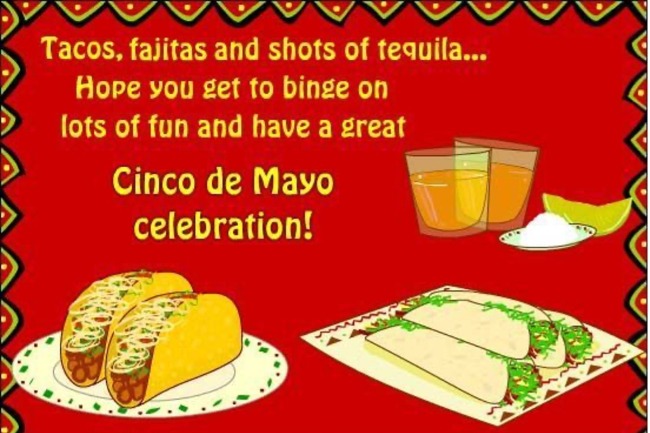
Nothing is sacred to our rulers. Nothing, that is, except the worship of Mammon, the god of money. Disciples of Mammon, otherwise known as capitalists, see the world through the lens of dollars. That extends to our holidays and celebrations of great leaders and historical events. What’s the meaning of US President’s Day? The first big sales events of the year. The birth of Jesus? Mountains of toys. Cinco de Mayo? Margaritas until you mumble, “Yeah, Trump’s right, Gulf of America!”
The greeting card industry not only has a whole line of Cinco de Mayo cards featuring margaritas and St. Patrick’s Day cards urging you to drink until you turn green — Hallmark working hand in hand with the liquor industry — but if we didn’t see the cards at our local superstore, would we even know that “Bosses Day” or “Administrative Professionals Day” is a thing!
As Cinco de Mayo approaches, Bill Gallegos isn’t asking for any cards. He reminds us that it’s the date of an actual historical event and that Chicanos chose it as a symbolic day for revitalizing Mexican pride. They fought for and won the demand that public schools teach Mexican history so Mexican American kids can know they belong to a brave, democratic people who won’t tolerate foreign bullies invading to commodify their country — they are not from a violent nation of criminal cartels as the nightly news tells them.
What’s next? I won’t be surprised if I walk down the greeting card aisle soon and see, “Happy CIA Day!” or “Chug-a-Lug for Manly Men Day!” But it’s so wrong for capitalists to make a mockery of the celebrations of holidays established by the people, for the people and in defense of a people. Get out! Don’t gringo our cinco! |
|

|
Cinco de Mayo: the Chicano Holiday |
|
Bill Gallegos is a long-time activist in the Chicano Liberation Movement. His family lived for centuries in the land of Nuevo Mexico and Colorado; after the US annexed that territory in 1848, ancestors ended up in the coal mines and on railroads. Bill wrote “The Struggle for Chicano Liberation,” a revolutionary analysis of the Chicano self-determination struggle, and has written from a Chicano point of view for the Adelante series of pamphlets by Liberation Road. Currently he is helping to build a chapter of the Mexico Solidarity Project in Los Angeles, Califas. |
|
|
Many people in the United States today see Cinco de Mayo as Mexican Independence Day, but it isn’t. What historical significance does the day have?
Bill Gallegos: Cinco de Mayo — May 5, 1862 — marks the date Mexican troops defeated the invading French army at the Battle of Puebla. |
|
|
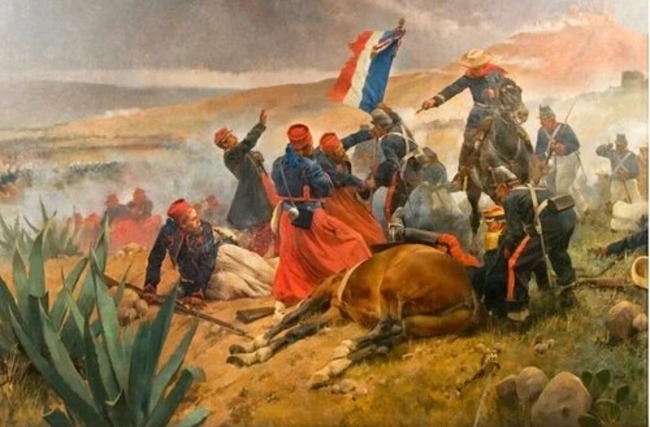
The Battle of Puebla was a significant Mexican victory on May 5, 1862, against French forces during the second French intervention in Mexico. |
|
After centuries of Spanish rule, Mexico had declared its independence from Spain on September 16, 1810 — the official Independence Day — and threw off Spanish rule in 1821. Then here comes Napoleon III, emperor of France, looking to add Mexico to the French colonial empire. He sent in over 5,000 troops from the world’s most powerful army. They landed in Mexico and set out to march to the capitol of Mexico City. Directly in their path: the city of Puebla, defended by 4,700 poorly armed troops but commanded by lgnacio Zaragosa, a seasoned guerilla warfare strategist. The French troops charged against the heart of the Mexican defenses. The defenses held. The French lost 1,000 soldiers. The Mexicans only lost 85 men. The Battle of Puebla handed France its first military defeat in 50 years and left the whole world looking at Mexico with new respect.
How did Cinco de Mayo become a rallying cry for the Chicano movement in the US?
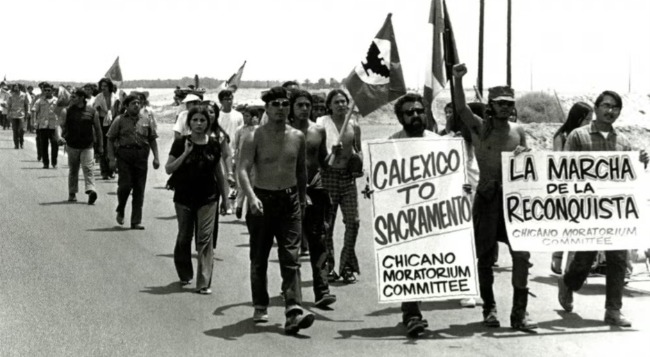
Antonio Sanchez from Central Washington University explains that well in The Real Meaning of Cinco de Mayo. In the late 1960s, he notes, Chicano civil rights activists on college campuses throughout the Southwest and California “purposely adopted the Battle of Puebla and May 5 as their day to publicly celebrate” their proud heritage. |
|
|
The Chicano civil rights struggle in Los Angeles in the 1960s and 1970s: Photo courtesy UCSB |
|
For the first time, he adds, college campuses heard the cries of “Viva la raza, viva Cinco de Mayo!” That cry amounted to “a bold statement of self-determination” and “cultural allegiance with Mexico,” a “defiant recognition of the accomplishments of the capable Mestizo people of Aztlan.” A new and hopeful Chicano holiday had “emerged triumphantly” from the struggle for civil rights.
How was Cinco de Mayo used to build the Chicano movement?
Cinco de Mayo, as a slogan and celebration, proclaimed our national pride in full view of the greater US public and opened the door to a larger discussion of our history, including the real meaning of the US annexation of Mexico’s northern territories in 1848. |
|
People of Mexican/Indigenous descent had lived on the lands now in Texas, Arizona, New Mexico, Colorado and California for hundreds of years and had maintained a culture still rooted in Indigenous practices and beliefs. |
|
|
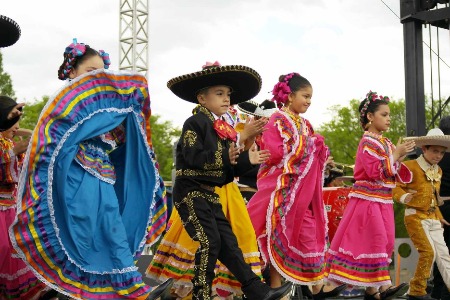
The largest Cinco de Mayo party is in California when the people of Los Angeles celebrate “Festival de Fiesta Broadway” on May 5th (or the closest Sunday). Photo: S Pakhrin / Flickr / CC BY 2.0 via ThoughtC |
|
Our movement developed an analysis that this culture represented a new Chicano Nation, with a unique identity forged by a century of life in the United States under an oppressive racist system. Through this analysis, the Chicano struggle became integrally connected with struggles in Mexico against Yanqui imperialism. We fought not just for equality with white Americans but for Chicano sovereignty.
Cinco de Mayo is now recognized nationally, even on Hallmark calendars! Do you consider that a victory?
Unfortunately, US alcohol corporations have largely coopted this holiday. They market it as an occasion to get drunk and party, not to celebrate an anti-imperialist victory, much less to motivate the Chicano people’s ongoing struggle against racism and national oppression. They horribly disfigured the holiday into “Drinko for Cinco.” But we still do have authentic celebrations in some communities and college campuses. And we still need to insist that our true history be recognized and honored throughout the US educational system and in popular culture.
Have Chicano activists built solidarity with the people of Mexico?
Yes! Chicanos provided powerful support for the Zapatistas and, more recently, supported the Morena Party, which swept to victories throughout Mexico in 2018. |
|
|
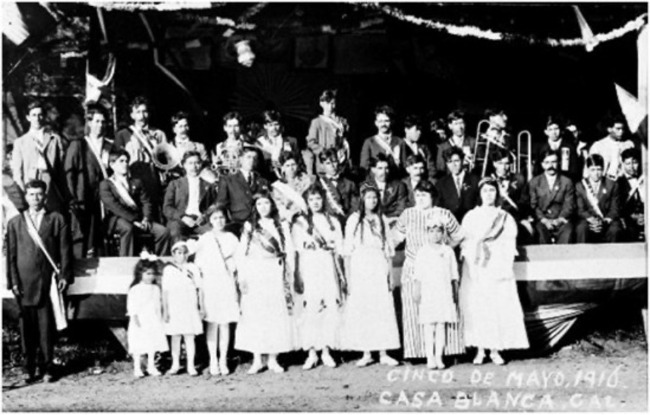
The 1910 Cinco de Mayo celebration in Riverside’s Casa Blanca neighborhood is seen in an old photograph. (Courtesy of the Riverside Public Library) |
|
The right of Chicanos to self-determination in the illegally annexed territories of Aztlán in the US Southwest and the right of Mexico to exercise sovereignty free from US domination have been and will be two parts of the same struggle. |
|
|
NEW! Sign up here for weekly delivery of COMPAÃEROS! |
|
Compañeros is the weekly newsletter of Mexico Solidarity Media, delivering all of our news stories, analyses, interviews and episodes of the podcasts Soberanía and El Taller, the Mexico Solidarity Bulletin, translations from Mexican media, photos and more! |
|

|
Sheinbaum’s Speech in Defense of Democracy |
|
The following are excerpts of remarks by Mexican President Claudia Sheinbaum in Barcelona, Spain, at the Summit in Defense of Democracy. The meeting was convened by Spanish Prime Minister Pedro Sanchez on April 18, 2026.
I come to the Summit for Democracy to congratulate my fellow presidents who fight for it every day. I come to share what Mexico holds as constitutional principles, born from its history, democratic principles in foreign policy — principles that today resonate loudly and clearly and are more alive than ever on the world stage: respect for the self-determination of peoples, non-intervention, the peaceful resolution of disputes, rejection of the use of force, the legal equality of states, the need for international cooperation for development, respect for human rights and the ongoing struggle for peace. Because in a world suffering from war and inequality, these democratic principles remain Mexico’s contribution to the peoples of the world as a symbol of hope.
Democratic principles also mean freedom. But it’s worth asking: what kind of freedom? The freedom defended by conservatism? The freedom to submit to external interests? The freedom to turn nations into modern colonies? Or the freedom of an unregulated market that turns many into nothing and a few into everything?
No. ...Freedom is an empty word if it is not accompanied by social justice, sovereignty and the dignity of peoples. When we speak of democracy, it is not the democracy of elites but of the people. Not the concentration of wealth, but its distribution. Not imposition, but participation. Not war, but peace. Not indifference and exclusion, but cooperation and inclusion.
When we speak of democracy, we refer to the democratization of culture, access to education, access to healthcare — and the ultimate purpose of governments, which is to ensure the well-being of their people. Democracy, as Abraham Lincoln said, is the government of the people, by the people, and for the people. There is no democracy when there is no option for the poor, for the dispossessed.
I would also like to propose a declaration against military intervention in Cuba so that dialogue and peace may prevail. …
… I am a woman of peace, and I represent a nation that loves freedom, justice and fraternity, and that understands democracy as the great Benito Juárez expressed it: “With the people, everything; without the people, nothing. With the peoples, everything; without the peoples, nothing.” |
|
Sign up for a free Mexico Solidarity Bulletin subscription!
And check out:
*MEXICO SOLIDARITY MEDIA: Our website for current news and analysis in English *COMPAÑEROS: NEW! Sign up here for Mexico Solidarity Media’s weekly newsletter *¡SOBERANÍA! (Sovereignty): For entertaining exposés of events in Mexico in English, catch our podcast with José Luis Granados Ceja and Kurt Hackbarth. *Sin Muros with English subtitles: José Luis and Kurt host a weekly TV show on Canal Once that analyzes Mexico-US relations with English subtitles.
Drop a line to meizhului@gmail.com |
|

|
Recent news reports and commentaries, from progressive and mainstream media, |
|
Nick Corbishley, The US’s Not-So-Secret War in Mexico naked capitalism. The Mexican state of Chihuahua is spelled with the letters “CIA”.
Más agentes y más operativos: crece el escándalo por la presencia secreta de la CIA en México RT. La polémica por la participación no autorizada de agentes de la Agencia Central de Inteligencia (CIA) en operativos en México crece a diario con nuevas revelaciones, ya que ponen de manifiesto la posible intromisión de EE.UU. en las políticas de seguridad del país latinoamericano.
Jessica Rawnsley, Mexico says US agents killed in crash weren't permitted to operate there BBC News. Mexico's security ministry said that immigration records showed one of the agents had entered the country as a "visitor", while the other had travelled on a diplomatic passport.
Magdalena Rosales Cruz, Claudia Sheinbaum en España El Sol del Bajío. Su presencia fue destacada, sobre todo por sus participaciones cuyos mensajes definieron bien qué es México y su pueblo.
Jorge Puma-Crespo, The Return of the Repressed Calaveritas y Amlitos. In the democratic imagination of the Transition, revolution survived only as pathology: a fever of youth, a provincial illness, a dirty dog wandering through the alleys of neoliberal Mexico.
Gustavo Leal F., Servicio Universal de Salud (SUS): voces desde el frente de operación La Jornada. La enfermería informa que el “modelo” de integración-Clark difícilmente “funcionará” porque arranca con presupuestos insuficientes y condiciones laborales precarias.
Emily Green and David Lawder, Mexico 'shouldn’t be nostalgic' about zero-tariff era, economy minister says Reuters. An ominous portend of the USMCA to come.
Zósimo Camacho, Educación de la primera infancia, entregada a la iniciativa privada Luces Del Siglo. La primera infancia debería garantizarse con inversión pública, escuelas dignas, docentes contratados y con un Estado que asuma su rectoría educativa. Todo lo demás es mercantilización del derecho a la educación.
Maria Sacchetti, Appeals court clears way for U.S. to reopen border for asylum seekers Washington Post. President Trump’s declaration of an “invasion” at the U.S.-Mexico border was illegal, effectively clearing the way to reopen the United States to migrants seeking asylum.
Jazmín Sandoval, ¿Ciencia para el pueblo, o para las corporaciones? Pie de Página. Mientras la Suprema Corte debate la constitucionalidad de la nueva Ley de Ciencia, comunidades como la de Alto Atoyac defienden el único instrumento legal que les ha permitido financiar investigaciones para demostrar el envenenamiento industrial de sus territorios. |
|
|
|

|
The Mexico Solidarity Project brings together activists from various socialist and left organizations and individuals committed to worker and global justice. We see the 2018 election of Andrés Manuel López Obrador as president of Mexico as a watershed moment. AMLO and his progressive Morena party aim to end generations of corruption, impoverishment, and subservience to US interests. Our Project supports not just Morena, but all Mexicans struggling for basic rights, and opposes US efforts to undermine organizing and Mexicoâs national sovereignty.  Editorial committee: Meizhu Lui, Bruce Hobson, Agatha Hinman, Victoria Hamlin, Courtney Childs, Pedro Gellert.  To give feedback or get involved yourself, please email us! |
|
Subscribe! Get the Mexico Solidarity Bulletin in your email box every week. |
