|

|
The weekly newsletter of the Mexico Solidarity Project |
|
Every issue archived online at mexicosolidarityproject.org/archives/ |
|
April 22, 2026 |
|
|
|
ICEbreakers: Asians and Latinos/as United |
|
Meizhu Lui, for the editorial team |
|
|
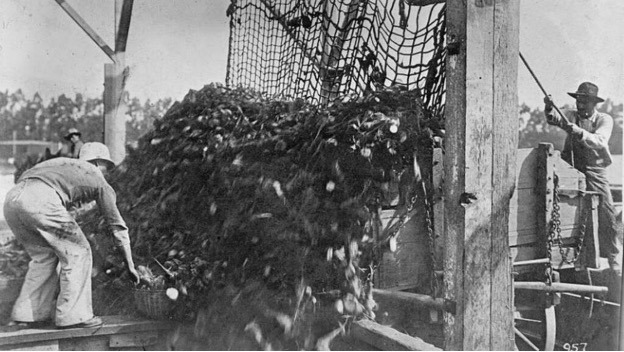
Laborers in the late 1800s when Mexican workers joined Chinese railroad workers in Oregon: Photo courtesy Pulso |
|
The first Chinese in the US were groundbreakers. Literally. We put crops in the ground, drove in railroad spikes and tunneled through rocky mountains. And we broke legal ground! The US set an ugly precedent with us — the first immigrant group in an immigrant nation that it barred from entry.
In the 1840’s, the Gold Rush attracted migrants from all over the world, including China. But white migrants routinely stole Chinese mine claims and commonly removed Chinese by outright murder. Like African Americans, we experienced “sundown towns” — ordered to vacate our homes or not live to see the next sundown. Cigar makers formed an early labor union, and their organizing slogan wasn’t “fight the bosses” — it was “no coolie labor.”
Shortly after the Civil War, the question arose in the US: Blacks may be legally equal now, but should Asians be also? The majority didn’t think so. In 1882, the Exclusion Acts closed the border to the Chinese, and many were deported. The US, a settler nation — Native American peoples were the only non-immigrants — welcomed only white immigrants into the club.
Over time, the US also barred people from other nations or severely limited their numbers. Fast forward to today, and many attitudes, practices and laws that first targeted the Chinese have been a blueprint for the demonization and deportation of today’s immigrants, mostly Mexican and Central American, but including Asians and Africans as well.
For non-whites, the US has been and remains treacherous territory. But, as Madeline Offina reminds us, Asians, Mexicans and many others continue to break new ground in their own way by allying with each other across countries of origin. By creating safe spaces for those who truly believe all people are created equal, we can, and — as the African American anthem resounds — “shall overcome.” |
|

|
Filipina and Mexican: A Radical Healer |
|
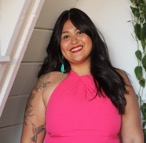
Dr. Madeline Ofina, the biracial child of immigrants, is a member of the Radical Healers Collective and has her own private practice. She spearheaded the Wellness Committee of the City Heights Defense Committee in San Diego. Through education and workshops, she focuses on the mental wellness of activists and the community alike. Her training and clinical focus are on those who struggle with PTSD or have loved ones with mental illness. |
|
|
ICE has terrorized Latinos/as. Have Asians also been targeted?
Yes, Asian immigrants have been targeted, but their experience and the impact of their deportations are somewhat different from the Latinx population. My mother is from Mexico and my father from the Philippines. I travel in two worlds and feel I can be a bridge between them. |
|
https://www.advancingjustice-aajc.org/ recently reported that Asians and Pacific Islanders are 17% of the undocumented population, about 1.7 million people. Half of these live in four states, New York, New Jersey, Connecticut — and the largest population, 26% of them — in my state of California. While the media has focused on South and Central American immigrants, Asians are also a big portion of immigrants in the US. |
|

|
New York City Asian district, 2020 |
|
Within the undocumented Asian category, 38.8% are from India, 19.8% from China, under 10% each from the Philippines, South Korea and Vietnam, and smaller numbers from the rest of Asia. About 90% are working age, a third of them between 25 and 34 years old, with still many years to contribute to the US economy. Three-quarters have some college, college degrees, or graduate-level education, so their impact on the economy is significant but different from Latinos. |
|
|
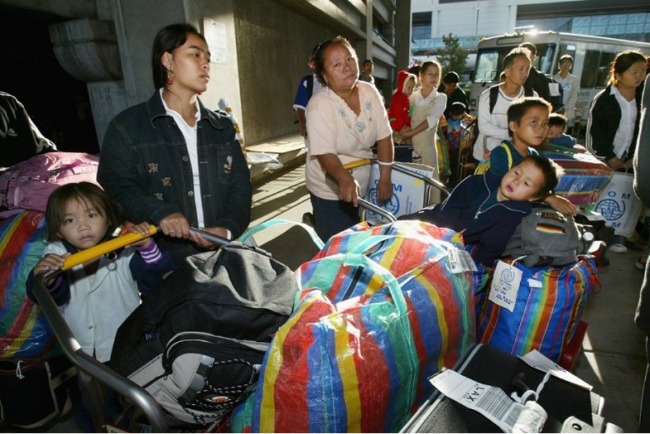
Southeast Asian immigrants continue to fight for basic rights: Prism Reports, 2020 |
|
ICE has concentrated on the Southeast Asian population, particularly Cambodians. This is tragic, because many of them fled genocide and war as children. They have experienced trauma and poverty, often lack skills suitable for urban employment and live in under-resourced neighborhoods. This has led some to commit minor crimes. |
|
Cambodians are three to four times more likely than other immigrant groups to be deported for old convictions. Because many US-born children live with at least one undocumented parent, the deportations are devastating for Asian families.
As the daughter of immigrants and a mental health clinician, when the ICE raids began, what did you do?
I’ve been a leadership fellow with the Asian American Psychological Association and have also worked with Chicanos in Psychology. Since I was aware and trained to understand that people from different cultures experience and respond to trauma differently, I felt that I could be of use to the immigrants traumatized by the ICE raids.
In San Diego, many defense committees popped up. I chose the City Heights Defense Committee, the CHDC, after it formed last summer. I loved being there; I loved how they operated. It was democratic, with elected leaders, and they didn’t tell you what to do. They asked everyone, “What can you bring?” |
|
|
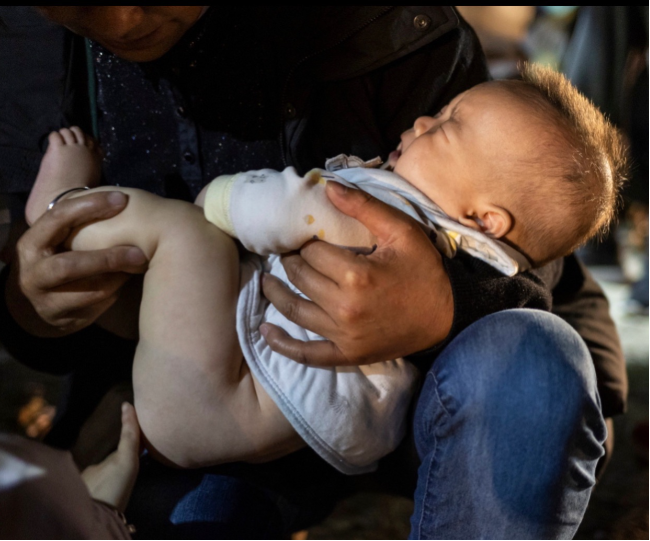
A grandmother from China assists in changing a three-month-old baby’s diaper at a Border Patrol staging area, 2023: Reuters |
|
I answered that question by volunteering to lead a wellness subcommittee. Older immigrants were being re-traumatized. And I worried that a new generation would grow up not feeling safe and constantly afraid while living in the US. I was concerned about the mental health of the activists and advocates who carry the emotional weight of witnessing violence and families being torn apart. |
|
How do you meet the mental health needs you see?
The wellness subcommittee members are healers. We quickly realized that we could not treat individuals; there were just too many in need. In some cases, we do refer individuals to clinicians in community health centers and elsewhere. But we needed to create opportunities for supporting and educating many people at once.
Here’s an example. Children were scared to go to sleep, worried that their mom or dad might not be there in the morning. To create a feeling of normalcy, we read them a bedtime story on Zoom every night. They're familiar with Zoom since it replaced physical classrooms during COVID.
Counselors and clinicians must be mindful that they can be part of an oppressive system themselves. |
|
|
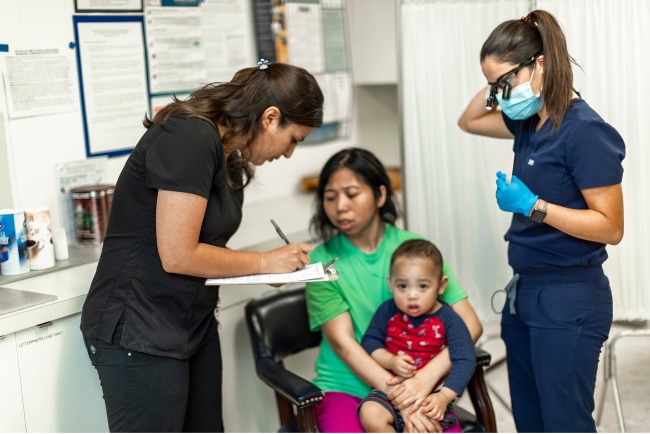
University students working at a refugee health clinic, SARHC; an acute care clinic to address the health and social needs of over 1,300 immigrant refugees |
|
It is our job to understand our own internalized biases and to exercise cultural awareness. Mental health is stigmatized in many cultures, more so than among US citizens. Many immigrants describe mental anguish differently from what we might expect. For example, they don’t say, “I suffer from depression.” They say, “My heart hurts.” |
|
I’m a member of the Radical Healers Collective — we aim to support the liberation of all people through decolonizing mental health care. We consider the circumstances surrounding a person’s mental challenges, instead of immediately pathologizing their behaviors. The Collective works not only with mental health professionals but also with churches, curanderos and other groups providing sanctuary spaces.
When it comes to activists and organizers, the question is how to avoid burnout and make the work sustainable. I recommend that individuals set aside time for rest and rejuvenation and not just run ragged for others. To last for the long haul requires a sense of empowerment, a deep connection to others in their community — to feel that we are in this together and have each other’s backs. It’s not a one-way street.
The Trump government is not just deporting people — they are committing psychological harm, and we have to address it directly. The wounds of psychological harm might be invisible, but they can last longer than physical pain. |
|
|
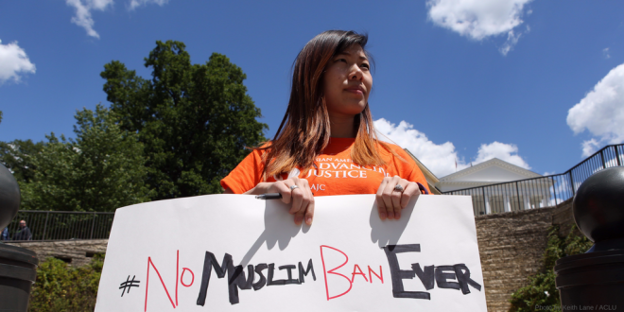
Black and brown communities moving forward, together: Asian Americans Advancing Justice |
|
We often hear about the importance of Black/brown alliances. But what about Asians? Are they part of the CHDC?
Yes. Community groups such as the Asian Solidarity Collective and Viet Voices joined, and CHDC has learned from their methods of work. For example, Asians come from different nations and language groups. The CHDC adopted their practice of patrolling neighborhoods in teams, with members who can speak the different languages we encounter.
Will ICE terrorizing City Heights have a long-term impact?
Yes — post-traumatic stress disorder is well known. But it’s not “post” yet; right now it's still just traumatizing!
Fortunately, post-traumatic growth is also possible. While traumatic experiences are often felt in an individual’s body, together we can find relief and an internal strength from being in community. Indigenous healers have long practiced healing circles and created collective spaces — before it was called “therapy.” We, as a community, know how to heal. |
|
|
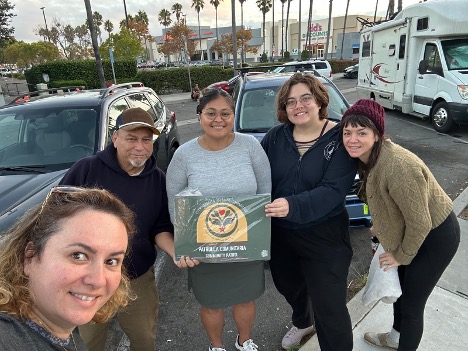
CDHC on patrol. Madeline holding the sign. |
|
|
NEW! Sign up here for weekly delivery of COMPAÃEROS! |
|
Compañeros is the weekly newsletter of Mexico Solidarity Media, delivering all of our news stories, analyses, interviews and episodes of the podcasts Soberanía and El Taller, the Mexico Solidarity Bulletin, translations from Mexican media, photos and more! |
|

|
Healthcare for All and Other Good News |
|
The following article by Joshua Carroll appeared originally in the April 10, 2026 issue of Novara Media. It has been lightly edited.
Beginning next year, Mexico’s 120 million citizens will begin to enjoy free, universal access to healthcare, following a decree by socialist president Claudia Sheinbaum.
The landmark policy will unify a fragmented and unequal system that has left many unable to receive care at hospitals and clinics they prefer, forcing them instead to use only what their insurance provider covers.
In theory, Mexico’s sprawling network of public health institutions should provide most people with coverage, but in practice poorer people and those in rural communities often cannot get the medicines or treatment they need without out-of-pocket expenses. Private health insurance, meanwhile, fills the gap for those who can afford it, creating a two-tier system based on income.
The first phase of the new universal system will begin on 13 April, with citizens aged 85 and older eligible to register for the ID needed to access care. After January 2027, other groups will be added.
Since coming to power in 2024, Sheinbaum has sought to undo decades of damage caused by neoliberal policies, building on the work of the previous socialist government. She has pledged to build 1.8m new homes to tackle a housing shortage while strengthening tenants’ rights.
Last year she increased the minimum wage by 13%, continuing a policy of regular hikes championed by her predecessor and mentor Andres Manuel Lopez Obrador since 2018.
“For years it was said that the minimum wage couldn’t go up,” she told a conference in December, “that it would cause inflation, that there would no longer be investment in the country, foreign investment.” Despite that, following a cumulative minimum wage increase of 154% since 2018, “we are at a record level of foreign investment,” she added. |
|
Sign up for a free Mexico Solidarity Bulletin subscription!
And check out:
*MEXICO SOLIDARITY MEDIA: Our website for current news and analysis in English *COMPAÑEROS: NEW! Sign up here for Mexico Solidarity Media’s weekly newsletter *¡SOBERANÍA! (Sovereignty): For entertaining exposés of events in Mexico in English, catch our podcast with José Luis Granados Ceja and Kurt Hackbarth. *Sin Muros with English subtitles: José Luis and Kurt host a weekly TV show on Canal Once that analyzes Mexico-US relations with English subtitles.
Drop a line to meizhului@gmail.com |
|

|
Recent news reports and commentaries, from progressive and mainstream media, |
|
Kurt Hackbarth, Mexico Is Going All In for Universal Health Care Jacobin. Mexico’s new national health system aims to provide universal care. At a moment when US taxpayer dollars are being harnessed to destroy health care infrastructure abroad, Mexico is attempting to make a constitutional right to care into a lived reality.
Jared Laureles y Jessica Xantomila, Inconstitucional, exigir a migrantes identificarse al abordar autobús: tribunal La Jornada. El juez federal en materia administrativa determinó que estas medidas vulneran el derecho al libre tránsito, establecido en el artículo 11 constitucional, además de que constituyen un acto de discriminación, violentando el artículo primero de la Carta Magna.
Tamara Pearson, US Mining Plan Will Sacrifice Mexico’s Environment for Weapons and Tech Truthout. A new mining agreement provides no benefits for Mexico and fails to address health and environmental impacts.
Trump quita patrocinio a católicos que cuidan niños migrantes. Creen que es venganza Sin Embargo. La organización a cargo de resguardar a miles de niños refugiados no acompañados expresó su preocupación por el destino de los menores tras la pérdida de los fondos.
Jorge Barrera, Mexico probes allegation Sinaloa faction threatened workers at Canadian-owned gold mine before union vote CBC News. Labour probe found evidence cartel faction member coerced workers to vote for union favoured by management.
Jornaleros y jornaleras explotadas y sin derechos en los campos agrícolas Tlachinollan. Las familias jornaleras no sólo les exprimen hasta la última gota de vida en los campos agrícolas, sino que tienen que padecer la falta de acceso gratuito a los servicios de salud.
Lara-Nour Walton, What Mexico Can Teach New York About Public Groceries Jacobin. Zohran Mamdani’s proposal for government-run grocery stores echoes a long-running system in Mexico — one that delivers affordability, but not without trade-offs.
Antonio Gershenson, Estamos con Lula y con Sheinbaum La Jornada. Y así, hemos llegado hasta nuestros días bajo las amenazas constantes de los países imperialistas. Pero lo que estamos experimentando actualmente ante un país como Estados Unidos, que tomó fuerza y dominio sobre los países más vulnerables, es insólito.
PEMEX Confirms Pipeline Leak Behind Gulf Oil Spill Telesur. PEMEX confirmed a pipeline leak caused the February 6 spill, citing protocol failures and ongoing investigations into responsibility.
Sergio Rincón y Paulina Padilla, Gobierno de CDMX mantiene en opacidad 500 mdp con programa social para embellecer la capital El Ceo. La revista detectó opacidad en el presupuesto y en el padrón de beneficiarios. |
|
|
|

|
The Mexico Solidarity Project brings together activists from various socialist and left organizations and individuals committed to worker and global justice. We see the 2018 election of Andrés Manuel López Obrador as president of Mexico as a watershed moment. AMLO and his progressive Morena party aim to end generations of corruption, impoverishment, and subservience to US interests. Our Project supports not just Morena, but all Mexicans struggling for basic rights, and opposes US efforts to undermine organizing and Mexicoâs national sovereignty.  Editorial committee: Meizhu Lui, Bruce Hobson, Agatha Hinman, Victoria Hamlin, Courtney Childs, Pedro Gellert.  To give feedback or get involved yourself, please email us! |
|
Subscribe! Get the Mexico Solidarity Bulletin in your email box every week. |
