|

|
The weekly newsletter of the Mexico Solidarity Project |
|
Every issue archived online at mexicosolidarityproject.org/archives/ |
|
April 01, 2026 |
|
|
|
Mexican Hawaiians, Paniolos and Planters |
|
Meizhu Lui, for the editorial team |
|
|
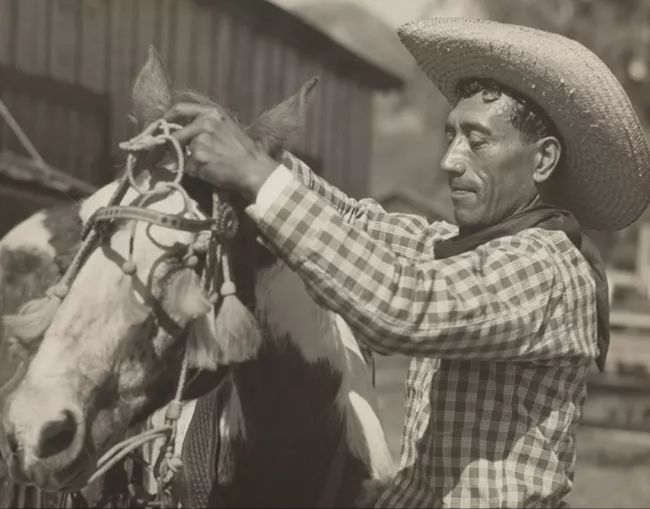
Paniolo David Kuloloia and his horse, 1930's (Hawaii State Archives, PP-13-6.010) |
|
The Hawaiian islands are the tops of volcanos, rising out of the ocean 2500 miles from any other land. Every living creature here has arrived by air or sea.
In 1793, a British navigator gifted six cows and a bull to King Kamehameha on Hawaii Island, also called Big Island. The king protected them and let them run wild and multiply. As they became a 1500-pound invasive species, they rampaged through villages, eating the thatched roofs off homes, trampling crops, injuring people — and no one knew what to do.
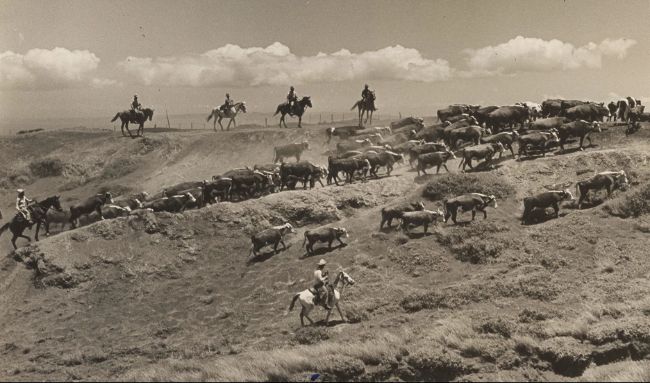
In the early 1800s, the king heard about the Mexican vaquero, or cowboy, and invited some to Hawaii. They taught Hawaiians how to handle horses — also new to Hawaii — and how to rope, herd, breed, fence and slaughter cattle. The Hawaiian beef industry was born.
The Hawaiian word for cowboy is “paniolo.” Because the Hawaiian language has no “s,” that’s how they pronounce “español.” I can see Mexican influence at the local rodeo I go to every year in the boots, bits, bridles, spurs and ornate hand-tooled saddles, which derive from early Mexican designs. Many Mexican Hawaiians, descendants of those early paniolo, still are proud ranchers.
Mexicans kept coming in small numbers. Armando Rodriguez and his wife Karina came to stay because Hawaii Island still has room for small family farmers who love to feel their hands in the dirt.
From paniolo ranchers to farmers like the Rodriguez family, Mexicans have contributed to Hawaii’s culture and economy. But now we are plagued by a new invasive species ruining crops and harassing people: ICE! The ICE species doesn’t care — it cannot be corralled or tamed. Eradication is the only alternative, and we’re working on it! |
|

|
Sonora to Hawaii: Farming in His Blood |
|
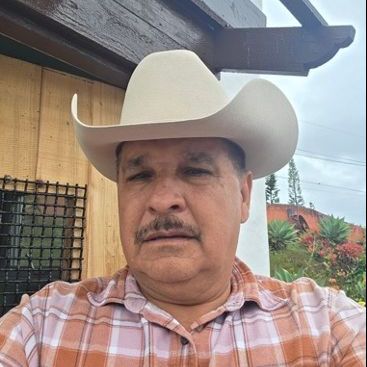
Armando Rodriguez went through the migrant back-and-forth journey between Mexico and the US several times before getting “lucky.” He was eligible for amnesty under the 1985 IRCA law. In 2013, he and his wife Karina started growing and processing their award-winning Aloha Star 100% Kona Coffee on Hawaii Island. He also founded Aloha Latinos, which informs and serves Mexicans and Latinos/as. |
|
|
When did you come to Hawaii and why? It’s a long way from Mexico!
My story begins in Sonora, Mexico, where my father was a farmer. I didn’t know we were poor — but I didn’t own a pair of shoes until I was in the US! When I was eight, my parents decided to migrate north. I didn’t want to leave, especially not to leave my dog Chillin. When my parents and us four kids were driving away from our home for good, I could see Chillin chasing after us, and I was sitting on the back of our flatbed truck crying. |
|
|
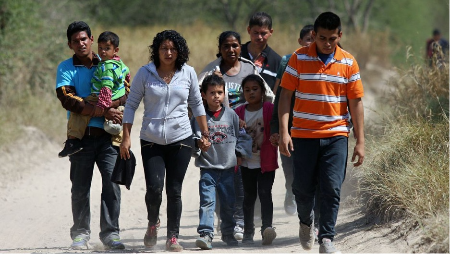
Migrants in the Sonoran Desert: Photo: iStock.com/vichinterlang: UCLA Newsroom |
|
We drove across the Sonoran desert. It was 1978 in the monsoon season; we were cold and wet. The truck broke down, and we walked for several days. We made it to Arizona, and we knew of a place where you could just walk through a gate on a ranch. In Phoenix, my father got a construction job, and my mom got one in a tortilla factory. |
|
But in 1979, they both were deported in an immigration raid.
Us four kids were left alone with no food for two weeks — it scarred me for life. An uncle finally came to get us. Later, our parents walked across the desert again and rejoined us. Life’s a roller coaster if you’re an immigrant. La Migra picked us up three or four times — but we always came back.
Me and my family ended up getting “lucky.” In 1986, Congress passed a law giving amnesty to immigrants living in the US for at least four years. We got a green card and a path to citizenship. I served in the military, but even after that, I was detained twice in Arizona. You probably heard of the racist sheriff Joe Arpaio in Maricopa County. He had it in for us Mexicans. |
|
In Arizona, I started my own small construction company, but farming’s in my blood from generations. I first came to Hawaii as a tourist in 2003. In 2004, I bought a macadamia nut farm. After going back and forth between Phoenix and the Big Island for ten years, in 2013, my wife Karina and I moved to our Kona farm full-time. It’s the perfect place to grow coffee, and that’s what we did. I didn’t even drink coffee! |
|
|
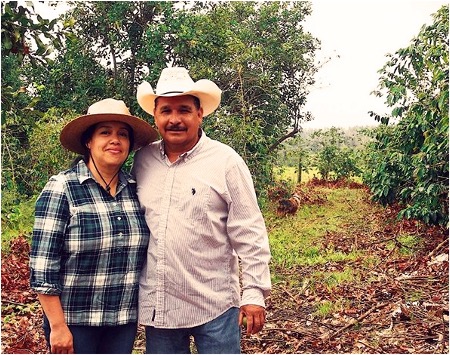
Armando and Karina Rodriguez, founders of Aloha Star 100% Kona Coffee Farms, from their website |
|
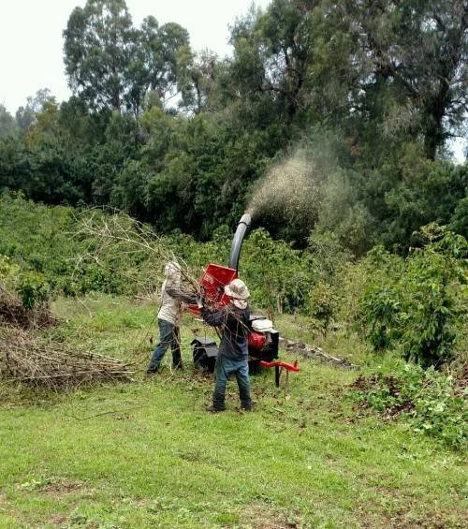
Here in Hawaii, we pioneered a different method of processing coffee called the “honey process.” After picking the red berries, instead of soaking them to separate the sweet red pulp from the bean inside — the method traditionally used here for over 200 years — we dry the berries with the “cherry” on, which gives it a sweet finish. Aloha Star 100% Kona Coffee has won many awards — it’s recognized internationally. I guess going back to farming was a good idea! |
|

|
|
Aloha Star Coffee Farm: Photos from Facebook Page |
|
Has ICE come to disrupt Paradise?
Unfortunately, yes. ICE targets unaccompanied minors. Their excuse is they want to protect “children in danger” and just want to do a “welfare check” and to “rescue” them from trafficking. But these children are legally seeking asylum — that’s how the agents have their names. Once picked up, ICE sends them to detention centers in Arizona or Texas. Some rescue! ICE stopped a 17-year-old on the street who already had won his case. He ran to his high school to get his legal documents but was deported anyway.
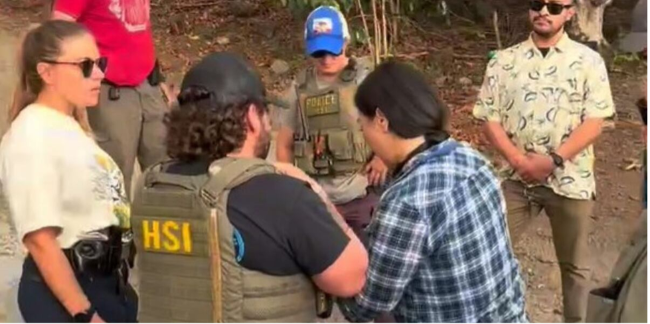
It’s not about minors. At a ChoiceMart grocery store, they grabbed thirty people, mostly women and children, put them in a warehouse at the Kona airport, then flew them to Oahu. They took workers off a Kona coffee farm near me. No one gets to talk to a lawyer. |
|
|
Video obtained by Hawaii News Now shows immigration enforcement officers at a Kona coffee farm in March. (Screenshot/Hawaii News Now/2025) |
|
What’s the effect? At Konawaena Elementary School, officers took a little boy right out of his classroom. This frightened the other children, and after that they begged the teachers, “Lock the doors!” The arrests have affected farms, landscaping and construction businesses and spilled over to shops. At the ChoiceMart, the usually full Hispanic aisle is empty.
When did you found Aloha Latinos, and what does it do?
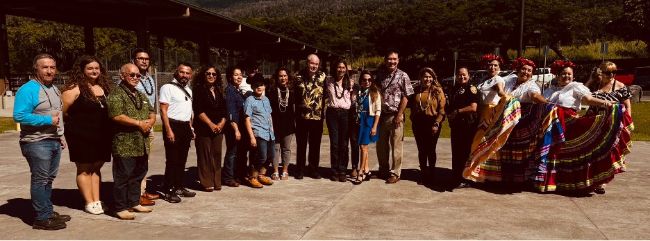
About three or four years ago, Mayor Mitch Roth mentioned at a meeting that he needed a Spanish-speaking organization to get information out to the community. But with ICE here, we’re doing more than giving out information. We distribute food to people afraid to leave home, we connect people who’ve been arrested to lawyers, and we work with other community groups to stop the local police from helping ICE. |
|
|
Founders of Aloha Latinos Hawai'i Association with Mayor Mitch Roth and County Council member Michelle Galimba. |
|
At the Konawaena school, the school officer who pulled the child out of his classroom felt bad. He told me the boy’s father asked for someone to get his son. The father was arrested, and there would be no one to pick up his son from school. Since I lived through my parents disappearing as a child, I told the officer he did the right thing; parents and kids should not be separated.
But it makes me mad. They should have let the father go. ICE entered the home without a warrant, claiming they were looking for a 14-year-old boy to do a welfare check. Then they detained the two adults at home, one being the child's father.
It’s unfair to make local police do this — we need to trust the local police to protect us, not terrorize us! My rancher grandfather used to say, “The one that holds the cow’s feet down commits the same sin as the one that stabs it.” Well, the local police were the ones holding the cow’s feet. |
|
|
Paniolo herding cattle at the Parker Ranch on the Island of Hawaiʻi (Hawaii State Archives, PP-13-6.016a) |
|
But Hawaii is a special place. You can still talk to the police and politicians with mutual respect. The community kept testifying to the police commission that they have to choose a new police chief that doesn’t cooperate with ICE. We did it! The new chief visited my farm and talked to me even before he was hired — wow, he came to me! He says the most important thing he’ll do is listen, and he’s keeping that promise.
Not everyone likes what Aloha Latinos is doing. Some people don’t want immigrants here; they think they’re “taking our jobs.” Even some Latinos oppose our work — they forget where they came from. I’ve been threatened. I used to keep my doors open, but now I lock up. ICE has divided us.
Do you have hope that things will get better?
If you take a clown and put him in a castle, the clown doesn’t become a king, the castle becomes a circus.
Americans will listen when their pockets are drained. They’ll realize our nation is going the wrong way. I’m still proud to be an American and feel blessed to be here. I’ll always defend my people and my country. |
|

|
NEW! Sign up here for weekly delivery of COMPAÃEROS! |
|
Compañeros is the weekly newsletter of Mexico Solidarity Media, delivering all of our news stories, analyses, interviews and episodes of the podcasts Soberanía and El Taller, the Mexico Solidarity Bulletin, translations from Mexican media, photos and more! |
|

|
Mexico Requires a Deterrence Strategy |
|

|
José Luis Granados Ceja is a journalist and political analyst based in Mexico City. He currently covers Latin America for Drop Site News. He is the co-founder of MSP's Soberanía podcast and a presenter on the show Sin Muros on Mexico’s Canal Once. He focuses on political issues, social movements, elections and human rights. Follow him @GranadosCeja |
|

|
What’s required from Mexico now, before it’s too late, is an effective deterrence strategy against potential US military action.
This year we witnessed the United States bomb and invade the capital of a Latin American country and capture its president, Nicolás Maduro; an illegal and unprovoked attack on Iran killing much of the country’s leadership; and direct threats to do the same in Cuba. The US has sharply escalated its bellicose rhetoric from US officials toward Mexico, including praise from Donald Trump himself for its 19th-century invasion of our country.
We now live in a world governed not by international law but by “might makes right.” Consider the illegal and medieval-style siege of Cuba. Sheinbaum initially stopped shipping them oil because of IEEPA tariffs imposed by the US. But the US Supreme Court struck down the tariffs. So why is Mexico still not sending oil to Cuba? The reality is that the US is militarily blockading Cuba, so any ship carrying oil faces violence — Mexico logically concludes our northern neighbor is a state military threat.
Celso Amorim, prominent Brazilian politician and key advisor to President Lula da Silva, told Phenomenal World that Brazil too must seriously consider what recent geopolitical events mean for the country's military strategy.
“This is a world without illusions,” he said. “The country needs to develop a serious defense policy, not to confront major powers — we will never have the capacity to confront countries such as the United States, Russia, or China militarily — but to acquire a real deterrence capability.”
He explains, “It is essential that external actors know that any aggression would entail significant costs and damage.”
While President Claudia Sheinbaum clearly and consistently defends Mexico’s sovereignty, the country’s security doctrine seemingly under-emphasizes the US military threat.
The US holds no respect for our sovereignty. This month, heavily armed US forces walked across the border into Mexico without authorization. When told to leave by both citizens and the Mexican National Guard, US troops called for backup, returning to US territory only after they were satisfied. Sheinbaum downplayed the event, saying they only crossed a few meters into Mexico and calling it unintentional.
When it comes to US incursions onto our land, we cannot cede even an inch.
Mexico should continue to work at maintaining a positive relationship with our closest neighbor and number one trading partner. But acting like Trump isn’t capable of unilateral military action against us is foolish.
What an effective deterrence strategy looks like for Mexico is a question best left for military experts, but watching Iran’s missile capability at work should inspire all the rebellious peoples of the world, including us.
|
|
Sign up for a free Mexico Solidarity Bulletin subscription!
And check out:
*MEXICO SOLIDARITY MEDIA: Our website for current news and analysis in English *COMPAÑEROS: NEW! Sign up here for Mexico Solidarity Media’s weekly newsletter *¡SOBERANÍA! (Sovereignty): For entertaining exposés of events in Mexico in English, catch our podcast with José Luis Granados Ceja and Kurt Hackbarth. *Sin Muros with English subtitles: José Luis and Kurt host a weekly TV show on Canal Once that analyzes Mexico-US relations with English subtitles.
Drop a line to meizhului@gmail.com |
|

|
Recent news reports and commentaries, from progressive and mainstream media, |
|
Patricia Boero, New Mexican Film Law Aims at Creative Sovereignty The Film Verdict. A new Mexican film law addresses the challenges posed by new technologies and increases democratic access to audiovisual production.
Luis Hernández Navarro, Bajo bloqueo de EU, 80% del pueblo cubano durante 67 años: Díaz-Canel La Jornada. “México es la tierra hermana que siempre ha estado al lado de Cuba, en las buenas y en las malas. La que siempre nos ha acompañado, la que nunca ha claudicado.”
Ricardo Wilson II, Langston Hughes: Novelist, Poet, Activist and... Translator Literary Hub. Ricardo Wilson II on the Writer’s Experience in Mexico and His Struggle to Bring Mexican and Cuban Writers to American Audiences.
México: reforma legal reabre esperanzas de las familias de localizar a desaparecidos Telesur. Las recientes reformas legales en materia de desaparición han permitido la localización de 31.946 personas vivas en lo que va del sexenio.
Sailboats of Nuestra América Convoy Arrive in Havana Telesur. Sailboats from Mexico reached Cuba safely after days of uncertain weather, marking a moment of solidarity and maritime achievement.
Alex Vasquez y Amy Stillman, Desalojos en Ciudad de México abren paso a rentas más costosas Bloomberg. Los desalojos de edificios completos generan indignación, ya que el alza de precios está expulsando a los residentes de sus propios barrios. Las tensiones siguen en aumento a medida que se acerca el Mundial.
Alex Vasquez and Amy Stillman, Mexico City Evictions Make Way for Pricier Housing Bloomberg. Evictions of whole buildings are one cause of anger as locals are priced out of more neighborhoods. Tensions are only rising as the World Cup approaches.
Kate Linthicum, Homeless and stateless: Deportees from U.S. are trapped in Mexico Los Angeles Times. Immigration officials gave her a choice for her deportation: “You can go to Congo or Mexico.”
Stephen Eisenhammer, Mexico says 40,000 of country's 130,000 disappeared people may be alive Reuters. After a year-long review of the national registry of missing persons, officials said 40,308 entries – 31% of the total – showed âsome activity across other government records such as tax filings or birth certificates, suggesting those people could be âalive and locatable.
China ‘reclama’ a México que perderá 9 mil mdd por sus aranceles: ‘Vemos barrera al comercio e inversión’ El Financiero. China estimó pérdidas por 9 mil 400 millones de dólares en los sectores mecánico y eléctrico del país asiático por los aranceles impuestos por México. |
|
|
|

|
The Mexico Solidarity Project brings together activists from various socialist and left organizations and individuals committed to worker and global justice. We see the 2018 election of Andrés Manuel López Obrador as president of Mexico as a watershed moment. AMLO and his progressive Morena party aim to end generations of corruption, impoverishment, and subservience to US interests. Our Project supports not just Morena, but all Mexicans struggling for basic rights, and opposes US efforts to undermine organizing and Mexicoâs national sovereignty.  Editorial committee: Meizhu Lui, Bruce Hobson, Agatha Hinman, Victoria Hamlin, Courtney Childs, Pedro Gellert.  To give feedback or get involved yourself, please email us! |
|
Subscribe! Get the Mexico Solidarity Bulletin in your email box every week. |
