|

|
The weekly newsletter of the Mexico Solidarity Project |
|
Every issue archived online at mexicosolidarityproject.org/archives/ |
|
January 28, 2026 |
|
|
|
A Migrant by Any Other Name Is a Migrant |
|
Meizhu Lui, for the editorial team |
|
|
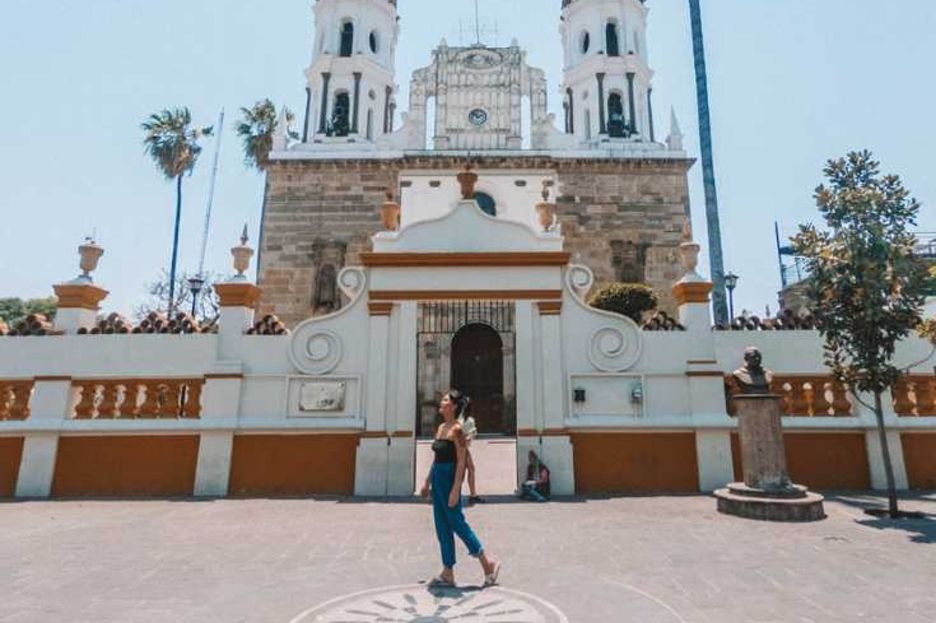
Living in Guadalajara: an expat base in Mexico with great quality of life!: March 31, 2021 by Trisha Velarmino |
|
US Americans and Mexicans have something in common when it comes to migration. People from the US are the largest immigrant population in Mexico, and Mexicans are the largest immigrant population in the US.
US citizens who move to Mexico — the number has more than tripled over the last 20 years and is now over one million — leave home for similar reasons as Mexicans. Economics. A dollar goes farther in Mexico. Climate change. Fires, hurricanes and floods also propel people out of California, Texas and beyond. Violence. Sending a kid to school or shopping at Walmart could get you shot. Culture. Great vibe!
In the US, when talking about US migrants living in Mexico, we call them “expats.” No one condemns them for having moved or questions their motives. But when talking about Mexican migrants, we hear them called “illegals,” “criminals and rapists” and “job stealers." The least derogatory terms are “undocumented” or “migrant,” and even those have become negative stereotypes. How come they too are not “expats”? Is this a matter of class, since US migrants tend to have a higher income? Is being working class a reason to be treated as someone with less value and fewer rights?
Diego Torres was a migrant, and he became an outspoken advocate for migrants in both Mexico and the US — yes, Central Americans and others crossing Mexico’s border too, because he believes that regardless of where people are from or where they now live, whether they are expats or undocumented, it’s all the same — they deserve to be treated with dignity and to live in peace.
He believes that regardless of where people are from or where they now live, whether they are expats or undocumented, it’s all the same — they deserve to be treated with dignity and to live in peace. |
|

|
Migrants: Mexican Wherever We Live |
|
Mexico City native Diego Alfredo Torres Rosete lived in the US as an undocumented immigrant for 20 years. Now back in Mexico City, he’s a Morena activist. He founded the Frente Amplio de Mexicanos en el Exterior (Broad Front of Mexicans Abroad), which defends and serves the needs of all migrants. To join one of the Frente’s 2026 Working Groups, please click: Working Groups. |
|

|
Like many Mexicans, you’ve lived several times in the US. What caused your back-and-forth?
Mexico had a recession in 1999. That was the first time I went to the US; I needed to earn money not just for me, but for my parents and family. After four years, I returned home, but the Mexican economy hadn’t improved, so I crossed back to the US again. Like other migrants, I had the dream that in the US, if you worked hard, you could do whatever you wanted and you could make it. I felt American!
After a 2010 arrest for drunk driving, ICE agents showed up. At that time they were not intimidating; they were friendly and helpful. They told me, “Don’t worry, just sign this document and go back to Mexico and then come back.” They didn’t deport me like they would now. I went to Mexico City on my own and built a thriving tool business. But after criminals held a gun to my head and stole everything, I returned to the US; this time, because of the violence. |
|
|
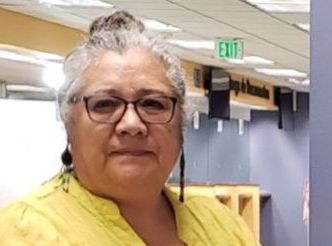
Martha García Alvarado: Mireva Olivera for Impulse Newspaper |
|
In 2015, ICE detained me again. Back again to Mexico! I was fortunate that Marta García Alvarado offered me a job with Morena’s Secretariat for Mexicans Abroad and International Policy, which she led. She herself lives in both Los Angeles and Mexico. |
|
I’m 53. I spent 20 years in the US, most of my adult life; my best friends are still in the US, and I miss them. But today, I can’t even think of returning. The US was always a bully — now it’s a criminal!
Once a Mexican citizen is in the US, what is Mexico’s responsibility to them?
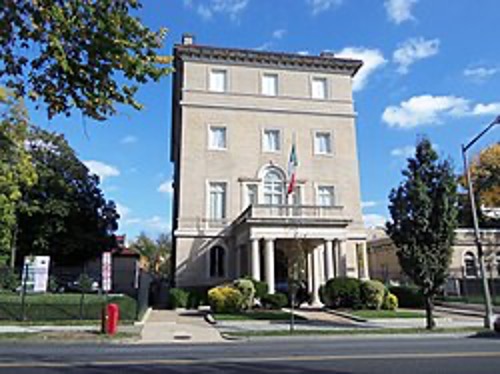
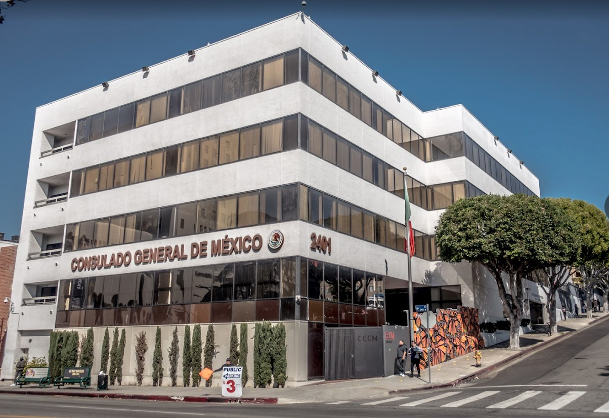
Many migrants confuse embassies with consulates. Embassies only handle country-to-country diplomacy, while consulates serve Mexicans abroad — but only those with legal documents. They supply basic information about your rights, but they don’t help fix your papers or offer legal or financial aid. Some consul staff have been corrupt, treating their jobs like a personal business. They would even sell appointments! |
|
|
The only Mexican Embassy, Washington DC |
|
|
One of many Mexican consulates, this one in LA |
|
Under president Sheinbaum, we see some reforms — making information easier to find and making appointments online. But it’s not enough.
Is the situation of Mexican migrants different from people from other places? |
|
|
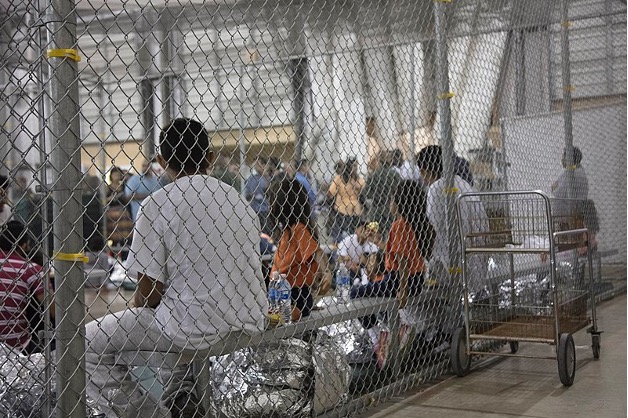
CCA Detention Center, San Diego: The San Diego Immigrant Rights Consortium |
|
During a two-month stay in a San Diego detention center in 2015, I talked with migrants from all over the world. They had fled their countries because of racism, lack of economic opportunity and violence. That’s why Mexicans migrated too — but the difference is that Mexico is a rich country. |
|
We see a plentiful banquet at home, but we’re not allowed to eat it; we have to eat a neighbor’s leftovers!
In 2022, you founded the Frente Amplio de Mexicanos/as y Migrantes. Why?
I believe in Morena’s principles. But I founded the Frente when I saw the Morena party moving in the wrong direction — its only goal had become to win elections, and that’s it.
As a migrant myself, I was upset at the inhumane way we treated migrants in Mexico. The Frente believes that Mexico should be at the forefront of the battle for better treatment of migrants wherever they are, and so we needed to speak up about our own country’s unjust policies.
Please describe the Frente’s 2025 project, which focused on Mexican migrants in North America. |
|
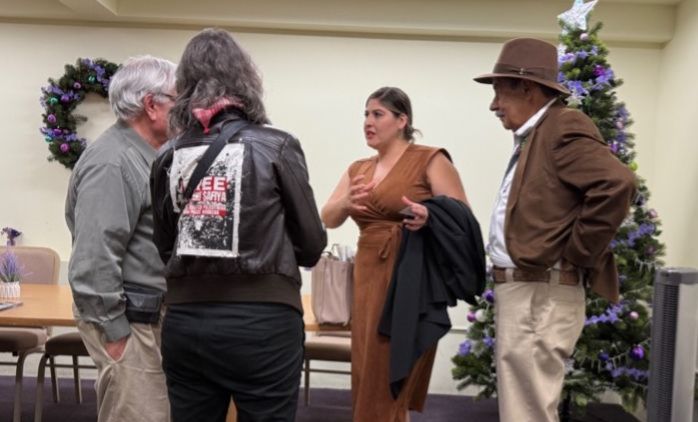
The project grew out of my own experiences. I partnered with Diputada Roselia Suarez, a Mexican congresswoman and migrant living in Chicago. We brought together migrant organizations, individuals and allies to discuss, document and propose solutions to the problems migrants face in the US, Canada and Mexico. |
|
|
Roselia Suarez speaking in San Francisco |
|
There were 14 issue-based working groups on child labor, gender-based violence, temporary workers, the USMCA and more.
For example, in discussing migration, we came up with a proposal to focus on high emigration communities to strengthen those local economies so no one would have to leave. A development fund linking remittances and tax payments from undocumented workers — money earned by the migrants themselves — could be used for local investments and reintegration programs. The Working Group on electoral reform proposed ways to raise the level of participation from citizens living abroad. |
|
|
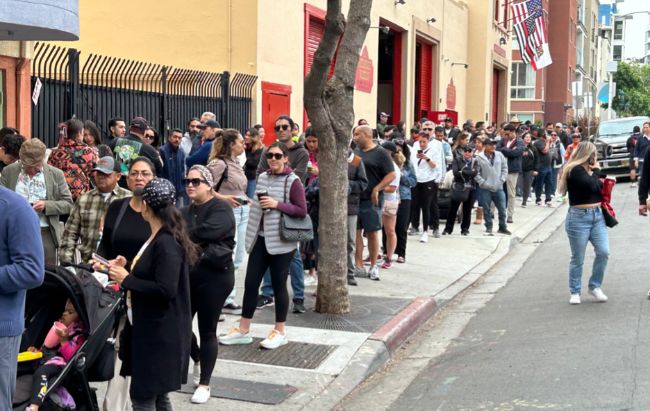
Ridiculously long line of Mexican citizens lining up to vote in the Mexican presidential election in July, 2024 outside the San Diego consulate. Photo: Martin Eder |
|
These included simplifying voter registration rules and providing information not just in Spanish but in indigenous languages — and English! since second- and third-generation Mexicans may not understand Spanish. We also discussed the need for a migrant electoral district, which would add to Congress thirty deputado/a seats and nine senators for Mexicans living abroad.
At the end of 2025, I published a comprehensive report documenting the issues identified and the recommendations of the Working Groups as a resource for everyone concerned about migrants. During the year, I distributed a monthly bulletin, Hablemos de Migración, or Let’s Talk about Migration.
Several Mexican Congress people live abroad. What role can they play?
As a result of an affirmative action policy that was pushed by Marta Garcia in 2019, five Mexicans who live abroad must be chosen to serve as representatives in Congress. Roselia Suarez, who I work with closely, is one of them. They don’t have much formal power, but they can bring a migrant lens to any issue. Take small business development, for example. Many returnees to Mexico face administrative barriers to bringing their businesses to Mexico; for instance, they aren’t allowed to import their commercial equipment. Instead of building Mexico’s economy, they fall back to being underemployed. |
|
No one talks about migrants, but they are Mexicans too, most of them Mexican citizens. Probably half the Mexican population has lived or has family living in the US, and the Mexican government should be serving them. They shouldn’t treat those living abroad as just a source of remittance revenue. |
|
|
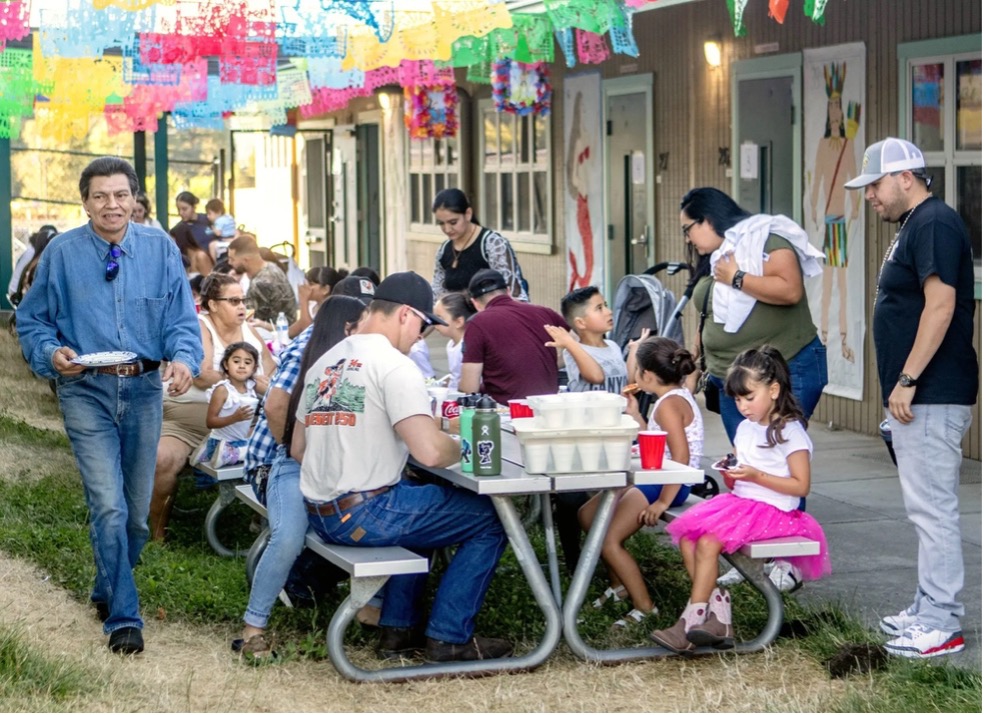
Willits-based Alianza summer youth program: Sergio Perez, Bay City News |
|
What will the Frente’s migrant project do in 2026? |
|
Strengthening Mexico’s own economy is the first step to changing the treatment of migrants in the US and Canada, so I support president Sheinbaum’s Plan Mexico. We have steps we can take — how about a boycott of US imports like Coca-Cola? Mexico has its own unhealthy drinks, ha ha! The US needs Mexican workers — if migration slows down, they’ll have to offer better terms.
In 2026, we will deepen our ties with migrant communities and move our proposals forward. It’s been an uphill struggle getting attention for migrant issues, and when work goes slowly, people quit. But we can’t let the system win. I’ve learned that I have to keep talking even if people aren’t listening and keep advocating for those left out. Often a tiny minority later becomes the majority — isn’t that the lesson of Morena? So, we’ll keep going. |
|
|
|

|
Fight ICE. Build the Union. |
|
The following article by Natascha Elena Uhlmann and Sarah Lazare was originally published in the July 8, 2025, issue of Workday. It has been edited for brevity and clarity.
Union members across the country are battling to keep their members free and safe from Trump’s federal immigration authorities. They’re doing emergency rallies, workplace organizing, door-knocking in the community, looking to their contracts and building coalitions that can respond rapidly to detentions and raids. But the vast majority of workers targeted by ICE have no union. They are day laborers, textile workers, caregivers or others working in the informal economy. “It’s not a surprise to me that a fascist government starts their crackdown by going after labor first, undocumented workers, and going into work sites,” Sheigh Freeberg, secretary-treasurer of UNITE HERE Local 17, told the crowd in St. Paul. Freeberg’s union represents hospitality and food service workers in Minnesota. “They know the real power in this country is labor, and they’re afraid of us.” Some unions are mobilizing to defend non-union workers and their communities. SEIU, for example, is calling for an end to “the brutal ICE raids terrorizing our neighborhoods and tearing families apart.” On June 30, SEIU members and Starbucks baristas gathered from across the country to protest outside of the Central Louisiana ICE Processing Center. “We cannot wait for things to be happening to us to start fighting, because when we wait for that level, then we’re left with no one to fight with,” said Siti Pulcheon, a barista and shift supervisor who attended the demonstration. She said that at a recent Starbucks Workers United Know Your Rights training for all baristas, an important question was asked: ‘How can we protect not just the baristas in our store, but also our customers?” More than 100 Teamsters Local 705 members at Mauser Packaging Solutions in Chicago went on strike in 2025, supported by union members in Los Angeles and Minnesota. “Local 705 is fighting to win similar protections for our immigrant brothers and sisters that live in the very community where Mauser’s Chicago facility is located,” reads the union press statement. ICE doesn’t aim to deport every undocumented worker; Trump knows many industries rely on their labor. The aim is to spread terror and scare workers from pushing back against the boss. The president’s budget bill, signed into law last July, allocates $170 billion towards the immigration crackdown, an amount exceeding the funding for most of the world’s armies. The labor movement can keep its head down, as the Trump administration hopes it will, and watch standards for every worker erode. Or it can fight — and grow stronger in the process.
As we’re seeing in Minnesota, when repression intensifies, more and more unions are choosing to fight. (Ed.) |
|
Don’t miss an issue! Sign up for a free Mexico Solidarity Bulletin subscription.
For a deeper dive into current news and analysis in English, check out our media website and the podcast ¡Soberanía! (Sovereignty) with José Luis Granados Ceja and Kurt Hackbarth. New episodes will now arrive weekly on Wednesdays, not Tuesdays.
NEW! Sign up for weekly delivery here of COMPAÑEROS
Sin Muros from José Luis and Kurt is a weekly Spanish language Mexican TV show on Canal Once that analyzes Mexico-US relations. It's also on YouTube, with English subtitles.
And those of you with mad skills and/or interests we want to hear from you! Get in touch to find ways to plug in to the work. Drop a line to meizhului@gmail.com. |
|

|
Recent news reports and commentaries, from progressive and mainstream media, |
|
Mexico to keep shipping oil to Cuba as humanitarian aid: President Sheinbaum Xinhua."Mexico has maintained relations with Cuba under every government because it is for the Cuban people. When there is an extreme blockade, people experience hardship," she stressed.
México ratifica continuidad de envíos de petróleo a Cuba frente a bloqueo de EE.UU. Telesur. La presidenta mexicana, Claudia Sheinbaum, precisó que la continuidad de los envíos de crudo a Cuba, se fundamenta en acuerdos contractuales y un firme compromiso humanitario.
Jorge Barrera, Carney's Davos speech strikes a chord in Mexico CBC News. Mexican lawmakers reflect on prime minister's words ahead of Canadian trade mission, CUSMA negotiations.
Rolando Cordera Campos, En el nuevo desorden global La Jornada. México necesita encontrar un camino que le permita a su economía crecer y redistribuir.
Brian McVicar, Amway loses $3 billion dispute after Mexico seized its 692-acre organic farm ISDS Platform. The Ejido San Isidro have described the 2022 land seizure as the culmination of a decades-long fight to gain control of property that was promised, but never provided, to their ancestors in 1939.
Carlos A. Pérez Ricart, Bush protegió a las armerías, el negocio creció y México pagó con vidas Sin Embargo. La violencia en México no es solo interna: depende del flujo masivo de armas ilegales desde Estados Unidos.
Jeremy Rose, Mexico – the revolution isn’t being televised Asia Pacific Report. Mexican President Claudia Sheinbaum’s support for resettling Palestinian children orphaned by Israel’s genocide in Gaza barely rates a mention.
Rodrigo Guillot, La falsa GenZ y el fascismo mexicano Tricontinental. El pasado mes de noviembre, México atravesó por protestas por parte de la oposición de derecha, bajo el disfraz de “Generación Z”, pero que promueve tácticas violentas y una agenda de extrema derecha contra el actual gobierno mexicano.
Building bridges of solidarity in response to Trump’s trade war USW. Amid Trump’s trade war on Canada’s manufacturing capacity and its workers, the Steelworkers Humanity Fund organized a tour by partner unions from Mexico and Canadian experts to discuss the tariff impacts on workers and the economy.
Isaac Enríquez Pérez, La «tulumización» y la buena nueva del desarrollo para las comunidades locales Rebelión. Viene a cuento Tulum por representar uno de los ejes gravitacionales de los procesos de acumulación de capital en el sureste mexicano a lo largo de los últimos lustros. Fundamentada su expansión en un turismo de alta gama que combina bellezas naturales, patrimonio arqueológico y una tranquilidad no tan presente en otros pueblos y ciudades de México. Sin embargo, ese dinamismo turístico tiene sus contradicciones y no está exento de impactos negativos sobre las comunidades locales. |
|
|
|

|
The Mexico Solidarity Project brings together activists from various socialist and left organizations and individuals committed to worker and global justice. We see the 2018 election of Andrés Manuel López Obrador as president of Mexico as a watershed moment. AMLO and his progressive Morena party aim to end generations of corruption, impoverishment, and subservience to US interests. Our Project supports not just Morena, but all Mexicans struggling for basic rights, and opposes US efforts to undermine organizing and Mexico’s national sovereignty.
Editorial committee: Meizhu Lui, Bruce Hobson, Agatha Hinman, Victoria Hamlin, Courtney Childs, Pedro Gellert. To give feedback or get involved yourself, please email us! |
|
Subscribe! Get the Mexico Solidarity Bulletin in your email box every week. |
