|

|
The weekly newsletter of the Mexico Solidarity Project |
|
Every issue archived online at mexicosolidarityproject.org/archives/ |
|
May 13, 2026 |
|
|
|
Our Peoples’ Health: House on Fire! |
|
Meizhu Lui, for the editorial team |
|
|
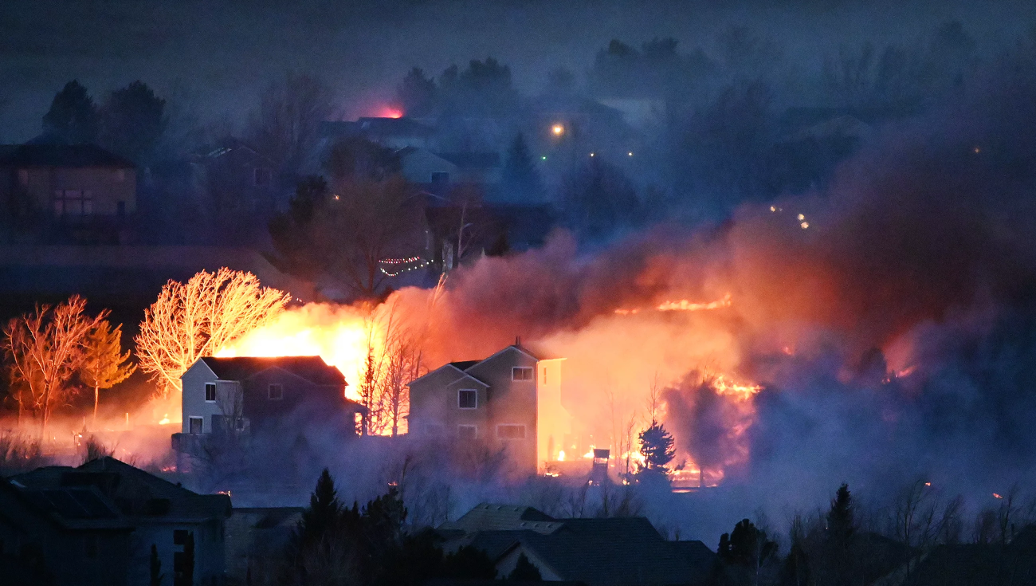
RJ Sangosti/Denver Post/Getty Images |
|
“Germs don’t carry a green card.” That was a saying we had at Health Care for All, a healthcare advocacy organization in Massachusetts. Policymakers may be against spending money caring for people who aren't citizens — but all of us, immigrants and non-immigrants are working together at the job, and at our schools all the children play together--viruses travel without checking anyone's papers. Same goes for low-income people who can’t afford insurance. Yes, healthcare must be for all, or we’re all at risk.
Universal — and public. At one time in the US, if your house was on fire, the firefighters wouldn’t come if you hadn’t bought insurance. But the fire didn’t care and merrily consumed one house and then the next. If you lived next door to the house where the fire started, would you say, “I’m so glad I have insurance,” or would you say, “The firefighters better put out that fire next door before it burns my house down!” People chose the latter and voted for a public system of firefighting.
As Gustavo Leal Fernandez points out in today’s interview, health policy reform in Mexico still prioritizes those already sick or injured, the house on fire. Important — but what can we do to prevent fires? In the US, the best way to predict someone’s health status is to look at their zip code. What can be done? The people in those neighborhoods probably have some good ideas.
If the most marginalized people can call the fire department and instruct them on why more fires are burning in their neighborhood, nations can create systems that protect all of us. |
|

|
Sheinbaum: Universal Health Care to All? |
|
Dr. Gustavo Leal Fernández is a Research Professor at the Universidad Autonoma Metropolitana-Xochilmilco. He has been studying health care, pensions, housing, and social security in Mexico and globally since 1978. Most recently, he has analyzed living conditions and health policy under President Lopez Obrador’s 4th Transformation. Dr. Carole Browner is a Research Professor at UCLA currently engaged in collaborative work on Mexican health and pension policy reform. Dr. Héctor Javier Sánchez Pérez is a Senior Researcher in the Department of Health at El Colegio de la Frontera Sur. |
|

|
Universal health care is one of the most ambitious promises in Mexican politics today. What healthcare system did Claudia Sheinbaum inherit?
For decades, Mexico’s public health system has been far from universal. The Mexican Social Security Institute, or IMSS, covered formal-sector workers and the Social Security Institute and Services for State Employees, or ISSTE, provided care for government employees. But the huge informal economy, rural areas and many Indigenous communities were left out. |
|
|
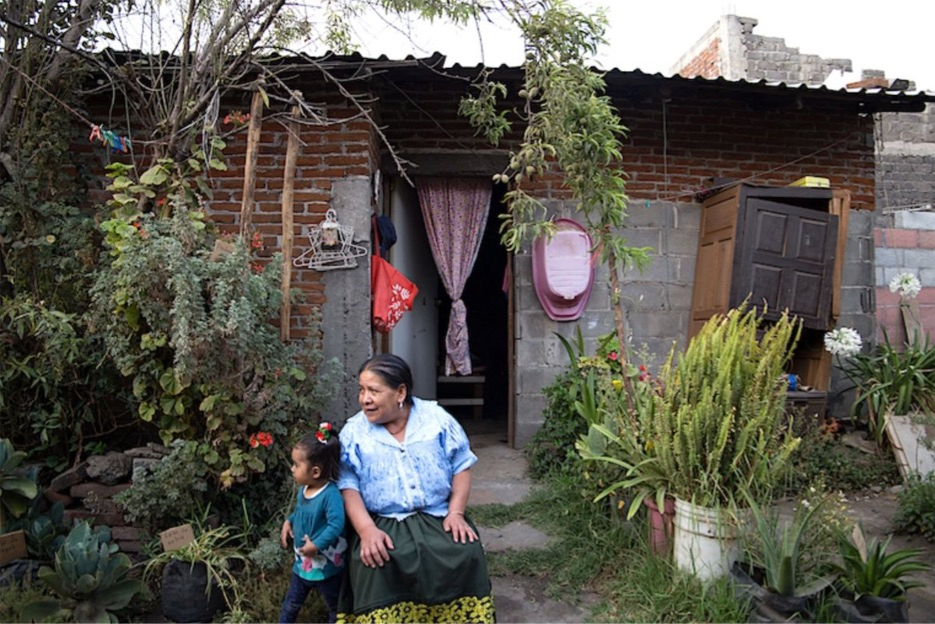
"Naná” Gracia is an Indigenous P’urhépecha woman seen here in her ekuarho agroforestry plot with granddaughter Alma. Photo: Monica Pellicci, Civil Eats, 2022 |
|
Years of neoliberal policies and budget cuts made things worse, pushing more people into private and often expensive healthcare, meaning that large segments of the population had little or no care at all.
President Claudia Sheinbaum, elected in 2024, has promised to deliver health care to all Mexicans by the end of her administration in 2030. Is this achievable?
It will be challenging. Her predecessor, President López Obrador, or AMLO, tried to include those without coverage in a new IMSS-Bienestar program, but results were mixed. |
|
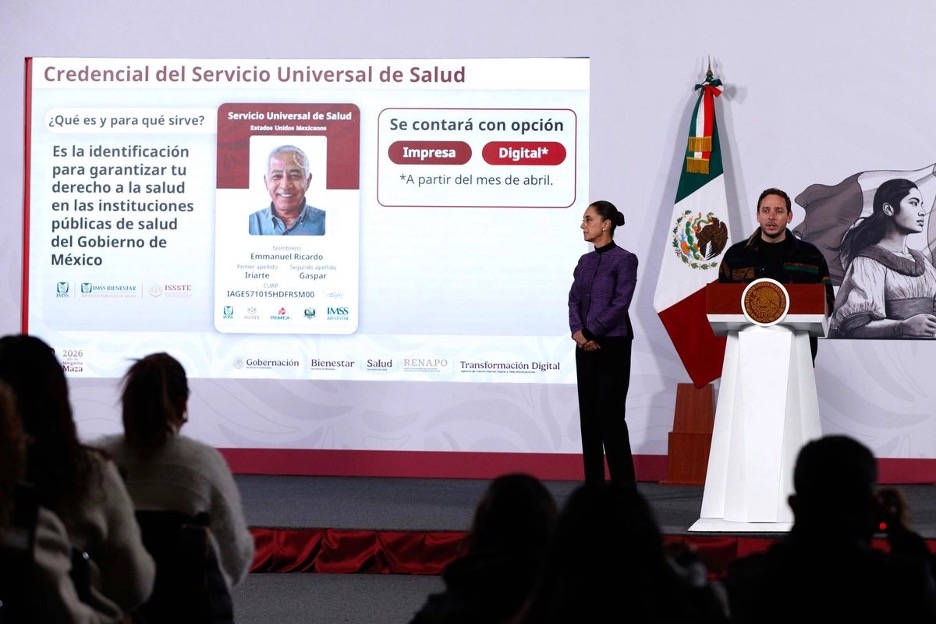
Recently, on April 7, 2026, Sheinbaum announced the Servicio Universal de Salud. Rather than creating a new system, this plan integrates the existing IMSS, ISSSTE and IMSS-Bienestar programs so Mexicans can get treated at any public facility, regardless of which system they belong to. |
|
|
Sheinbaum rolls out the new national universal health care plan (Servicio Universal de Salud) |
|
The rollout starts small: older adults, those 85 and over, will get health credentials first in 2026. In 2027, cross-institutional care for emergencies, heart attacks, strokes, high-risk pregnancies and certain cancers is planned to begin, with full integration targeted for 2030.
It sounds promising, but the road will be steep. Mexico spends just 5.9% of its Gross Domestic Product, or GDP, on health — well below the international Organisation for Economic Co-operation and Development, or OECD, average of 9.3%. In US dollars, per-person spending is only about $1,588 compared to the nearly $6,000 average across OECD countries.
There’s only 1 hospital bed per 1,000 people, versus 4.2 in the OECD; life expectancy is 75.5 years — about 5.6 years below the average; and rates of preventable and treatable deaths remain high.
Out-of-pocket costs consume 38–41% of total health spending, which hits families hard.
To alleviate the pressure on facility-based treatment, wouldn’t health promotion and disease prevention programs help? |
|
Sheinbaum is offering the Plan República Sana, the Healthy Republic Plan, which emphasizes prevention, shorter waiting times, improved infrastructure and more dependable medical supplies and digital records. |
|
|
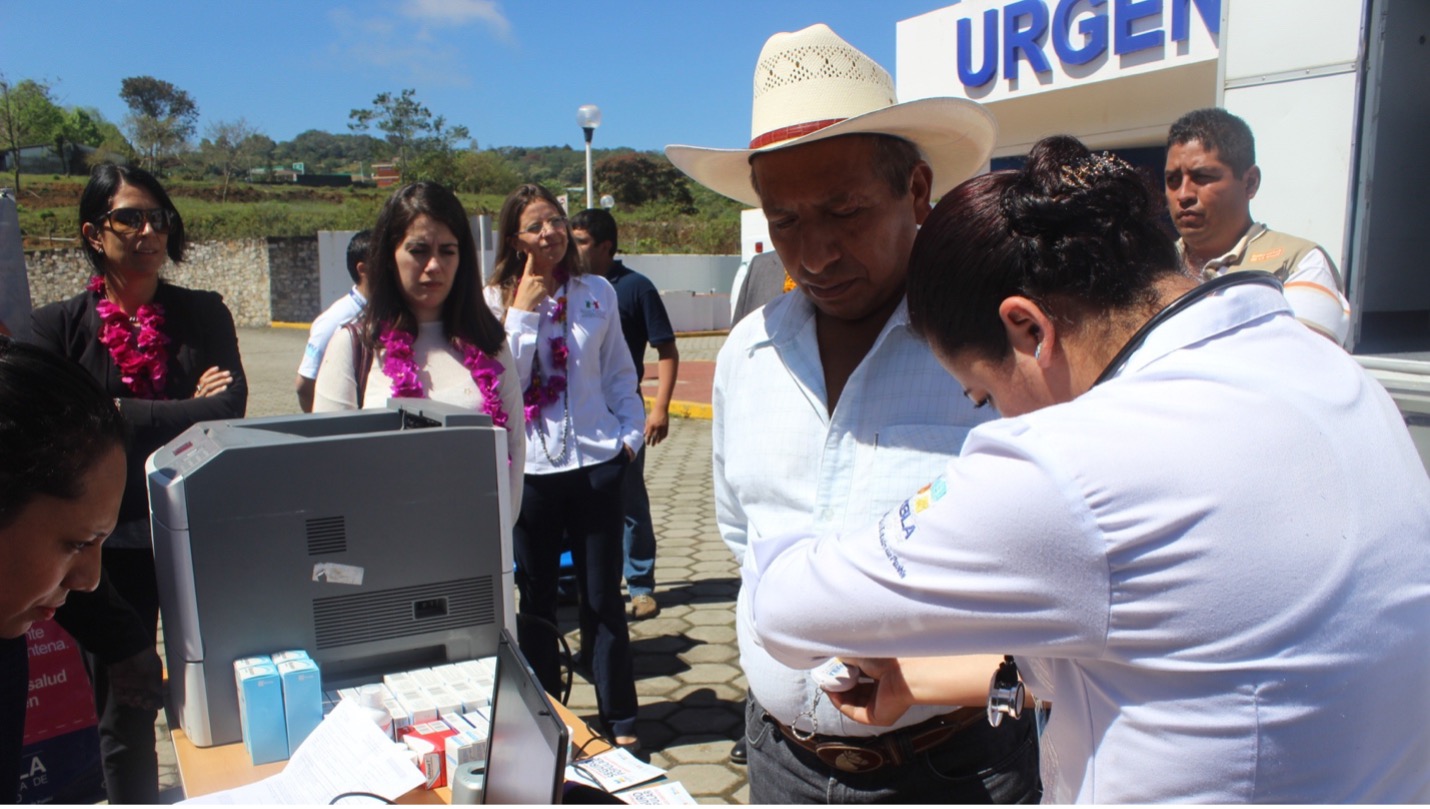
Health personnel demonstrate a “Consulta Segura” – a preventive health checkup: Photo courtesy World Bank Group |
|
One innovation intended to incorporate community participation “from below” is the La Clínica es Nuestra, The Clinic is Ours initiative, which sends money directly to communities for infrastructure improvements for each community clinic’s particular needs.
While a step in the right direction, requiring each program be run by a “Health Committee for Well-being” — made up of five members elected by the beneficiaries themselves — doesn’t necessarily translate into a genuine community voice or a truly community-driven approach. And it hasn’t impressed the public, since most are more concerned about practical, day-to-day issues like shorter wait times to see a doctor and ensuring enough staff and medicines are consistently available and on hand.
Sheinbaum's reforms seem to be driven by a political agenda and will consume considerable resources that could instead be devoted to disease prevention — not just treatment — and community engagement. |
|
|
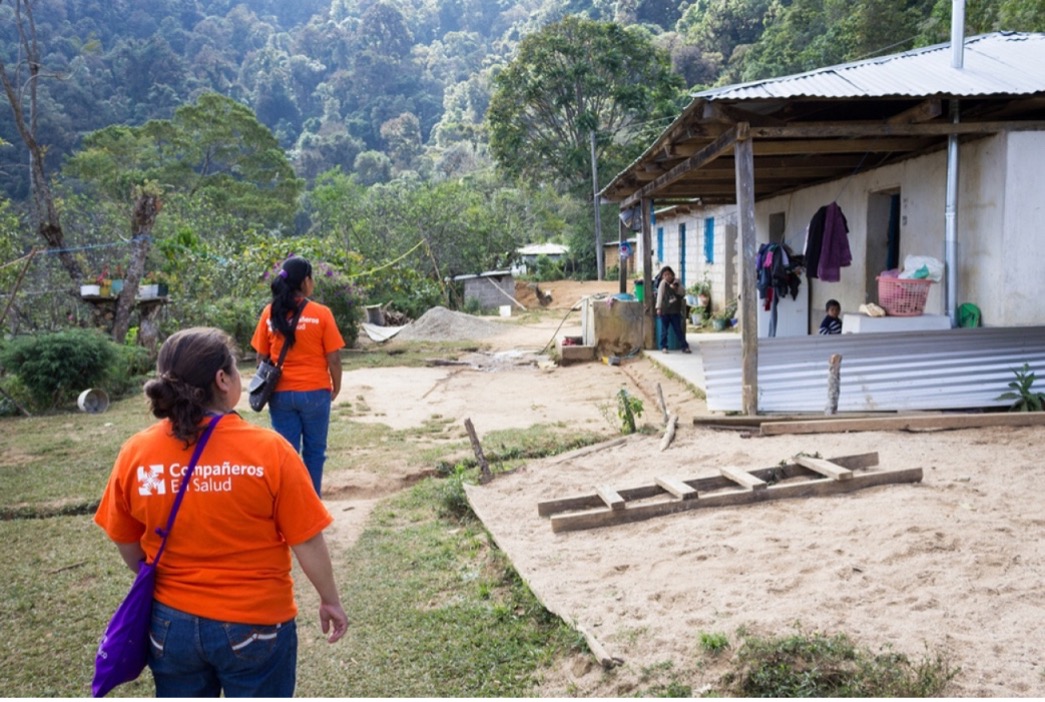
Community health workers Yadira Roblero and Magdalena Gutiérrez make a home visit to a family in Laguna del Cofre, 2019: Aaron Levenson/Partners In Health |
|
For example, another new Sheinbaum initiative is the Casa por Casa, or Home to Home, program that provides home-based care to the disabled and the elderly. Tracking down sick people in their homes is a clinical approach that may be important for patient care — but does not address disease prevention. |
|
The new programs are well intentioned, but many see them as incremental, not transformative. In other words, they don’t address the structural changes that are necessary to change the population's overall health profile.
What are the hurdles to achieving these ambitious goals?
Lack of major public investment! A national health system cannot be created with chronic underfunding. |
|
|
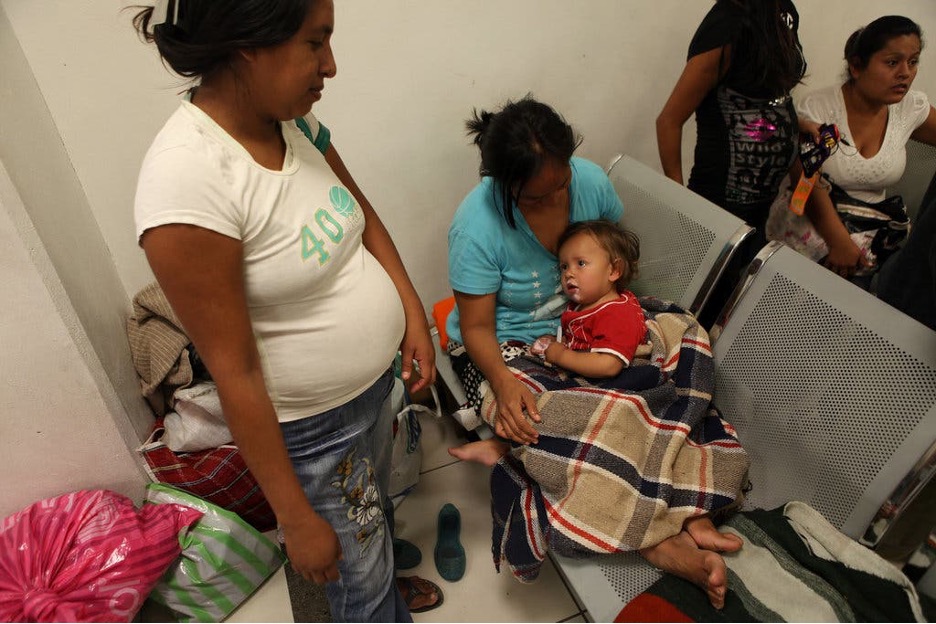
Quality varies, and people in poor Guerrero may seek care in nearby Yautepec or Cuernavaca, where Lucila Rivera Díaz, right, waited with her son, 2011: Adriana Zehbrauskas for The New York Times |
|
It won’t be easy to merge the three main public health systems nationwide — they are very different in funding sources, organizational structure and even legal framework. While digitizing records sounds good, this could widen current inequalities in rural areas without reliable electricity or internet. Medical training still favors specialists over community and family doctors. |
|
Public trust may be difficult to build without more community involvement in health planning, not just on infrastructure needs like maintaining buildings. In general, the new plan tends to prioritize expansion of hospital infrastructure while continuing to neglect primary health care — a core problem of the past system. People would prefer not to get sick, not to need hospital care at all.
So, how do you rate Sheinbaum’s new health plans?
Besides funding, our approach requires two major changes. Prevention must become a real priority, addressing the root causes of poor health. Genuine collaboration with those doing the work and receiving the services will ensure better provision of care; frontline workers and community members are experts who must be brought into decision-making, instead of relying on top-down decrees. |
|
To achieve community consultation requires more transparency and decentralization to states and municipalities, allowing policies and regulations established at the federal level to be adapted to local needs. What people need and want in Mexico City is not the same as indigenous people in rural Chiapas do. |
|
|
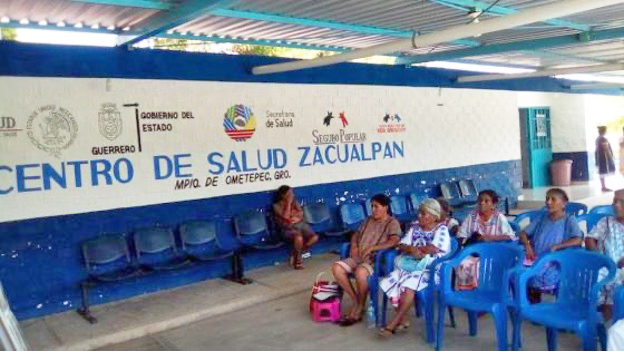
A clinic demonstrates the value of free health insurance, 2026: Renata Narita/Leonardo for CEPU Santiago/Wikimedia |
|
|
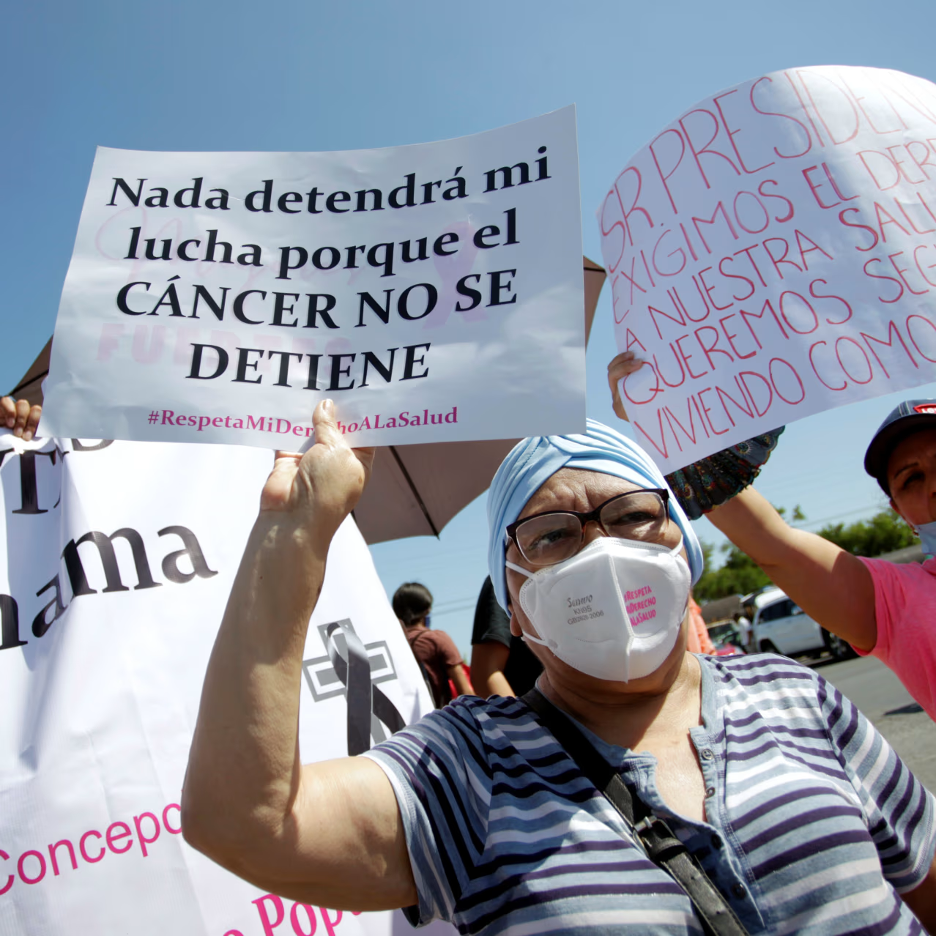
People unable to find medications for their cancer treatment protest in 2020. ‘Nothing will stop my fight, because cancer won't stop.’ Daniel Becerill/Reuters |
|
More than most recent governments, Sheinbaum links health closely to broader social goals; the April 2026 decree is a meaningful step toward ending fragmentation. But turning it into true universal care by 2030 demands far more than managerial tweaks — it requires bold increases in resources, significant structural changes that involve both frontline staff and the population itself, and real accountability. Nearly two years into President Sheinbaum’s term, the gap between announcement and real implementation is still wide. |
|
The political will appears stronger now, but the road ahead is long and difficult. In the end, true universal access to quality health care isnât measured by the number of new ID cards or decrees, but by a healthier people, lower family medical debt and renewed confidence in the public system. |
|
WE WILL BE MOVING!
As of the May 27 issue the Mexico Solidarity Bulletin will move to a new home on Substack.
Our readership has grown, and we want to provide a better reading experience for our subscribers. As part of the Substack community, you can also access our articles and the Bulletin on your Substack app.
What do you need to do? Nothingâyour subscription will be automatically carried over. |
|
|
|
|
NEW! Sign up here for weekly delivery of COMPAÃEROS! |
|
Compañeros is the weekly newsletter of Mexico Solidarity Media, delivering all of our news stories, analyses, interviews and episodes of the podcasts Soberanía and El Taller, the Mexico Solidarity Bulletin, translations from Mexican media, photos and more! |
|

|
Diego Rivera Murals Inspire DIA Workers |
|

|
The following article by Lee DeVito was published in the November 6, 2025, issue of the Detroit Metro Times. It has been edited for length.
Update: On February 27, 2026, the Detroit Institute of Arts Workers United won voluntary recognition of their union, becoming a unit of AFSCME Michigan 925.
Mexican artist Diego Rivera’s Detroit Industry Murals stand tall and proud inside the Detroit Institute of Arts (DIA), a monument to the power of workers and a city long associated with organized labor.
Those murals, in part, have inspired DIA workers to move to form a union. The DIA Workers United effort was announced by the Michigan chapter of the American Federation of State, County, and Municipal Employees (AFSCME), which is asking for voluntary recognition from the museum.
“It’s been something that workers at the museum have been discussing, honestly, since I’ve been there,” says Tyler Taylor, who started at the DIA as an intern in 2008. “It’s a difficult topic to avoid given that the DIA is home to Diego Rivera’s Detroit Industry Murals…. I don’t know of a greater celebration of labor power and collaboration that has entered the canon. You can’t help but be influenced by that work, how Rivera depicted the dignity of labor.”
“For me, it just strikes me as truly a natural evolution for the DIA, referring to not just Rivera’s work at the heart of the collection but really the legacy of labor in this city and how, through collective bargaining, the auto workers built maybe the strongest working class this country has known,” Taylor says. |
|
Sign up for a free Mexico Solidarity Bulletin subscription!
And check out:
*MEXICO SOLIDARITY MEDIA: Our website for current news and analysis in English *COMPAÑEROS: NEW! Sign up here for Mexico Solidarity Media’s weekly newsletter *¡SOBERANÍA! (Sovereignty): For entertaining exposés of events in Mexico in English, catch our podcast with José Luis Granados Ceja and Kurt Hackbarth. *Sin Muros with English subtitles: José Luis and Kurt host a weekly TV show on Canal Once that analyzes Mexico-US relations with English subtitles.
Drop a line to meizhului@gmail.com |
|

|
Recent news reports and commentaries, from progressive and mainstream media, |
|
Paloma Duran, Orla Mining Acts on USMCA Labor Ruling at Camino Rojo Mexico Business News. The ruling marked one of the most detailed findings issued under the USMCA's labor enforcement mechanism since the agreement took effect in 2020.
Zósimo Camacho, Avanza el guion de Trump para una intervención en México Diario Red. La designación de los cárteles del narcotráfico como terroristas, el “Corolario Trump” a la Doctrina Monroe, las acciones en Venezuela y las acusaciones contra políticos en funciones marcan un patrón de intervención militar estadunidense que ahora apunta hacia México.
Gloria Muñoz, Families from Cuba and Central America Begin Search for Their Missing Children in Mexico Resumen. In coordination with Mexican authorities, the mothers and grandmothers of the missing men and women will spend the coming days traveling the roads to find clues, traces, and information that might help locate them.
Fabrizio Lorusso, Decálogo sugestivo de la narcoguerra gringa POPLAB. La injerencia de Estados Unidos en el Sur global y americano es directamente proporcional al aumento del consumo y de las muertes en el propio país, así como al crecimiento del negocio legal e ilegal ligado de una u otra manera a la narcoguerra.
Ximena Gonzalez, What Drives a Country to Use Workers as An Export? The Tyee. Immigration has become a billion-dollar business because countries like the Philippines, Mexico, India and China act like an employment agency, where workers have to pay a fee to leave and work abroad, while migrants already abroad send money back home.
Beatriz Guillén, Estados Unidos ordena investigar a los 53 consulados de México en su país El País. La cadena señala que el secretario de Estado, Marco Rubio, incluso está considerando el cierre de algunas oficinas diplomáticas.
Aleks Phillips, Mexican parents criticise ending school year a month early for World Cup BBC News. After [unions,] parents' and employers' associations objected, Mexican President Claudia Sheinbaum appeared to soften the announcement, describing it as a "proposal".
Sare Frabes, Plan México acelera inversiones mientras la Corte fija requisito para defensa colectiva indígena Avispa Media. Dicho decreto establece que la Autorización Inmediata deberá emitirse en un plazo de 30 días hábiles y, una vez otorgada, los proyectos podrán iniciar de manera inmediata.
Oscar Lopez, Mexico nightclub’s $300 cover charge for US citizens captures popular mood The Guardian. Owner of Japan nightclub says ‘This is a response to a year of insults directed at us – as a country – by the United States’
SAT devuelve 270 mil millones a empresas; aún no concreta saldo a favor de 3 millones de personas La Jornada de Oriente. El Código Fiscal de la Federación establece que el tiempo de devolución no debe superar los 40 días hábiles; así que para los contribuyentes que presentaron su declaración hacia el cierre del mes y no han recibido el saldo a favor deberían estarlo percibiendo máximo en junio. |
|
|
|

|
The Mexico Solidarity Project brings together activists from various socialist and left organizations and individuals committed to worker and global justice. We see the 2018 election of Andrés Manuel López Obrador as president of Mexico as a watershed moment. AMLO and his progressive Morena party aim to end generations of corruption, impoverishment, and subservience to US interests. Our Project supports not just Morena, but all Mexicans struggling for basic rights, and opposes US efforts to undermine organizing and Mexicoâs national sovereignty.  Editorial committee: Meizhu Lui, Bruce Hobson, Agatha Hinman, Victoria Hamlin, Courtney Childs, Pedro Gellert.  To give feedback or get involved yourself, please email us! |
|
Subscribe! Get the Mexico Solidarity Bulletin in your email box every week. |
