|

|
The weekly newsletter of the Mexico Solidarity Project |
|
Every issue archived online at mexicosolidarityproject.org/archives/ |
|
December 10, 2025 |
|
|
|
Sexual Trespasses — Invisible in Plain Sight |
|
Meizhu Lui, for the editorial team |
|
|

|

|
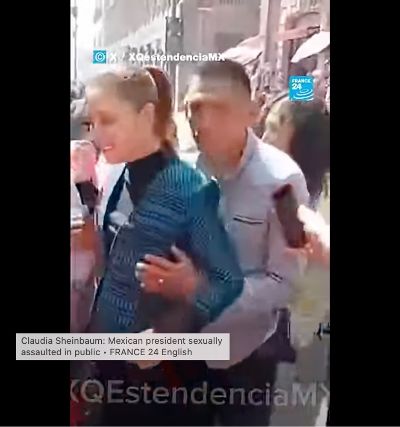
Prexident Claudia Sheinbaum being groped on the streets of Mexico City. France 24, 11/5/25 |
|
My first time was right after high school. No, not THAT first time! I mean the first time I was groped.
I was in an elevator with an elderly elevator operator who was about half my size. When the doors closed, he grabbed me — as Misogynist-in-Chief Trump would say — “by the pussy.” I was too stunned to stop him. I didn’t report it.
As Fabiola Ramirez tells us, strangers transgressing women’s bodies in public places happens “everything everywhere all at once.” That movie title says it all. A guy behind me on a crowded escalator. Next to me on a bus where riders are packed like sardines. Two of us alone in the office. We women say nothing because it’s useless. Others avert their eyes: “I see nothing going on here!"
Mexico was shocked/not shocked when their president, Claudia Sheinbaum, was groped in the middle of a street, in the middle of the day, in the middle of a crowd, in the middle of cellphone cameras. No matter our position or social status, to many men, any woman is an object they are free to touch.
Feminists in Mexico and the US have been demanding for decades that the government take sexual harassment seriously. What will it require for women to simply walk to the store or ride a bus to work without the fear that their bodily autonomy will be breached at any moment? Hmm, what if women began grabbing random men by the balls in public? Would that get attention?
And we haven’t even gotten to domestic violence or femicide.
Women’s equality isn’t something to be kept waiting on the back burner. To achieve Mexico’s 4th transformation, or any social transformation, requires action. No one can be free until women are free. |
|

|
Because Women’s Bodies Belong to Women |
|
Fabiola Paulina Ramírez Ortiz brings an intersectional feminist perspective to her work as a human rights defender, union organizer, grassroots educator, policy designer and advocate. She has spearheaded equality and non-discrimination campaigns in community, workplace and government settings. She's worked with the Mexico City Council to Prevent and Eliminate Discrimination, the National Human Rights Commission, and the National Electoral Institute. She also has provided direct support for victims of violence, and founded Mariposas Mirabal, a space for listening and shared learning for women in precarious employment. |
|

|
What do you think of Claudia's reaction after a stranger groped her in public?
Even though Claudia is Mexico’s first woman president, a stranger publicly and inappropriately touched her in the middle of a crowd in broad daylight. I found it outrageous and revictimizing when I heard some people deny what happened -- despite videos and numerous witnesses -- saying it was just a show, that Claudia planned it. As proof that it was staged, they noted that after it happened, she kept smiling! She took several days to file a complaint, and some said that showed her weakness, that we're not ready for a female president.
In fact, she had a completely normal reaction to assault. Women often don’t speak up until after they’ve had time to consider the consequences for themselves, the aggressor and their own families. |
|
|
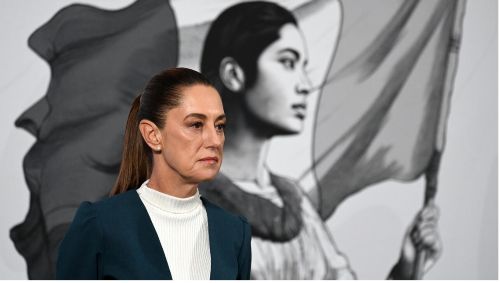
President Sheinbaum has unveiled proposals to boost reporting and prosecution of sexual abuse after herself being groped in the street © Yuri CORTEZ / AFP/File |
|
An assault victim owes no one “ideal” behavior. It’s a fundamental principle to never pressure women who experience violence to file a report. For Claudia, filing an official complaint was necessary and right; as president, she didn’t want to perpetuate the normalizing of these behaviors. |
|
The world expects women leaders to do everything perfectly — but not men. In 1848, when President Santa Anna lost the war against the United States and relinquished half of Mexico's territory, no one said, “Enough is enough! No more male presidents!”
Have you ever been groped in public yourself?
Absolutely, I can assure you that we've all experienced it. The first time I saw it was while walking home from middle school, and a boy riding a bike touched my friend's butt. Harassment mostly happened to me on public transportation. One time, I was on my way to high school on a packed bus. I felt something but wasn't sure if I was being touched. A young woman was watching and called me over as if she knew me and pulled me away from him. So, I learned from a young age both that men feel free to invade our bodies and that women together can protect each other.
It's important to distinguish between sexual violence occurring in private versus public spaces. In private spaces, the perpetrator is usually someone the victim knows, but in public spaces, he’s generally a stranger. According to a National Security survey, during the first nine months of 2025, 1,194 reports of sexual harassment were filed in Mexico City, an increase compared to the previous year. According to a parliamentary report, of those incidents, 64.8% occurred in public streets or parks and 17.8% on public transportation.
But these are only the official reports! |
|
Most women don't report incidents, some due to lack of awareness, others out of fear, but always because it's unlikely any action will betaken. Unfortunately, sexual harassment, including verbal abuse and groping, has become normalized. |
|
|
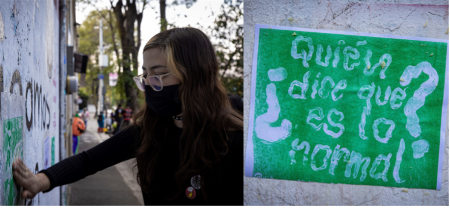
Mexican "artivists" raise awareness of sexual violence: Photo: © UN Spotlight Initiative/ Celsa Calderoni |
|
Sexual violence against women, including street harassment, isn’t based on sexual desire. It’s based on control — the exercise of power over women and feminized bodies. As is often said, “If there is someone more oppressed than the worker, it’s the worker's wife.”
What are some demands that feminists have made to the Mexican government for the protection of women?
First and foremost, we demand that the government take attacks against women and girls seriously. Crimes committed against women simply because they are women or non-binary must be investigated diligently, and the perpetrators must be prosecuted. No more impunity.
We demand investigations with a gender perspective by public servants sensitive to the special circumstances women face in gender-based violence. Investigators should be trained to address crimes against women, with the professionalization of workers in this sector.
Current investigative methods re-victimize women because they often start with the premise that "she asked for it," with questions like "What were you wearing?" Investigators must understand that daring to report abuse is difficult — even after filing a report, the victim may return to an abuser. This does not invalidate the report! |
|
|
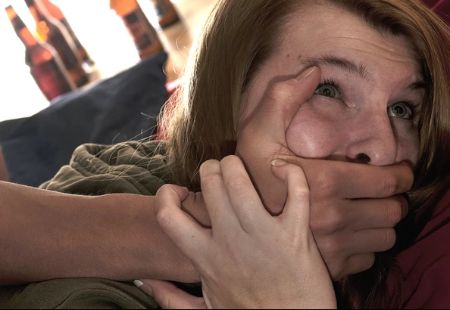
Sexual assault victims are often afraid to speak out: storymd Journal |
|
Instead, they must ask: Why did she return? What other options did she have? Was she offered a safe space? Was there economic and psychological violence that prevented the victim from leaving?
Care should be comprehensive with multidisciplinary teams that include mental health professionals, legal counsel and financial support. |
|
For example, women of Andalusia, Spain, passed a law requiring employers to hold women’s jobs while they are in women’s shelters following incidents of abuse. Here in Mexico, a feminist group, Pan y Rosas (Bread and Roses), is demanding that the government implement a similar law nationwide.
I’ve always maintained that human rights are not mere declarations of goodwill — they demand concrete actions, and actions require funding. We demand that the government impose no budget cuts for women's centers, shelters, or investigations of crimes against women.
Have measures been implemented to improve women's safety?
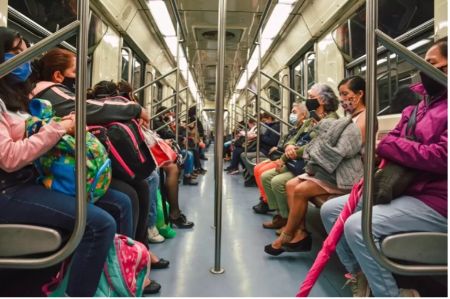
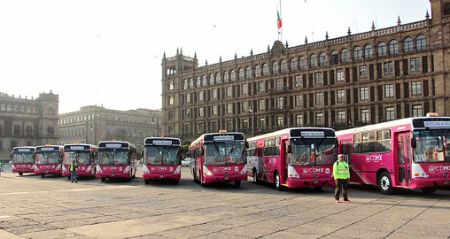
Initiatives to combat violence against women range from very useful to mere charades. For as long as I can remember, Mexico City has had women-only subway cars — and similar “pink seats” on other transit — to reduce sexual harassment on public transportation. And personally, I feel much safer traveling in these spaces. |
|
|
|
|
|
Women only buses known as ‘Atenea buses’ in Mexico City. Photo: UN Women/Juan Luis Cedeñoy |
|
These affirmative measures should be temporary though, and disappear after the inequality has been addressed. But they’ve been in place so many years, it suggests they aren’t seriously reducing sexual harassment on public transportation.
The Alert of Gender Violence Against Women, or AVGMs, are triggered when femicides and disappearances of women exceed “normal” rates and an area is designated as high-risk. Currently, 24 AVGMs are active in 22 of the 32 Mexican states; however, monitoring them is complex, and authorities don’t always report true emergencies. The program only highlights their inaction!
In Iztapalapa, Clara Brugada, as mayor, implemented "Walk Safely," a program that included installing streetlights, visible road signs, improvements to parks and creating murals about women's safety. These definitely improved the neighborhoods’ appearance and increased a sense of security, but these are measures the government should already have been taking simply to improve neighborhoods. These weren’t specifically for the safety of women.
Would men lose if women achieved equality? |
|
The gender binary and sexual violence don’t only repress and oppress women but also LGBTQ+ people and men who don't conform to masculine stereotypes. If they express tenderness or show tears, heterosexual men are often ridiculed — or worse — usually by other men. |
|
|
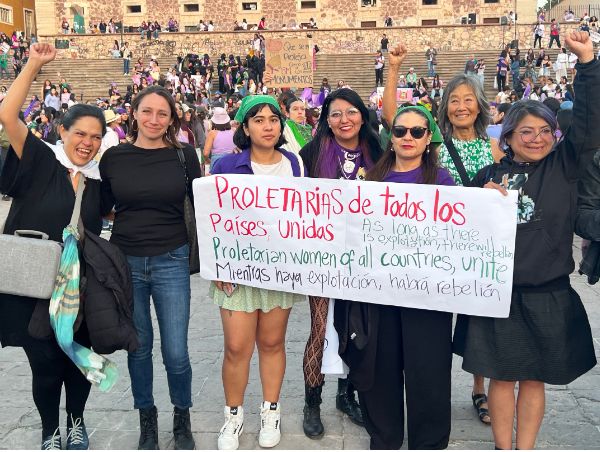
Women's Day in Guanajuato, 2024: Photo courtesy of Bruce Hobson |
|
We feminists imagine a world where all people, regardless of gender identity, can live a life more fully than we do currently. |
|
|
|

|
Rini Templeton: To Be of Use |
|
|
Activist Vicky Hamlin, a retired tradeswoman, shop steward, and painter, shines the light — in her art and in this column — on the lives of working people and the world they live in. |
|

|
"I make images . . . People's art--perhaps I do aspire to that because people's art would be art that comes from the people and returns to them. Art that is nourished by the traditions, the daily life, the struggles of the people, and returns to become theirs." Rini Templeton.
Rini Templeton was born in Buffalo, New York. She lived and worked in Mexico from 1974 until her death in 1986. She donated her art freely in solidarity with struggles in Cuba, Mexico, Nicaragua and the US.
Separate imges here are taken from the online archives, RiniArt. Book pages reproduced from El Arte de/The Art of Rini Templeton, the Real Comet Press, Centro de Documentación Gráfica Rini Templeton, Mexico, CDMX |
|
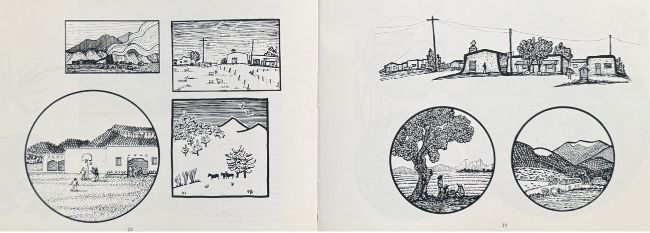
|
Rini's landscapes |
|
Rini Templeton moved around. A lot. She moved wherever she was needed, where peoples’ movements could use her talent, dedication and hard work.
Many Americans move to Mexico for what Mexico can do for them, but Templeton moved there because she was a giver, a lover of Mexico and its people, its landscapes and its history of struggle. Below are only a few of the struggles she engaged in, during the 1970s. When she arrived in Mexico right after the 1968 Mexican Student Movement, she started a series of drawings supporting struggles for union democracy and against the charro or corrupt government unions. She worked with the strike of the National Autonomous University of Mexico Workers Union (STUNAM) and with the National Health Care Worker’s Union, Section 84 (SNATSA). |
|
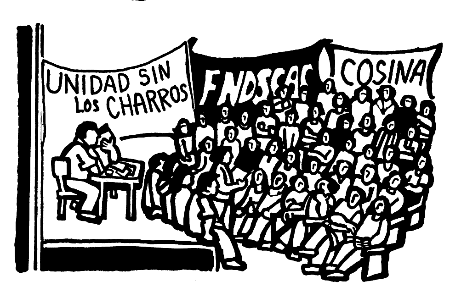
|
Established in 1982, COSINA the National Coordinator of Unions, brought together over 50 labor organizations to fight austerity, for the right to strike and union democracy, and against repression. |
|
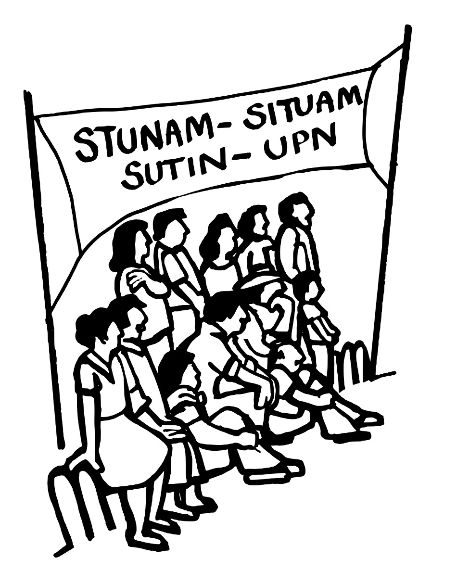
|
In 1977 university workers (STUNAM, Sindicato de Trabajadores de la Universidad Nacional Autonoma de Mexico) went on strike |
|
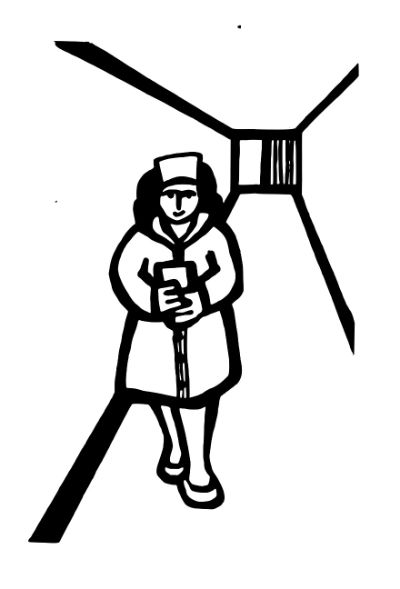
|
In 1970 workers at Mexico City Children's Hospital started a struggle that triumphed the next year with a democratically led union. |
|
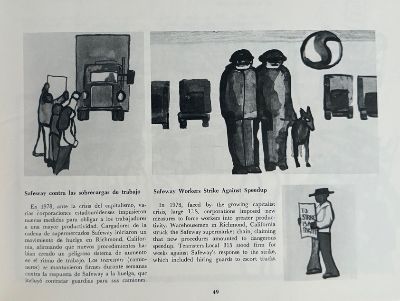
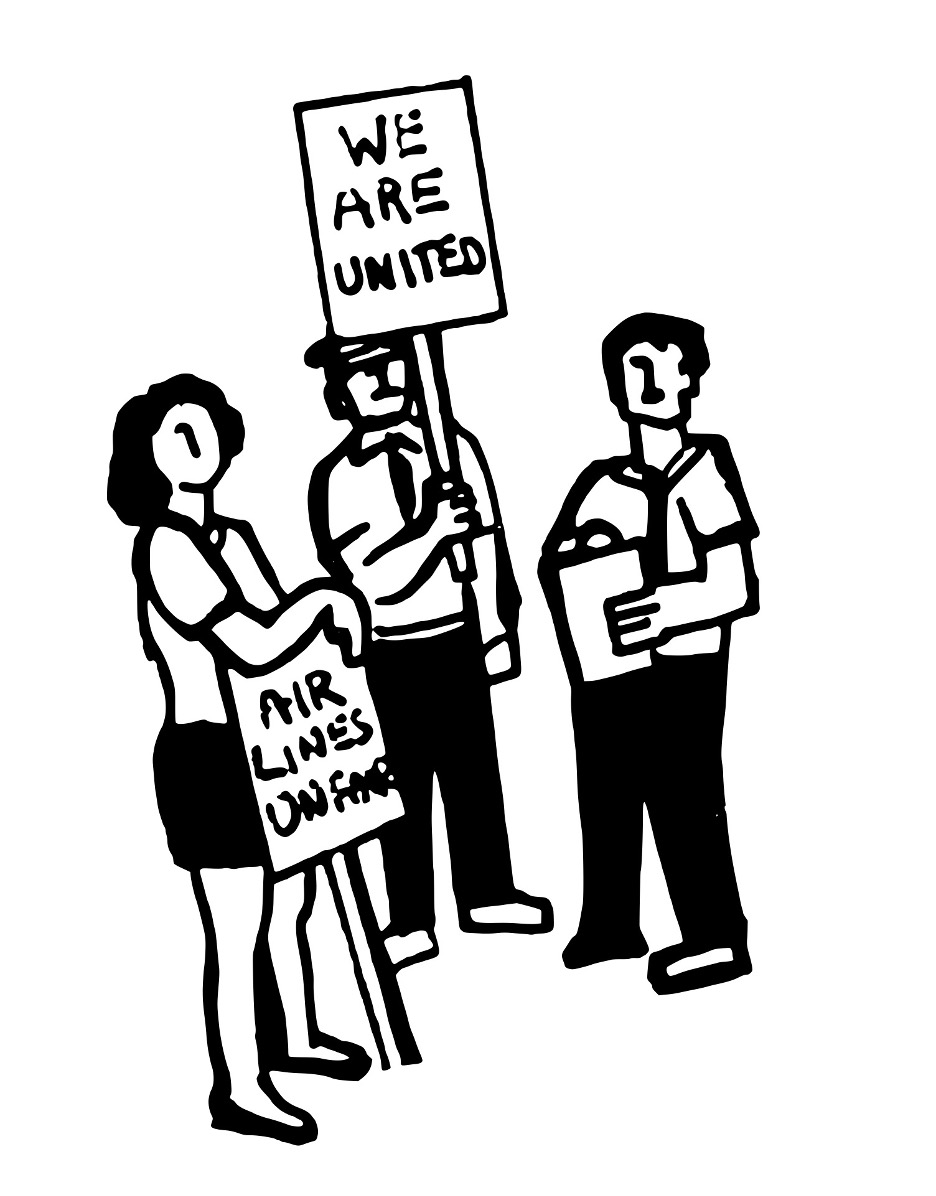
She then did graphics and support work for the US Teamsters Union #315 in Richmond, Ca, which was on strike against speed-ups at Safeway, for the United Airlines pilots strike, and against “Right to Work” laws in New Mexico. |
|
|
Temasters at Sateway strike agianst speed-ups |
|
|
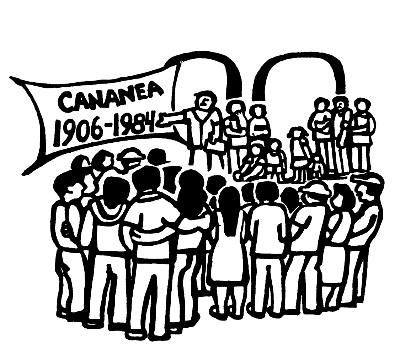
in 1906, the miners at Cananea struck for the same wage as Americans working there. In 1983, the miners' struck again. They won a 50% raise and other concessions. |
|
|
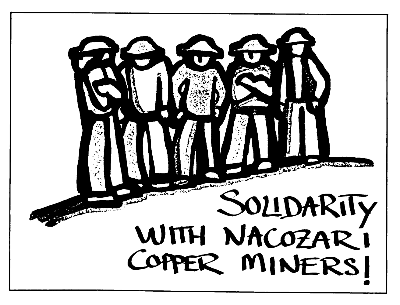
In 1978, 5,700 Mexican copper miners in Nacozari went on strike twice for union recognition. |
|
In 1978, Mexican miners went on strike for recognition as Section 277 of the Mexican Miners and Metallurgical Workers Union. Templeton wrote a pamphlet to build support between the Nacozari Mine workers and the American Chicano movement. She also worked with the National Coordinator of Educational Workers, the independent teacher’s union, against austerity policies and in the press department of STUNAM. |
|
|
United Airlines pilots carried out several massive strikes in the early 1980s |
|
|
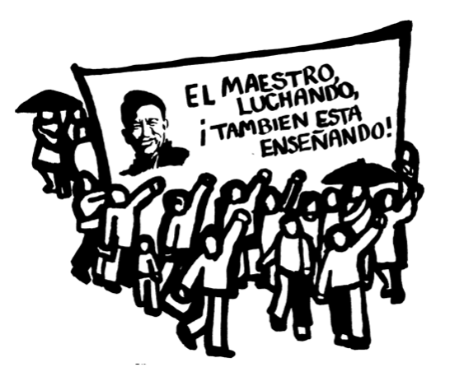
in the early 1980s more than 100,000 teachers mobilized against undemocratic unions controlled by the state, repression and bad working conditions. The banner says "The teacher in struggle/is also teaching". |
|
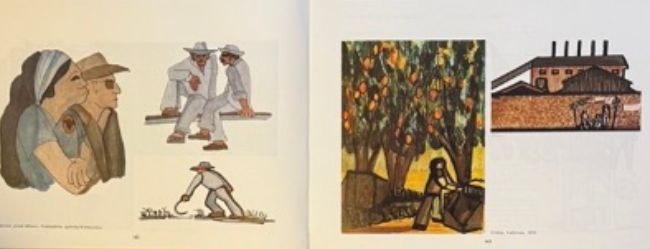
Templeton worked in accessible media that was fast and usually needed no words to convey the message. Her images are strong and clear and “readable,” so always positive and adoptable. They continue to be used widely. |
|
|
Rini's watercolor work |
|
Templeton died at home in Mexico in her 40s. Her legacy continues and will endure. In the words of Marge Piercy in her poem “To Be of Use,” “The pitcher cries for water to carry/and a person for work that is real.” Templeton embodied how an artist fulfills that most important human need. |
|
|

|
Recent news reports and commentaries, from progressive and mainstream media, |
|
Seven Years of Mexico’s Fourth Transformation Mexico Solidarity Media. Full text and translation of the President of Mexico, Claudia Sheinbaum Pardo’s speech addressing 600,000 people in Mexico City’s Zócalo.
Alejandro Cruz, Asistieron más de 600 mil personas al acto de Sheinbaum en el Zócalo La Jornada. La Secretaría de Gobierno de la Ciudad de México confirmó que más de 600 mil personas asistieron al acto encabezado por la presidenta Claudia Sheinbaum pasa festejar los siete años de la transformación.
Edwin F. Ackerman, Sheinbaum’s Mission New Left Review. Building the transformation’s ‘second storey’, as Sheinbaum has described her mission, has revealed crucial tensions besetting the populist left-wing project.
Enrique Méndez y Fernando Camacho, Morena no puede avalar el genocidio en Gaza: diputados La Jornada. Diputados de Morena afirmaron que la recepción del rabino David Yosef por parte del coordinador de Operación Política del grupo, Pedro Haces Barba, es un problema ético del partido.
Benjamin Weiser, Ex-D.E.A. Agent Charged With Agreeing to Launder Millions for Cartel New York Times. The former agent, Paul Campo, laundered money for what he thought was the Jalisco New Generation Cartel in Mexico, according to an indictment unsealed on Friday.
David Cilia Olmos, Plan Telaraña, instrumento criminal del gobierno de Luis Echeverría Revista Contralínea. El Plan Telaraña es una muestra del carácter criminal y fascista de la dictadura del PRI en la década de 1970.
Paloma Duran, Marcelo Ebrard Pushes to Greenlight Exploration Projects Mexico Business News. Mexico’s Economy Secretary appears to be taking a new “open for business” approach to mining.
Fernando Buen Abad Domínguez, Para un análisis semiótico de TV azteca Rebelión. TV Azteca no nació como un fenómeno cultural autónomo ni como un emprendimiento empresarial aislado; nació como un manotazo ideológico-mercantil oligarca en sus alianzas neoliberales.
Macarena Hermosilla, Mexican government seeks to gradually reduce workweek to 40 hours UPI. The push to shorten the workweek began in 2022, when lawmakers from the Morena party and several unions proposed a 40-hour week. However, that initiative did not advance.
Mexican Lawmakers Pass a Proposal to Change Water Rights Governance Telesur. The reform eliminates the transfer of water rights between private parties and mandates that unused concessions revert to the National Water Commission (Conagua). It establishes a National Water Registry and a catalog of water responsibility for concession holders and assignees.
Montserrat Antúnez, Gobiernos de izquierda y derecha promocionan a Coca-Cola, con sus caravanas navideñas Sin Embargo. Gobiernos de todos los partidos políticos promueven las Caravanas Navideñas de Coca-Cola como eventos familiares pese a las enfermedades que se asocian al consumo de refrescos en México y las toneladas de basura que dejan a su paso. |
|
|
|

|
The Mexico Solidarity Project brings together activists from various socialist and left organizations and individuals committed to worker and global justice. We see the 2018 election of Andrés Manuel López Obrador as president of Mexico as a watershed moment. AMLO and his progressive Morena party aim to end generations of corruption, impoverishment, and subservience to US interests. Our Project supports not just Morena, but all Mexicans struggling for basic rights, and opposes US efforts to undermine organizing and Mexico’s national sovereignty.
Editorial committee: Meizhu Lui, Bruce Hobson, Agatha Hinman, Victoria Hamlin, Courtney Childs, Pedro Gellert. To give feedback or get involved yourself, please email us! |
|
Subscribe! Get the Mexico Solidarity Bulletin in your email box every week. |
|
Web page and application support for the Mexico Solidarity Project from NOVA Web Development, a democratically run, worker-owned and operated cooperative focused on developing free software tools for progressive organizations. |
