|

|
The weekly newsletter of the Mexico Solidarity Project |
|
Every issue archived online at mexicosolidarityproject.org/archives/ |
|
March 18, 2026 |
|
|
|
The US Romance with the Gun |
|
Meizhu Lui, for the editorial team |
|

|
The US has been in a long love affair with guns because they are central to its creation story — the exhilarating extermination of the original peoples, the heroic vigilantism enforcing white supremacy. These stories of white male prowess get hearts racing and blood pumping.
Children of following generations are indoctrinated with images of good cowboys shooting bad Indians, good cops shooting Black criminals and good soldiers wiping out sub-human “gooks.” Kids are addicted to violent video games where they sharpen their shooting skills.
Guns are, in effect, an extra appendage for the American he-man.
Adding the profit motive to the ratcheting up of desire for bigger guns produces a lethal combination. Gun manufacturers entice those harboring wannabe fantasies with military-grade weapons.
The US weapons industry enjoys unique protections under US law. The Protection of Lawful Commerce in Arms Act denies victims of gun violence the right to hold the manufacturers accountable. Marketing death is a fantastic business model.
As Tania Del Moral tells us, most homicides in Mexico are committed with US guns, and most are related to the drug trade. But while the US berates Mexico for being soft on the cartels and threatens to use more guns to destroy them — the manly way to do the job — it has been silent about its role in providing the cartels with the weaponry needed for their own lucrative business model.
The US public needs to recognize that its lover is a brutal thug. In Mexico, people live in fear of cartels. In the US, people live in fear of random shooters in our grocery stores, churches and schools. Venezuela, Cuba and Iran are now trying to survive the brutal attacks of a nation whose first instinct is to pick up a gun. Our romance with guns is becoming ever more deadly. Is it time yet to end this toxic relationship? |
|

|
US Guns Cause Wounds that Won't Heal |
|
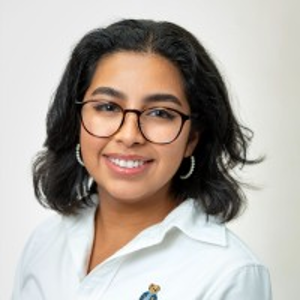
Tania Del Moral has roots in both Mexico and the US. From 2023 to 2025, she worked at Latin America Working Group (LAWG) as an advocate for human rights and democracy in Mexico and Central America. As Global Exchange's Washington Advocacy Coordinator, she helps channel concerns and demands from grassroots alliances around the hemisphere, forging them into proposals and legislation — such as the "ARMAS Act" and the “Stop Arming the Cartels Act,” designed to reduce gun trafficking from the US to Mexico. Tania lives in Washington, D.C., with her cat, Michi. |
|
|
At the place where drug kingpin “El Mencho” was captured, what kinds of weapons were found?
About 80% were US-made — a percentage similar to other weapon seizures at crime scenes or found in cartel caches. Weapons included AR-15s, AK-47s, and .50-caliber rifles that can pierce a lightly armored tank or disable a heavy one. These are manufactured in the US by companies like Colt and Sig Sauer. The two rocket launchers were from Russia and Belgium.
How do military-grade weapons get in the hands of criminal gangs?
In the whole country, Mexico has only two legal gun stores; both are on military bases, and buyers are vigorously vetted. You’d think it would be hard to buy military-grade weapons. However, with the US-led “War on Drugs” begun in 2006, imports increased, and so did state collusion with cartels and local authorities. |
|
|
|
|
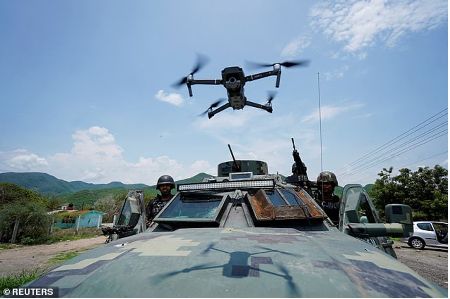
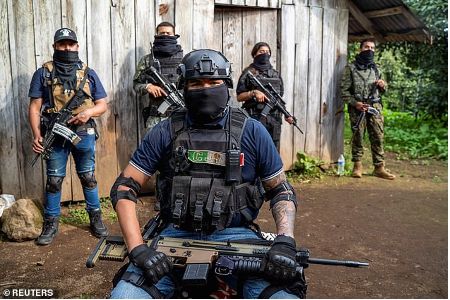
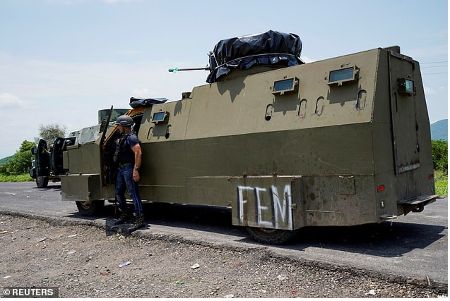
Members of the Jalisco New Generation Cartel (CJNG) pose for photos at an undisclosed location in Michoacan state, Mexico: Daily Mail, UK/REUTERS |
|
A drone overflies an armored vehicle July 1, 2021 |
|
Armed members October 15, 2022 |
|
With an armored vehicle July 1, 2021 |
|
Now, an average of 369 firearms enter Mexico every day. Some are bought directly from manufacturers, and a small percentage are stolen. But most are “straw purchases,” meaning they are bought for someone else. |
|
|
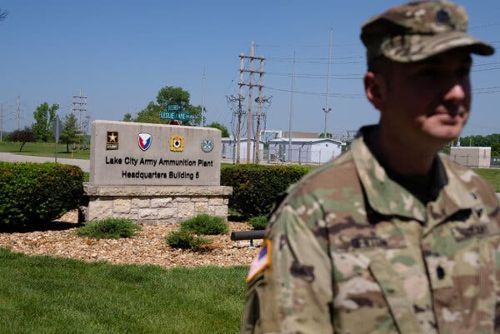
Lake City Army Ammunition Plant in Independence, MO: Photo: Emily Rhyne/The New York Times |
|
The New York Times recently revealed a US military connection. Agreements between the US Army and private contractors running the Lake City Army Ammunition Plant in Missouri allow .50-caliber ammunition and gun components to enter retail markets.
A new report, “Corridors of Violence,” points a finger at states with lax gun control. |
|
In 2023-2024, 90% of US guns confiscated in Mexico after being used in a violent crime within a year of purchase were sold in just 2 states, Texas and Arizona, and from just 15 zip codes — 14 of them in Arizona. The Arizona-Sinaloa Pipeline has become the principal corridor for gun trafficking to Mexico criminal groups. As the report states, “According to ATF data, most crime guns trafficked to Mexico with a short ‘time to crime’ — the time between purchase and confiscation in Mexico, a key indicator of deliberate trafficking — came from Arizona: 62% of U.S.-sourced guns with a time-to-crime of a year or less.”
Arizona loves guns more than lives and hasn’t shut down unlicensed vendors. In contrast, California prohibits the sale of assault rifles and .50-caliber rifles and requires background checks for buyers, including at gun shows. Between 2015 and 2024, only 3.5% of guns from California were purchased less than three years before being recovered in Mexico, compared to 41% from Arizona and 33% in Texas.
It’s obviously not hard to get the firearms over the border. If the Border Patrol searched carefully for firearms — which is part of their job — instead of for migrants, we’d all be better off!
Mexico’s National Registry of Disappeared Persons contains 130,000 names. This is an incredible number!
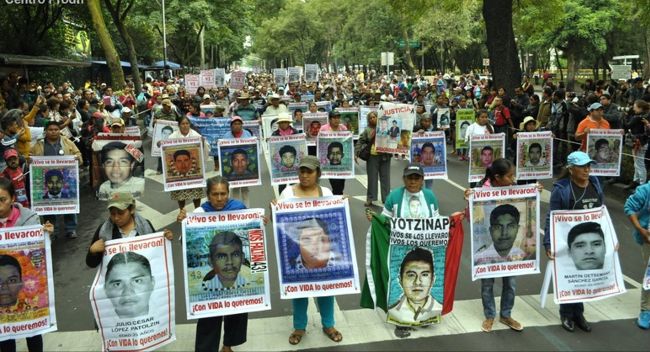
Forced disappearances go back a long time. The state has used them as a tool of repression since the “Dirty War” of the 1970s, when they targeted student activists rebelling against the corrupt government. Activist parents crusading to find the 43 Ayotzinapa students who went missing in 2014 have kept disappearances in the public eye.
In 2018, Mexico passed the General Law on Forced Disappearances. It mandated special prosecutors for cases of forced disappearances and promises families the right to justice, truth, and reparations. But none of that happened. Cover-ups, failures to investigate and poor forensic tools leave the missing still missing. The open secret of past collusion between the state and organized criminal groups, as in the Ayotzinapa case, has discouraged people from bothering to report. The 130,000 reported cases don’t tell the whole story. |
|
|
Families of the 43 disappeared students, during a protest, asking for an adequate investigation @Centro Prodh |
|
A Standardized Protocol for the Search of the Disappeared was created after the General Law on Disappearances. It includes six mechanisms for systemizing searches and requires that state agencies work with the families. But the families are still waiting. President Sheinbaum recently promised that she would meet with the parents of the Ayotzinapa students after March 26th. We'll see!
So many of these are “cold cases,” from many years ago. Is it a good use of resources to try to find people missing for so long? |
|
Yes! Having someone disappear is worse than knowing they are dead — it’s a wound that won’t heal. When nothing was done, families started searching for evidence themselves. Across the country, between 200 and 300 collectives of “buscadoras” or searchers, mainly women, go out in teams to remote and dangerous areas, and they’ve found many graves. They’re willing to search themselves, but they’re demanding protection; it’s dangerous work. Government agencies must work with them. They say, Sin las families, no! Nothing without the families! |
|
|
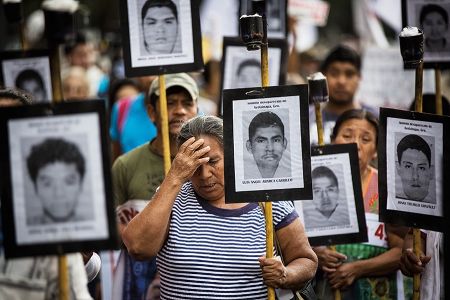
Metodia Carrillo Lino, mother of Luis Ángel Abarca Carrillo, one of the 43 forcibly disappeared Ayotzinapa students, marches in Mexico City with families of other disappeared students, demanding truth and justice in the case. Photo: Clayton Conn |
|
Because guns used in crimes come from the US, isn’t this really a US issue?
Gun crimes are in the US too. Mass shootings, especially of school children, have caused families to demand gun control. In 2023, Global Exchange started the Peoples Movement for Peace and Justice (MPPJ) as a binational coalition of persons who have suffered from violence and believe working across borders is necessary to end it.
The Newtown Action Alliance of Connecticut, which includes parents who lost children in several mass shootings, participates in the MPPJ. In December we brought a group of Mexican women to Washington, DC, to participate in their 13th Annual National Vigil for All Victims of Gun Violence. We also partner with the Black Lives Matter chapter of South Bend, Indiana, the Quixote Center in Washington, DC, COLEFOM in Georgia and Lila Latinx in North Carolina.
In spite of all efforts, under Trump, the US has gone backwards. The e-trace system, which tracks the export of guns in order to combat illegal trafficking, used to be under the State Department as a foreign relations issue. Under President Biden, gun exports to Guatemala fell to zero. Then Trump moved it to the Commerce Department, making it a business issue. Gun exports to Guatemala shot up again. We support the proposed ARMAS Act, which would transfer firearms tracking back to the State Department.
Democrat Rep. Joaquin Castro, who worked with Global Exchange’s “Stop US Arms to Mexico” project, introduced the “Stop Arming Cartels Act” in 2024. It would ban the sale, possession, importation and transfer of .50-caliber rifles by civilians. |
|
|
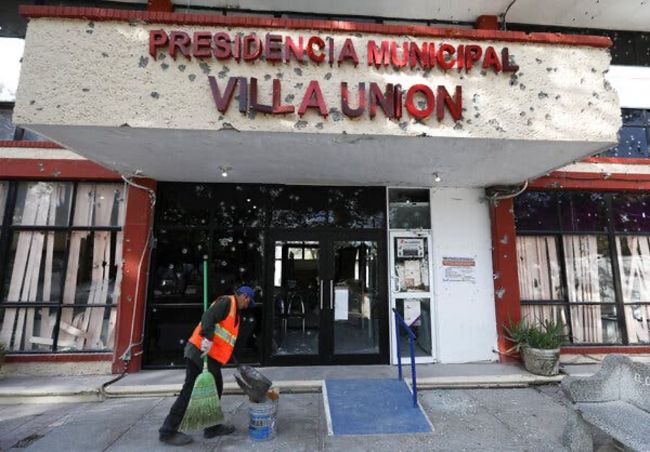
Four police officers, two civilians and 19 cartel members died during a 2019 gun battle in the Mexican town of Villa Unión: Eduardo Verdugo/Associated Press/NY Times |
|
What can be done?
We must spread public consciousness that gun trafficking originating in the US, particularly in Arizona and Texas, is enabling cartel violence. If Trump really wants to reduce the power of the cartels, he should stop the massive flow of weapons into Mexico. President Sheinbaum stated this clearly in her conversations with Trump.
The MPPJ continues to bring families torn apart by gun violence on both sides of the border to speak at press conferences and to lobby in Washington, DC. It is their voices that need to be heard — and heeded. Sin las families, no!
|
|

|
NEW! Sign up here for weekly delivery of COMPAÃEROS! |
|
Compañeros is the weekly newsletter of Mexico Solidarity Media, delivering all of our news stories, analyses, interviews and episodes of the podcasts Soberanía and El Taller, the Mexico Solidarity Bulletin, translations from Mexican media, photos and more! |
|

|
A Tidal Wave: Victor “Marka27” Quiñonez |
|

|
 Activist Vicky Hamlin, a retired tradeswoman, shop steward, and painter, shines the light â in her art and in this column â on the lives of working people and the world they live in. |
|

|
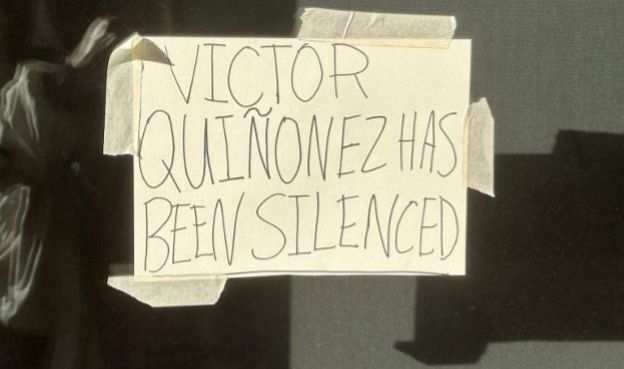
The latest chapter is the sudden shuttering of the Victor “Marka27” Quiñonez (@Marka 27) show on February 11 at the University of North Texas. Titled Ni de Aquí, Ni de Allá (“Neither from Here nor from There”) the show is a tour de force (meaning great!) display of Quiñonez’ talent and heart. And they closed it. A week after it opened. |
|
|
A sign protests the cancelation of Quiñonez’s exhibition, College of Visual Arts and Design Galleries, U of North Texas: Photo: Narong Tintamusik. |
|
“‘It’s been a trend in this country to suppress any kind of expression that’s going against what this administration is doing to civilians and this regime that’s been harming and murdering people,’ Quiñonez told Hyperallergic. |
|

|
Victor “Marka27” Quiñonez with his installation “Elevar la Cultura” at SCOPE Art Show in Miami in December 2025 Photo: Valentina Di Liscia/Hyperallergic |
|
|
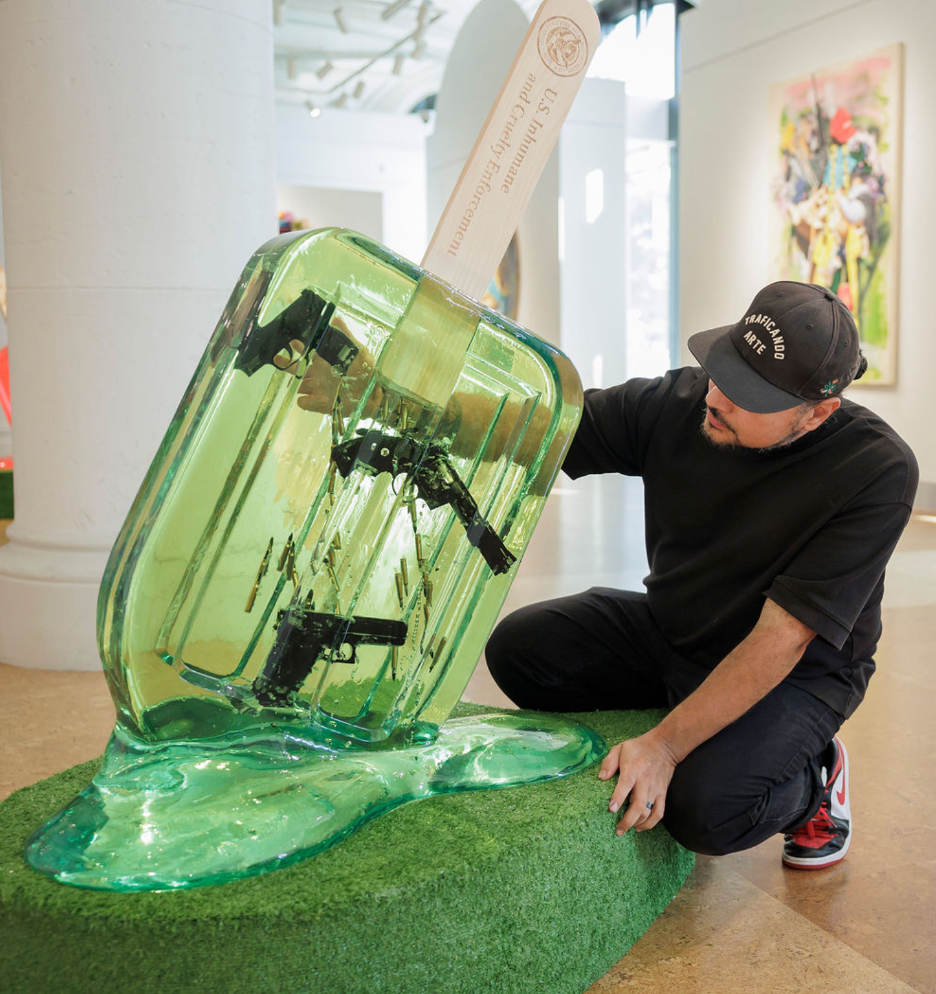
Victor “Marka27” Quiñonez with a sculpture from his I.C.E. Scream series: Hyperallergic |
|
“‘They say ICE is supposed to be helping people, but detention centers are just another word for privatized prisons,’ he continued. ‘My work speaks to the vulnerability of the communities affected by that.’”
Strangely, given the struggles of immigrants here, the Mexican art diaspora is alive and well in the United States. Quiñonez has found real success with his “neo-Indigenous” (his words) style. He can read his audience, because that audience is, well, him — his story, family, friends, neighbors, idols. To be personal and universal at the same time in your chosen art is a gift, and it’s what makes Quiñónez (and Bad Bunny too, imho, just sayin’) so across-the-board popular. |
|
|
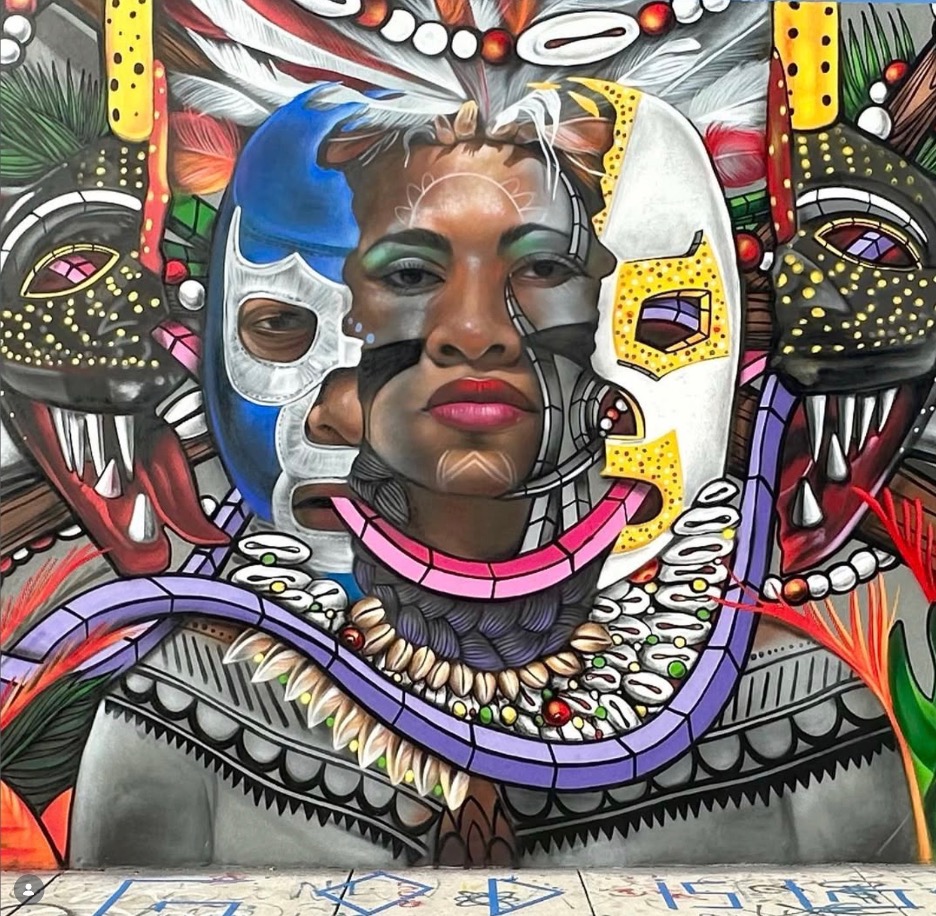
"Luchando Por mi Patria"; Collaboration with Don Rimx: Quiñonez' Instagram page |
|
Quiñonez includes portraits of men and women, cartoon characters and bits and pieces from daily life mixed together with modern abstraction, brilliant color and traditional indigenous patterning, as in these pieces from this closed exhibition.
From painting, sculpture, textiles, graffiti, graphic design, fashion to sound installation and more, he continues to embrace both his past and current cultures and communities. |
|
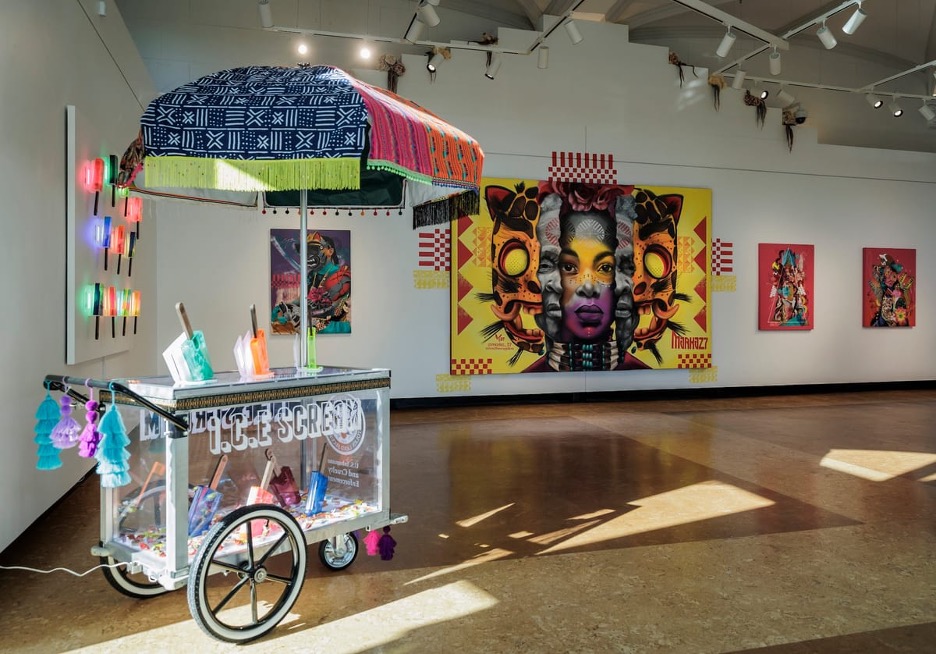
His installation called “I.C.E.Scream” is particularly touching because the ice pop cart crashes a very sweet image of childhood against the horror of the ICE raids. |
|
|
The pieces that incorporate graffiti show restraint in the image on canvas (like a father’s gentle love) and then wild abandon in the spray can art surrounding the canvas. |
|

|
|
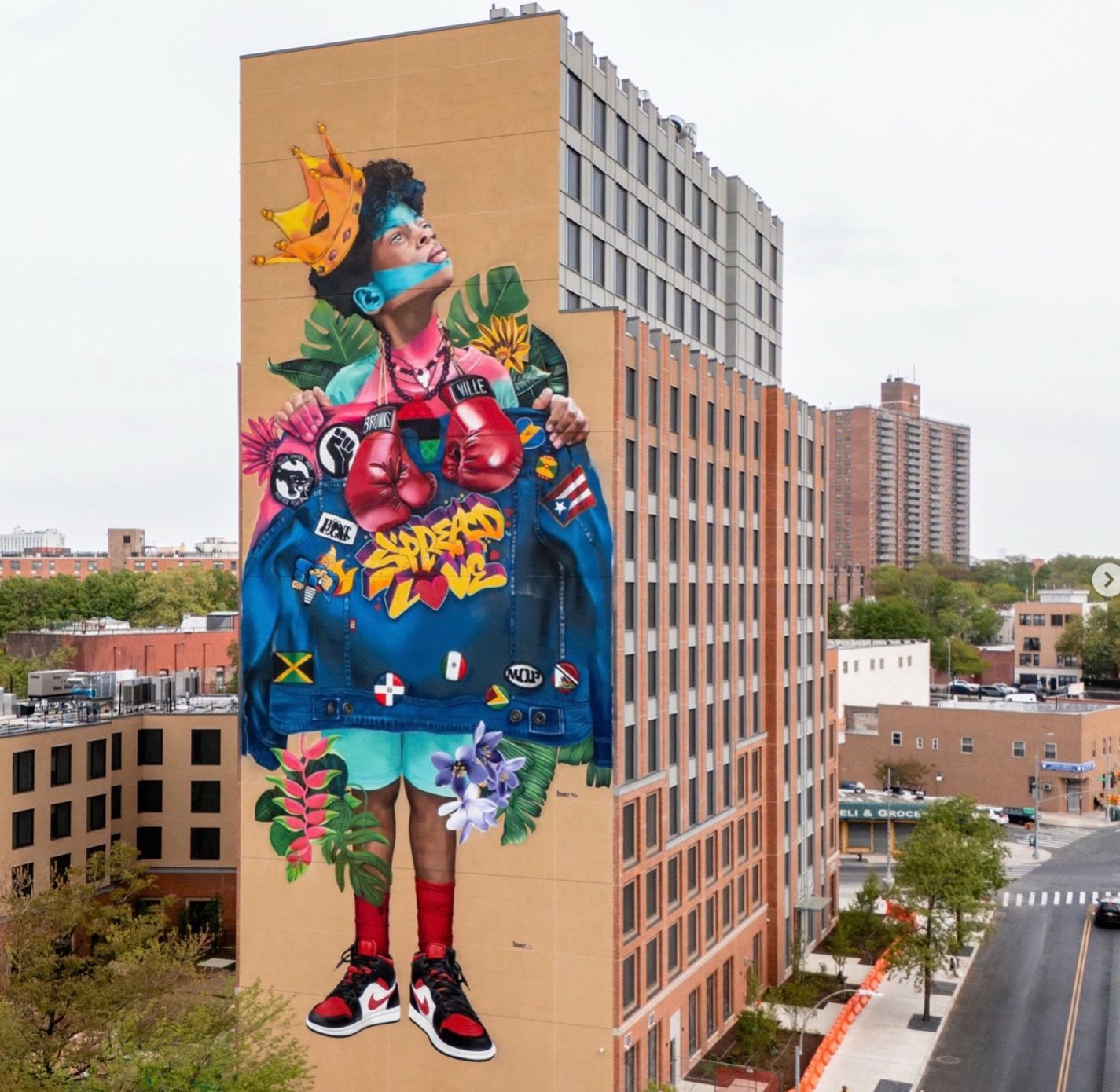
"Brownsville King of Love"; mural dedicated to the Brownsville, Brooklyn, NY community in partnership with Artbridge. Image: Quiñonez' Instagram page |
|
His huge murals have gotten attention all over the world. They are magnificent, detailed and glorious. They define and lift up any neighborhood they are in. |
|
A tidal wave is happening — a tidal wave of rebellion against the Make-America-White-Again, make-us-all-good-soldiers-for-Trump right-wing storm that seemed frighteningly strong at the beginning. They were wrong, we did not roll over and die. Powerful voices of resistance like Marka27 show that we have the collective will and spirit to take back what is ours — our history, our lives, our art. |
|
UPDATE: This from Hyperallergic:
Nine graduating students in the Studio Art MFA class have committed to withdrawing their upcoming thesis shows.
One, Carla Hughes, told Hyperallergic,“We now understand that our administration does not actually care about what we have to say, so we’re more interested in taking our work to our community than keeping it in the institution.” |
|
|
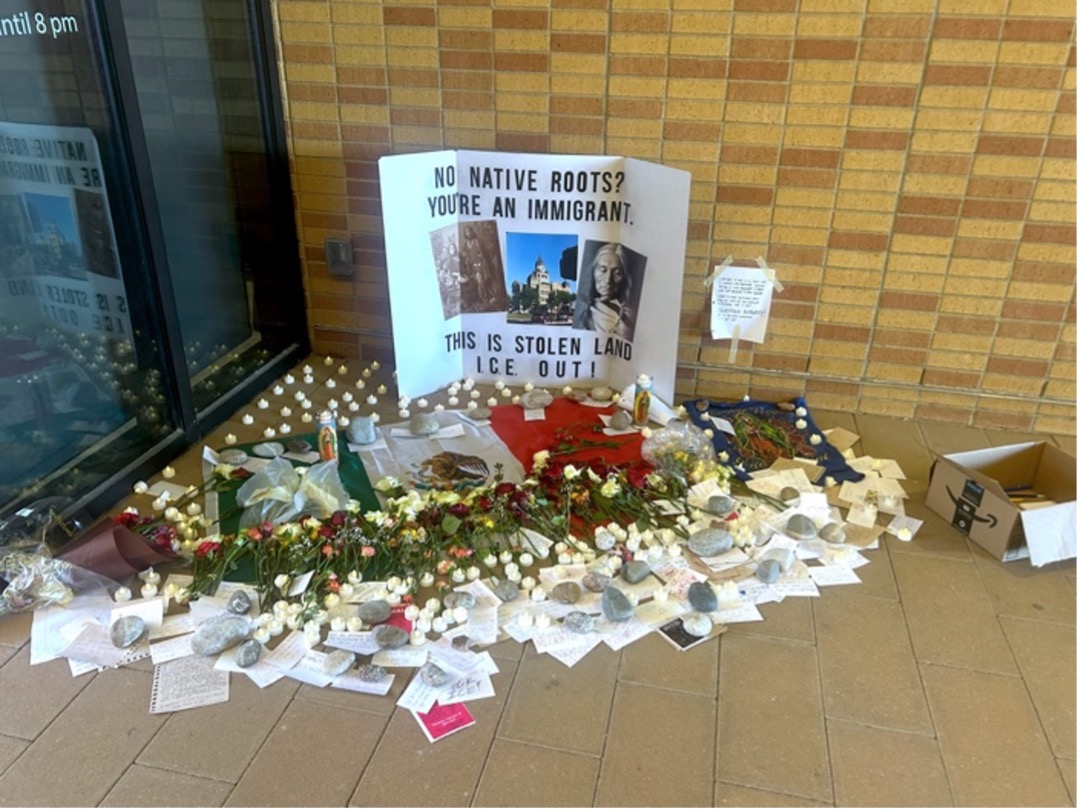
Students held a “vigil” action in solidarity with Victor Quiñonez. Photo: Sierra Rose Dominguez |
|
More news: Public records revealed the discussions that went on before the cancellation. |
|
Sign up for a free Mexico Solidarity Bulletin subscription!
And check out:
*MEXICO SOLIDARITY MEDIA: Our website for current news and analysis in English *COMPAÑEROS: NEW! Sign up here for Mexico Solidarity Media’s weekly newsletter *¡SOBERANÍA! (Sovereignty): For entertaining exposés of events in Mexico in English, catch our podcast with José Luis Granados Ceja and Kurt Hackbarth. *Sin Muros with English subtitles: José Luis and Kurt host a weekly TV show on Canal Once that analyzes Mexico-US relations with English subtitles.
Drop a line to meizhului@gmail.com |
|

|
Recent news reports and commentaries, from progressive and mainstream media, |
|
Oscar Lopez, Sheinbaum tells Trump: stop illegal arms trade from the US to Mexico The Guardian. The US president claimed he wanted to eradicate cartels and made comments about Mexico’s president that were deemed sexist in his Miami summit speech.
Zedryk Raziel, Los pueblos petroleros de Veracruz, una ventana al futuro con ‘fracking’ El País. Comunidades indígenas de Papantla se ubican sobre yacimientos de gas y aceite que el Gobierno quiere explotar mediante la técnica de la fractura hidráulica, considerada muy dañina por los ambientalistas.
Steelworkers solidify cross-border worker alliances amid CUSMA review USW. The trinational union meetings in Mexico occurred at the same time as an official Canadian government delegation of hundreds of businesspeople was pursuing investment opportunities in Mexico, without any labour representation.
Critica Trump rechazo de México a su “ayuda” contra el narcotráfico La Jornada. El mandatario de Estados Unidos, Donald Trump, declaró que la presidenta de México, Claudia Sheinbaum, “no debió haber rechazado mi ayuda” sobre el combate a los cárteles del narcotráfico en territorio mexicano.
Chantal Flores, Vinyl, Lament, and Monterrey’s Enduring Beat Discogs. A slowed-down turntable accident sparked cumbia rebajada, a vinyl-driven sound that still echoes through Monterrey’s barrios decades later.
Gaspar Vela, México blindará la gasolina en 24 pesos frente a la volatilidad Milenio. Gobierno y empresarios renovarán esta semana un convenio para fijar precio del combustible; advierte Imco sobre el riesgo de activar estímulos fiscales.
Mexican Navy Ships Arrive in Havana With Humanitarian Aid Telesur English. Cuban President Miguel Diaz-Canel highlighted Mexico’s role as a reference point for Latin American solidarity with Cuba, emphasizing that the Mexican nation does not yield to pressure against his country.
Ricardo Pérez Trejo, Las plataformas digitales firman un acuerdo para combatir la violencia contra las mujeres; X se niega a colaborar Diario Red. Las secretaría de las Mujeres firmó un acuerdo con representantes de Meta, Google, y TikTok para combatir la violencia contra las mujeres en la conferencia de prensa de la presidenta Claudia Sheinbaum de este miércoles 11 de marzo.
Martha Pskowski, Mexico's Housing Laboratory shows off 32 low-cost prototypes The Architect’s Newspaper. (From 2019, but a relevant and interesting read considering the new social housing expansion from President Sheinbaum.)
Viri Ríos, Malentendidos de la popularidad de Sheinbaum Milenio. Aun si los mexicanos suelen identificar a “la inseguridad” como uno de los problemas más importantes de México, la popularidad de Sheinbaum no se encuentra anclada a su lucha contra el crimen organizado. |
|
|
|

|
The Mexico Solidarity Project brings together activists from various socialist and left organizations and individuals committed to worker and global justice. We see the 2018 election of Andrés Manuel López Obrador as president of Mexico as a watershed moment. AMLO and his progressive Morena party aim to end generations of corruption, impoverishment, and subservience to US interests. Our Project supports not just Morena, but all Mexicans struggling for basic rights, and opposes US efforts to undermine organizing and Mexicoâs national sovereignty.  Editorial committee: Meizhu Lui, Bruce Hobson, Agatha Hinman, Victoria Hamlin, Courtney Childs, Pedro Gellert.  To give feedback or get involved yourself, please email us! |
|
Subscribe! Get the Mexico Solidarity Bulletin in your email box every week. |
