|

|
The weekly newsletter of the Mexico Solidarity Project |
|
Every issue archived online at mexicosolidarityproject.org/archives/ |
|
December 03, 2025 |
|
|
|
Tren Maya: The Pride of Mexico |
|
Meizhu Lui, for the editorial team |
|
|
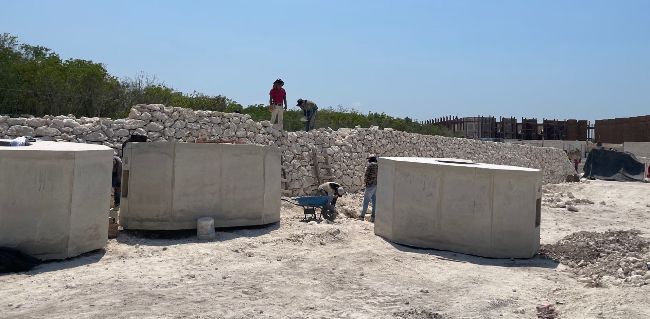
Building a wall by hand with local stone at Jaguar Park |
|
In 2024, three of us from the Bulletin production team, Bruce Hobson, Vicky Hamlin and I, joined Étienne von Bertrab on his research expedition studying the Tren Maya.
Interviewing Etienne took me back to the adventures we shared going from Cancún to Mérida on the train’s northern loop; at that time, the tracks and stations were still under construction. What struck me most vividly was that the project is indeed “more than a train.”
In Tulum, as part of the massive Jaguar Park designed to be within walking distance of the train station, we watched indigenous craftsmen build a Mayan historical museum by hand, using ancient methods — no mortar — such as building foundations of stones and bricks and walls of straw tied together in sheets. At a Mayan ecotourism co-op, the manager told us about their negotiations with the government when it requested permission for the train to go through some of their ejido land. What they got in return included a new school and health center, needed for a community far from the nearest city.
In Chetumal, resting on a bench near a newly opened museum, another component of the Tren Maya Project, we struck up a conversation with a Chetumal resident. He loved the new attractions bringing more people, jobs and income to his town. At one station, I chatted with a National Guardswoman and asked her opinion. With pride in her voice, she responded that the train was constructed with Mexican expertise. “Even the train cars are made in Mexico!”
And that was the most common feeling we found in our random encounters. Pride. More than a train. The Tren Maya symbolizes the pride of Mexico. |
|

|
Critics Miss the Forest for the Trees |
|
Étienne von Bertrab, born and raised in Mexico, now teaches political ecology at University College London. His research focuses on environmental (in)justice in Latin America. Over the last five years, von Bertrab has led a team conducting research on the Tren Maya, the López Obrador administration’s flagship infrastructure/development project. His team has paid particular attention to the voices of people living in the southern region. He turned his research into the recently released graphic novel, Más Allá: Una Historia del Tren Maya. |
|

|
Since this is such a controversial topic, we are publishing the interview in two parts. This is Part 2.
Multiple organizations accuse the project of damaging the environment. Is that simply a price the project had to pay?
In 2018, when AMLO first announced the train project, he made the mistake of claiming, in a radio interview, that “not a single tree would be felled.” An exaggeration, of course, as the train would inevitably impact the environment. But when he made that statement, the assumption was that the railway would use the existing rail lines and highways, and they could simply renovate abandoned train stations. This would have required minimal deforestation for laying the tracks. However, the plan wasn’t workable.
The original route had to be changed multiple times in response to local community demands, social resistance, archaeological findings, technical difficulties and costs — and to minimize harm to the environment. |
|
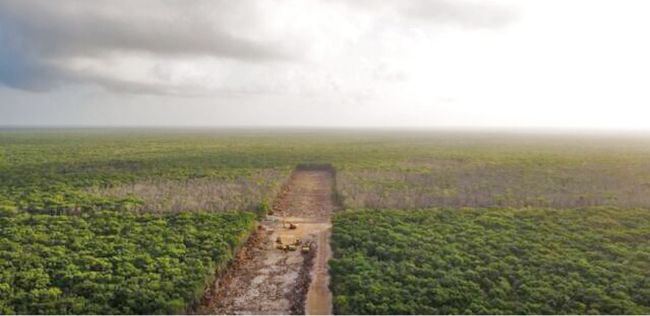
Section 5, particularly the parts between Playa del Carmen and Tulum, underwent the most controversial changes because one of the longest and most extraordinary underground river systems flows underneath. Hotel associations of the Riviera Maya strongly opposed building along the highway, and it was also too expensive to buy the necessary land required from private owners parallel to the route. |
|
|
Jungle clearing advances in Section 5. Photographer: Lisette Poole for Bloomberg Businessweek |
|
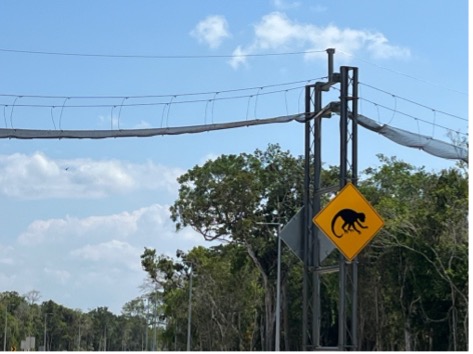
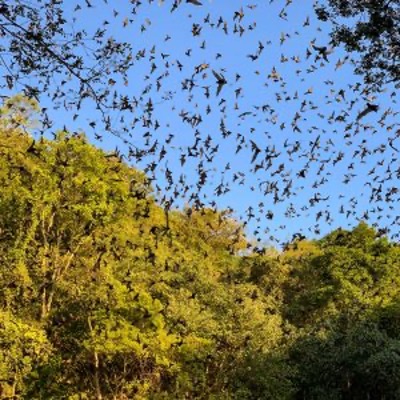
Moving the route inland meant far more deforestation than originally planned, and the project now had to minimize the train’s impact on the underground river system, caves and cenotes (sinkholes). In some cases, like in Calakmul, building the railway next to the highway would have made it more difficult for animals to cross those double barriers, and would also have affected a hugely significant bat cave, Volcán de los Murciélagos. As a result, the project moved the route several kilometers away and constructed animal crossings, as it did in the rest of the route.
When it comes to how the train impacts the environment, we should consider several factors. First, the deforestation it caused is only a fraction of what tourism development and its associated urbanization have caused over the last decades. The building of highways, hotels, recreation parks and golf courses caused far more damage to ecosystems, but no one protested these mostly private developments. The pre-Tren Maya transport model, with all cargo transported by road, is also more dangerous for people and animals. Motor vehicle emissions are much higher, whereas half of the Tren Maya railway is electric, and the rest can be electrified in the future. |
|
|
A road sign, monkey crossing: Photo: Meizhu Lui |
|
|
El Volcán de los Murciélagos, Campeche |
|
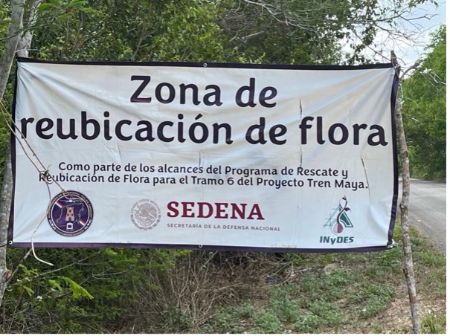
Second, due to the Tren Maya project, Natural Protected Areas have expanded, and key biological corridors are now in better shape than before. Companies that built the railway, including SEDENA, were obliged to reforest, which they largely have done. However, not everyone has complied, and the current administration is ensuring that they do so. |
|
|
Zone of Plant Relocation, a project of SEDENA, the Ministry of Defense: Photo: Meizhu Lui |
|
|
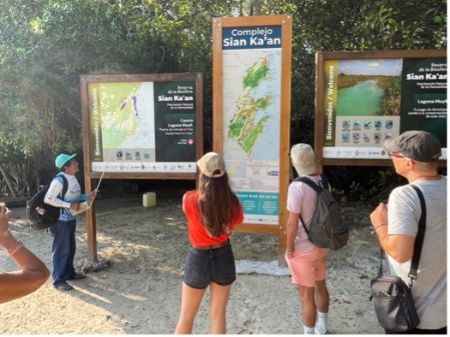
Sian Ka'an, a bioreserve and UNESCO Heritage site, means 'Origin of the Sky' in Mayan |
|
Third, we must consider Sembrando Vida, or Sowing Life, a national program that in practice is now the largest reforestation program in the world and which started precisely in this region, implemented in conjunction with the Tren Maya project. In the five states along the route, 167,000 peasant farmers, mostly on ejido lands, receive a monthly stipend to implement agroforestry systems in previously degraded parcels of land and to care for their milpas and trees. They have reforested 419,000 hectares, a figure much greater than the around 7,000 deforested during construction.
A media-intensive campaign called Sélvame del Tren, or, in English, “Save me from the train,” promoted the idea in Mexico and internationally that the Tren Maya was committing “ecocide.” This campaign not only exaggerated the actual environmental damage but also obscured all the negative impacts of past developments. By visiting the area, I found that this was a campaign disconnected from local communities, who mainly sympathized with the project. They knew what had caused the real ecocide in their region.
What about the issue of “touristification”?
Local communities certainly don’t want to see more Cancún-style developments that appropriate precious resources, including land and water, and exploit the workers. It’s a highly predatory model of globalized tourism. The Tren Maya aims to spread the benefits of tourism — and there are benefits — to a larger region and to residents and workers. The key question is what kind of tourism is promoted and what mechanisms can be implemented so that people can decide how far and at what cost developments should be expanded.
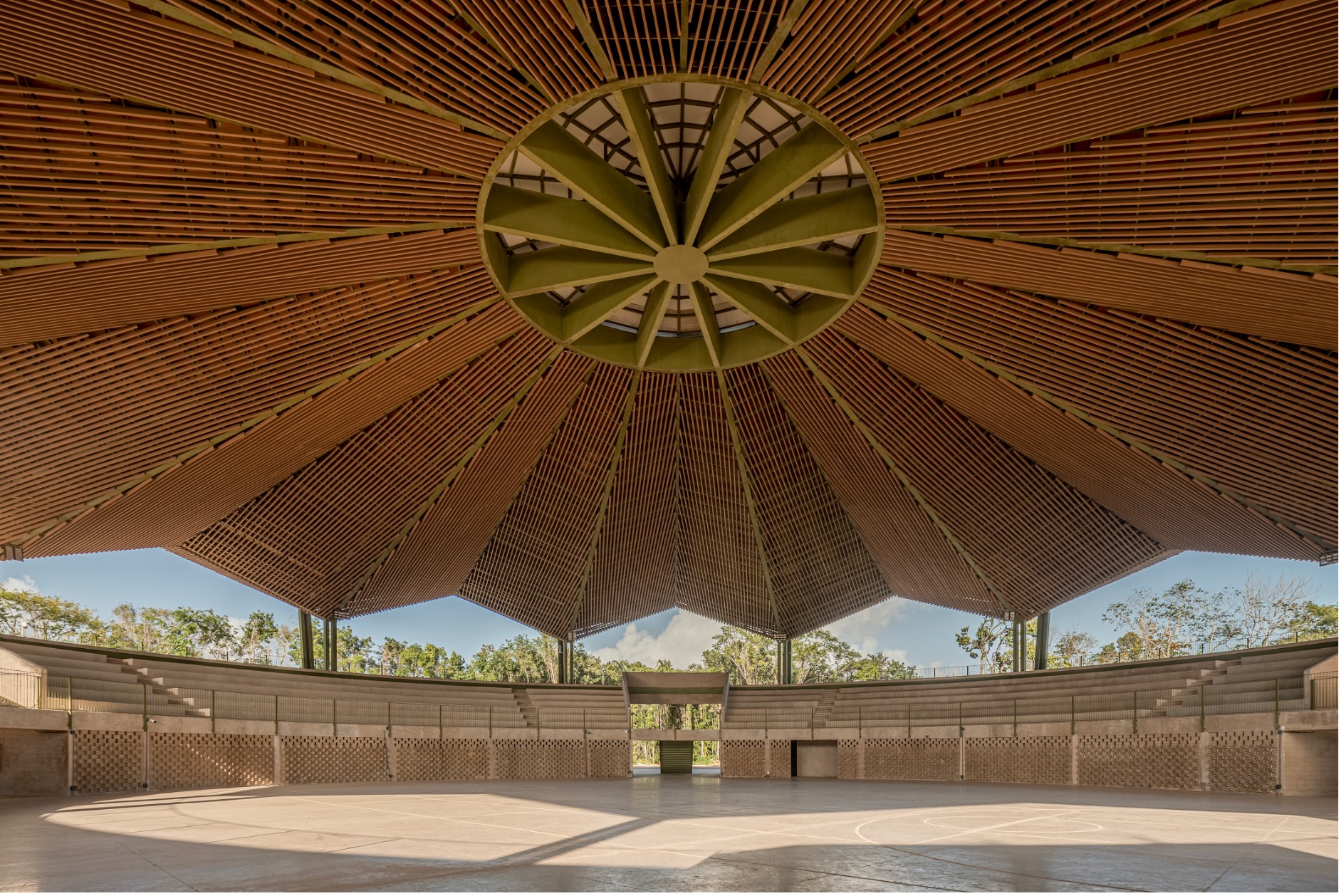
Construction of the train created hundreds of thousands of jobs, including by other public projects such as parks, museums, community centers, sports grounds and so on. All this public investment fueled private investment, and the rate of economic growth in the region has, for the first time, been higher than in the country’s center and north. But we will need to understand how that level of jobs can be maintained and what kinds of jobs are created. |
|
|
Parque Quintana Roo, Chetumal, Othón P. Blanco, Mexico: main pavilion can host events year-round and is set within an urban park: Image: Andrés Cedillo): Wallpaper Newletter |
|
One disappointment is the lack of commitment towards community-led tourism, or turismo comunitario. In 2021, FONATUR, the entity originally entrusted with the Tren Maya project, reached an agreement with a regional alliance of cooperatives involved with tourism, with the aim of strengthening them and creating up to a hundred cooperatives along the route. But with changes in the project’s management, the agreement has been left in limbo.
Of course, dangers lie ahead. Thanks to the efforts of AMLO’s administration, local and regional governments have more robust planning instruments, but we’ve witnessed both good local governments, with honest officials devoted to the public good, and terrible ones, involved in corruption, particularly in land deals. The people must remain vigilant, ensuring their local governments are accountable to them and mobilizing when needed.
Most academics publish scholarly papers, as you also have done. So why did you decide to publish your research in the form of a graphic novel?
It was a result of several factors: a project for an academic book didn’t materialize, and I was generally frustrated with how academic publishing works. But I also wanted to produce something that could contribute to public understanding and debate. It had to be in Spanish and in a format accessible to everyone. |
|
|
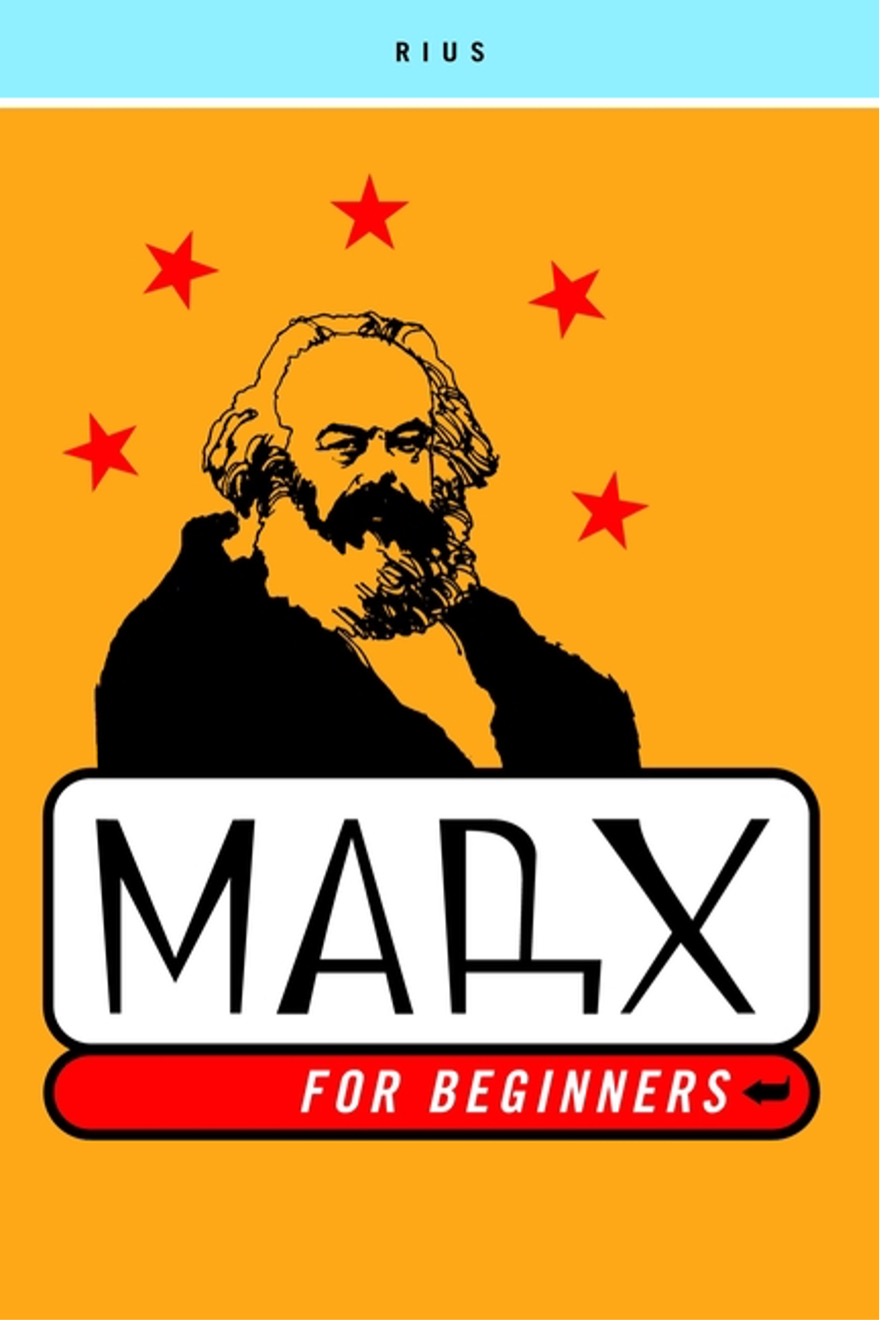
Marx for Beginners by Rius (Eduardo Humberto del Río García) |
|
That’s when I thought of Rius, the beloved Mexican cartoonist who wrote more than 100 books, including Marx for Beginners, which was translated into dozens of languages. Many of us Mexicans were politicized through his books. I proposed the idea to the cartoonists of El Chamuco; they recommended Augusto Mora to be the illustrator. It was a huge pleasure to work together, and we hope readers like our book. |
|

|
Augusto Mora by Monero Hernández |
|
|
|

|
Destabilization Fails in Mexico |
|
|
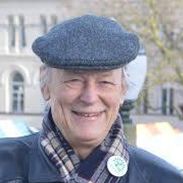
David Raby is a retired professor of Latin American history, a freelance journalist and coordinator of the UK Mexico Solidarity Forum, the sister project to the Mexico Solidarity Project. His book Mexico In Transformation: From AMLO to Claudia was published in 2025 by Praxis Press. |
|
This article was originally published in the November 27, 2025, issue of Morning Star. It has been lightly edited for clarity, and mainly for brevity. |
|
If you rely on the mainstream media, you will learn that Mexico is in chaos and that many thousands of Gen Z protesters marched against President Claudia Sheinbaum’s government on November 15.
But many of those promoting the march were well-known politicians from the opposition parties PAN (the traditional right) and PRI (the former dominant party) and their intellectual and media associates. By late October, a growing chorus of new social media accounts was backing it, and critical examination revealed that many of them were bots and originated abroad, in Argentina, Brazil, Colombia, Spain and the US. In fact, it was an international operation associated with the extreme right.
PAN party leader Jorge Romero declared in a TV interview that “what the Mexican right needs is violence.” [Editor’s note: PAN Congresswoman Lily Tellez called for US intervention. Is PAN advocating a coup?]
This all takes place when the Trump administration is actively trying to reassert its hegemony in Latin America and the Caribbean. While Mexican leaders have been remarkably successful in maintaining good relations with the US and in defending its sovereignty despite repeated threats by Trump and his associates, there can be little doubt that Washington is not at all pleased with Mexico’s independent stance on a whole host of issues, including energy sovereignty, public welfare programs, support for Cuba, criticism of right-wing governments in Peru and Ecuador, and refusal to support interventionism in the Caribbean.
Trump’s ambassador to Mexico, Ronald Johnson, is a former CIA officer with a record of involvement in coups and interventions, and while both he and the Mexican government have observed diplomatic niceties, it would not be at all surprising if the CIA or other agencies were involved in trying to destabilize Mexico.
Fortunately the skill of Sheinbaum and her team and the overwhelming support of the Mexican people make it inconceivable that any such subversion would succeed; the November 20 civic-military parade marking the anniversary of the great Mexican Revolution was a massive popular rally in support of the government, with a bold and dignified speech by the president.
(Editor’s note: After the November 15 demonstration, the same players called another march to take place on November 20 to disrupt the celebration of the Mexican Revolution. Only a handful of people showed up.) |
|
|

|
Recent news reports and commentaries, from progressive and mainstream media, |
|
Kurt Hackbarth, The Truth About the “Gen Z” March in Mexico Jacobin. Mexico City’s “Gen Z” anti-government protest against President Claudia Sheinbaum bears all the hallmarks of an astroturf campaign.
Luis Hernández Navarro, Rabia rural La Jornada. Los agricultores mexicanos se encuentran en un punto de quiebre. Atrapados entre el acuerdo comercial USMCA y un muro de políticas que los ignoran, están luchando por su supervivencia. Su ira no disminuirá pronto.
Julian Resendiz, Mexicans long for promised 40-hour work week Border Report. Ismael Gonzalez sighs when asked how different his life would’ve been if he only had to work 40 hours a week. The first thing that comes to mind is he could have spent more time with his children.
Gabriela Rodríguez, Sobre feminicidio indígena La Jornada. Los feminicidios son ejercidos por hombres que sienten amenazada su virilidad o se sienten desafiados, que recurren al uso de la fuerza para mantener su lugar de poder.
Mexico and Central America to Strengthen Migrant Protection Telesur. Mexico, Belize, Costa Rica, El Salvador, Guatemala, Honduras, and Panama identified violence, insecurity, and economic factors as the main causes of displacement, affecting more than 1.7 million people in Mexico and Central America and requiring coordinated responses.
Hedelberto López Blanch, Estados Unidos contra el Gobierno de Sheinbaum Rebelión. En la ofensiva que están desarrollando la Administración del convicto presidente de Estados Unidos, Donald Trump y su secretario de Estado, Marco Rubio contra los gobiernos progresistas de América Latina, han puesto sus miradas ahora contra México y su presidenta Claudia Sheinbaum.
Pablo Meriguet, Second anti-Sheinbaum protest loses momentum People’s Dispatch. After the highly-watched violent protest reportedly drew around 17,000 people, the second one barely managed to gather 200. Analysts see the marches as an attempt to destabilize the executive branch.
Políticas sociales de México y Brasil impulsan caída de pobreza histórica en América Latina Telesur. La región logra su nivel más bajo de pobreza en una década, con México y Brasil aportando el 90% de la reducción total de personas con ingresos insuficientes.
Nestor Jimenez, Mexican Farmers & Transporters End Blockades Mexico Solidarity Media. The government has made a commitment to farmers to discuss excluding basic grains and oilseeds from the review of the USMCA.
Cristóbal León Campos, La derrota conservadora Rebelión. Era algo sabido, pero ahora es algo comprobado, la mano de la derecha y la ultraderecha intentó de manera oportunista mecer la silla de la inconformidad de la llamada Generación Z, todo con el fin de obtener adeptos y partidarios de su oposición al gobierno federal y, de manera particular, para capitalizar su rechazo clasista y racista contra la presidenta de México, Dra. Claudia Sheinbaum Pardo, a quien dirigieron insultos y descalificativos alejados de cualquier argumento político. |
|
|
|

|
The Mexico Solidarity Project brings together activists from various socialist and left organizations and individuals committed to worker and global justice. We see the 2018 election of Andrés Manuel López Obrador as president of Mexico as a watershed moment. AMLO and his progressive Morena party aim to end generations of corruption, impoverishment, and subservience to US interests. Our Project supports not just Morena, but all Mexicans struggling for basic rights, and opposes US efforts to undermine organizing and Mexico’s national sovereignty.
Editorial committee: Meizhu Lui, Bruce Hobson, Agatha Hinman, Victoria Hamlin, Courtney Childs, Pedro Gellert. To give feedback or get involved yourself, please email us! |
|
Subscribe! Get the Mexico Solidarity Bulletin in your email box every week. |
|
Web page and application support for the Mexico Solidarity Project from NOVA Web Development, a democratically run, worker-owned and operated cooperative focused on developing free software tools for progressive organizations. |
