|

|
The weekly newsletter of the Mexico Solidarity Project |
|
Every issue archived online at mexicosolidarityproject.org/archives/ |
|
February 04, 2026 |
|
|
|
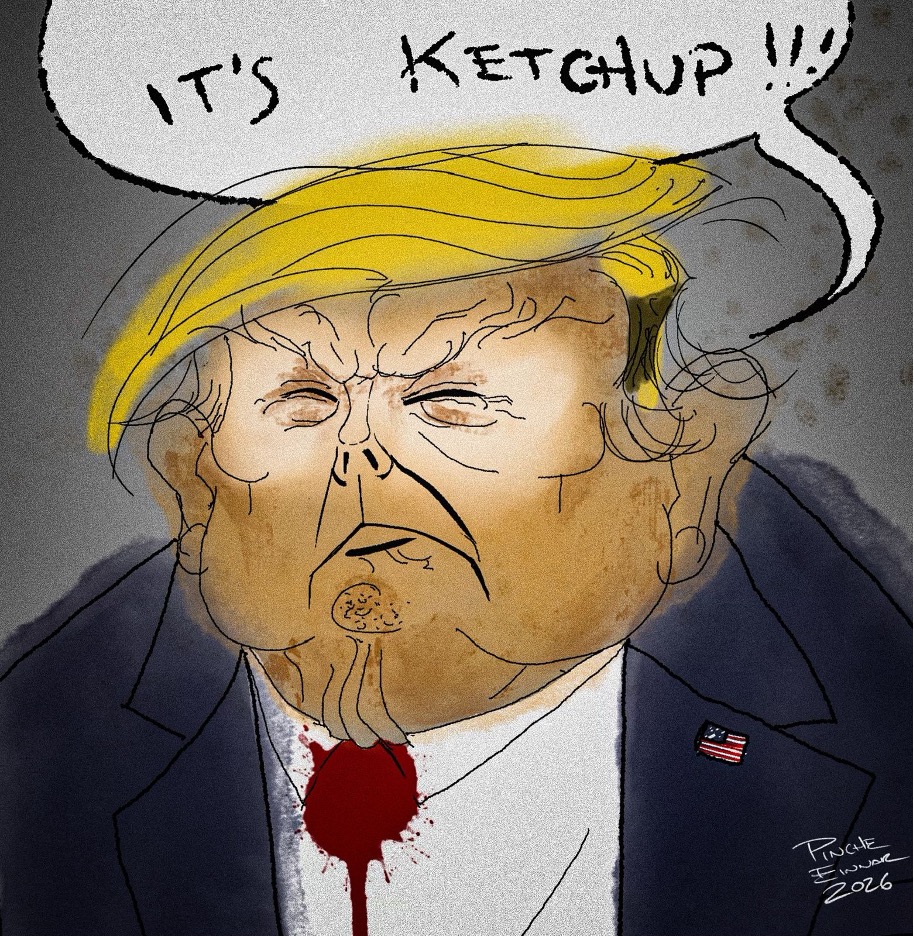
Trump’s Diet: Blood and Ketchup |
|
Meizhu Lui, for the editorial team |
|
|
Cartoon: Pinche Einnar |
|
It’s well-known that Big Trump loves Big Macs from McDonald’s. He even ordered fast food for a White House banquet! Is it just because he’s a regular guy? Michael Wolff’s Fire and Fury, about the inside of the Trump White House, explains: Trump is confident that a takeout order from McDonald’s isn’t poisoned. Like most autocrats, he constantly watches his back.
But anyone else’s security? Like most autocrats, spilling other people’s blood is as inconsequential as spilling ketchup. In shock and horror, we watched the videos of ICE murdering in cold blood Renee Good and Alex Pretti in Minneapolis. Trump’s lackeys around the banquet table smugly proclaimed, between bites of their Big Macs, that Good and Pretti got what they deserved. Pass the ketchup.
The murders, without any follow-up criminal charges, of white US citizens as they defend their non-white neighbors are new. But a straight line runs between the deaths of Good and Pretti by ICE and the US military blasting 100 Venezuelan fishermen into the sea while killing another 100 people in the kidnapping of Venezuelan president Maduro in Caracas. Trump unleashes gangs of thugs to terrorize the US population so they will accept a white nationalist state and uses drone strikes and boots on the ground to force Latin America to relinquish its sovereignty at gunpoint.
Trump lies when he says that Venezuela traffics drugs into the US and that Good and Pretti are domestic terrorists — but no one’s buying it. The people know blood from ketchup, wherever it is spilled. |
|

|
Attack on Venezuela: Mexico’s Response |
|
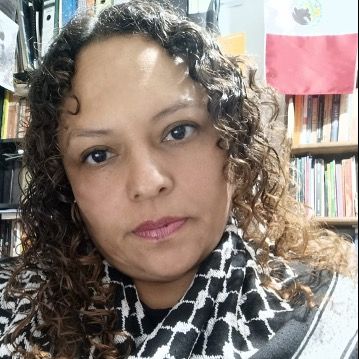
Daniela González López founded and coordinates the international Observatorio de Derechos Humanos de Los Pueblos, the Human Rights Observatory of the Peoples, and is a general advisor to the Committee for the Defense of Women's Rights (CODEM). She reports for the Plurinational Radio Station of Abya Yala Soberana de los Pueblos. As an organizer supporting international struggles, particularly in Palestine, she frequently participates in forums that advocate for the human rights of peoples and women. |
|
|
How did Mexican citizens react to the US military attack on Venezuela and the kidnapping of President Maduro?
The mainstream media did not extensively cover the attack on Venezuela. Ordinary citizens of Mexico are not much interested in international politics, and any mentions that did occur were probably disinformation. |
|
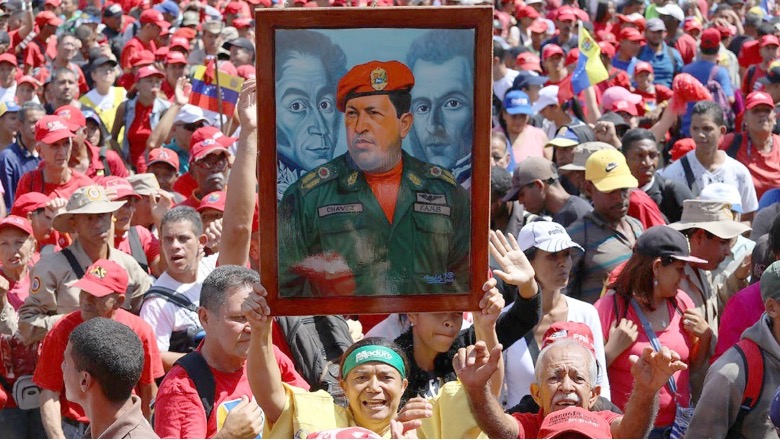
But among progressives, leftists and anarchists, some of us have long-standing relationships with Hugo Chavez’s Bolivarian Republic of Venezuela. |
|
|
Venezuela’s Bolivarian Revolution: Hugo Chávez: María Páez Victor for GeoPolitical Economy |
|
The day after the kidnapping, several organizations called for a demonstration, but that certainly wasn't our first event. Maduro’s opposition has been waging a media war, a destabilization war and a legal war against Venezuela’s elected leadership for decades. We’d been calling these attacks a “war” even before the military invasion. |
|
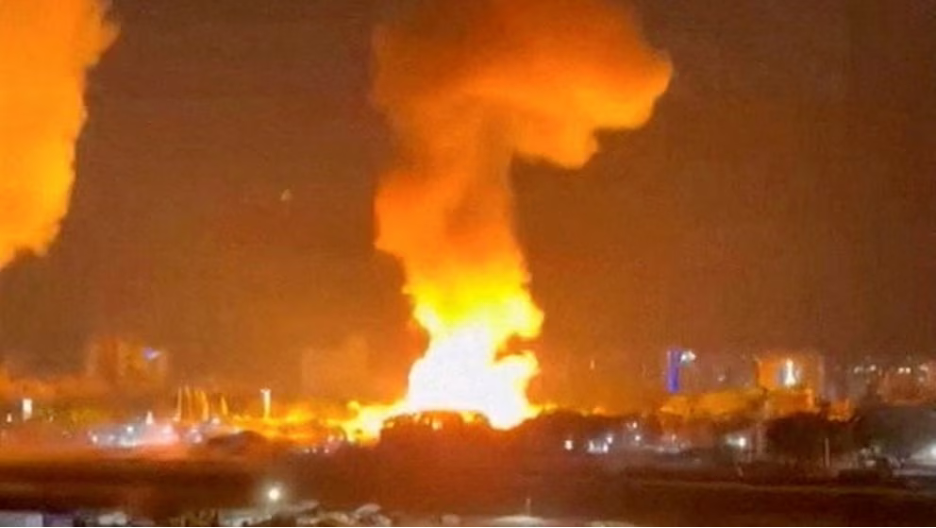
The military attack was brutal. The US ambassador and former CIA agent, Ron Johnson, was happy to announce, "No American lives were lost." But what about the lives of the Venezuelans, the lives of the Cubans helping to guard the president in international solidarity? |
|
|
US carries out 'large-scale strike' in Venezuela: ABC News |
|
From the Mexican perspective, for those of us who understand the history of US domination in Latin America, including the bloody repression of left-wing opposition movements, we were concerned about Venezuelan and Cuban lives, not the invading US military personnel!
The organization you lead, the Human Rights Observatory, helped to organize the protest. When was it formed, and why?
The Observatorio isn’t an NGO and doesn’t have a vertical structure; it’s an international network of groups, mostly from Latin America. It includes members from Guatemala, Ecuador, Colombia, Brazil, Argentina, Panama, Chile, Uruguay, Honduras, Bolivia, Costa Rica and Mexico, but also from the United States, Switzerland, Spain and Palestine. In 2016, I was in CODEM, the Committee in Defense of Women's Rights, one of the founding organizations. I was elected as the coordinator of the Observatorio at the founding assembly, and I’ve been re-elected at annual assemblies.
We have no funding. We are all volunteers, and participants from various countries play different roles, depending on their capacity and expertise.
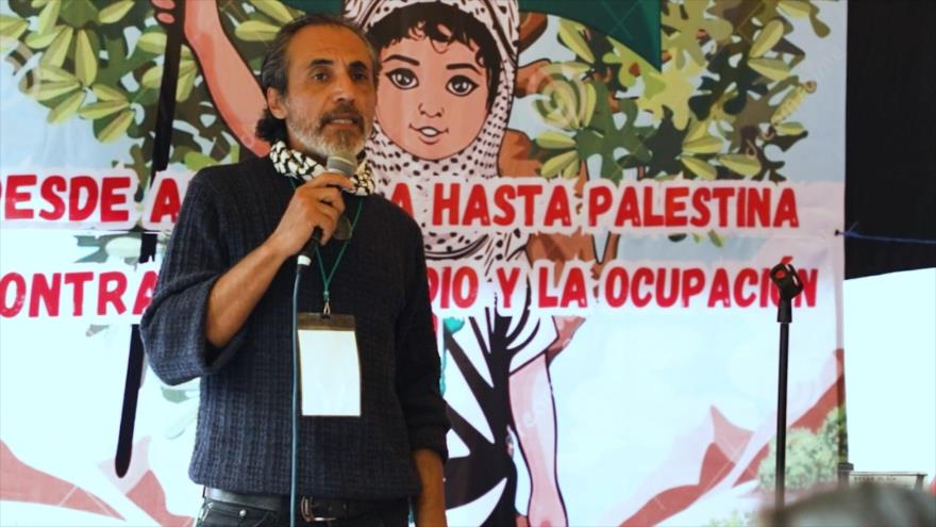
Since the Israeli genocide began, we’ve focused on Palestine. |
|
|
Assembly of the People says no to genocide in Gaza |
|
|
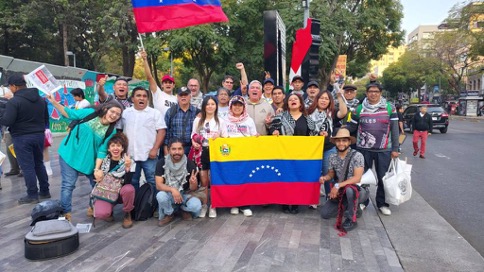
ODHP: Solidarity with Venezuela in Mexico |
|
Did many of the people who support Palestine organize and turn out to protest what the US did in Venezuela? That didn't happen in the US.
In Mexico, yes! Those opposing the genocide in Palestine also came out and protested the US kidnapping of Venezuela’s president. We understand our fight isn’t against one country or to defend one people. It’s not just moral outrage about Israel committing mass murder with US weapons. In Mexico and Latin America, we have experienced the theft of our resources and political coups against elected presidents through military actions and economic sanctions. We are clear that ours is a struggle against imperialism, capitalism and war wherever they threaten, from Gaza to Caracas to Greenland.
In the United States, many who opposed the attack don’t support president Maduro. That made organizing harder. Is that the case in Mexico?
Those of us who are part of the Observatorio support Maduro. But the progressive movement doesn’t agree on the nature of Maduro's presidency — some call him a dictator, others don’t. It can be divisive. However, we all support the Bolivarian Revolution initiated by Commander Hugo Chávez. That vision promotes the unity of Latin America and its independence from US influence while implementing internal social programs to help the poor.
Many Venezuelans in Mexico hate Maduro, and they physically attacked us during the demonstration because they considered our protest to be in his defense. But our solidarity is with Venezuela as a sovereign nation. Whether you think Maduro is a dictator or not — Trump clearly IS a dictator! He must be opposed.
Some on the left believe that presidenta Claudia Sheinbaum didn't take a strong enough stand on Palestine, and her position on the Venezuela kidnapping is also weak. What do you think? |
|
|
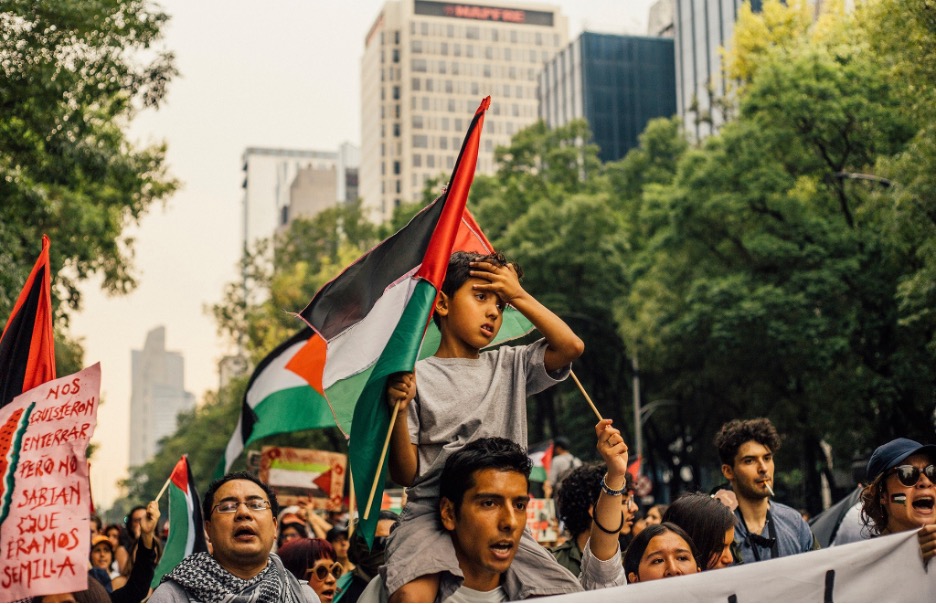
Artists, Writers, Academics Call for Sheinbaum to Welcome Gaza Orphans: photo courtesy Mexico Solidarity Media |
|
We weren’t happy with her stance on Palestine. The International Criminal Court determined that Netanyahu had committed war crimes and issued an arrest warrant against him, but Sheinbaum’s government didn’t join that effort. |
|
She didn’t cut ties with Israel, as we demanded, and as President Gustavo Petro of Colombia did.
In the case of Venezuela, she didn’t challenge the right of the United States to prosecute Maduro. He was kidnapped! That was illegal under international law, and the Trump Justice Department itself admitted that Maduro was not head of a drug cartel. In fact, the alleged “Cartel del Soles” doesn’t exist! Maduro and his wife, Cilia Flores, must be released immediately. But Sheinbaum only called for a "fair trial." By not firmly defending Venezuela's sovereignty, she undermines her own demand for respect for Mexican sovereignty.
We are not supporters of presidenta Sheinbaum.
Trump has completely altered the global agreements in place since World War II. What role should Mexico play?
International relations and global norms are irreparably broken. For left-wing organizations and all those who oppose fascism and imperialism, this is a time to strengthen international ties and organize conferences, events and protests. Many international meetings are being organized for 2026. |
|
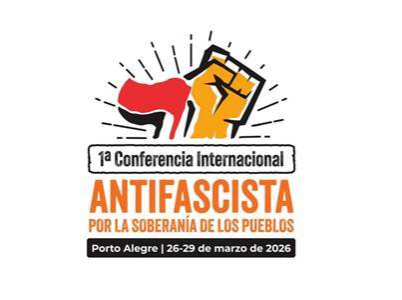
On January 24 and 25, an international conference met in Bogotá, called by Progressive International, an organization that includes Colombia’s president Petro. A few weeks later, an international anti-fascism conference will meet in Porto Alegre, Brazil. |
|
|
|
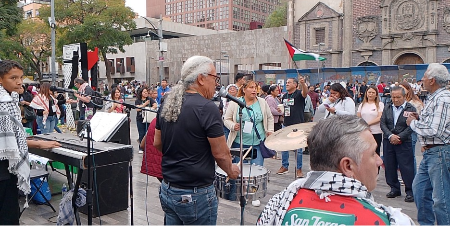
ODHP 8th International Assembly denounces all forms of oppression: in front of la Puerta de la Resistencia y la Vida, Ciudad de México, 2025 |
|
|
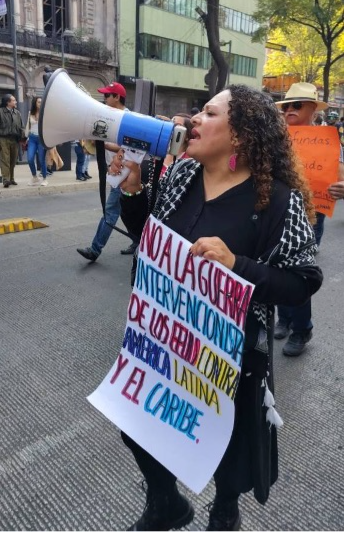
ODHP condemns US aggression against Venezuela |
|
Here in Mexico, we also have internal problems to address. The Observatorio will participate in organizing initiatives around the right to water, the search for the disappeared — particularly women — the genocide and occupation of Palestine, and the defense of the Zapatista autonomous movement. Mexico, as a nation, must firmly defend the sovereignty of all countries and all peoples. Mexicans, as activists, must take to the streets to insist on everyone’s right to live in peace at home and abroad. |
|
|
|
|
|
Compañeros is the weekly newsletter of Mexico Solidarity Media, delivering all of our news stories, analyses, interviews and episodes of the podcasts Soberanía and El Taller, the Mexico Solidarity Bulletin, translations from Mexican media, photos and more! |
|

|
Solidarity or Submission: The Fight to Save Cuba Is the Fight to Save Us All |
|
|
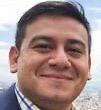
José Luis Granados Ceja is a journalist and political analyst based in Mexico City. He currently covers Latin America for Drop Site News. He is the co-founder of MSP's Soberanía podcast and a presenter on the show Sin Muros on Mexico’s Canal Once. He focuses on political issues, social movements, elections and human rights. Follow him @GranadosCeja |
|
|
A powerful 7.8 magnitude earthquake struck Ecuador on April 16, 2016, shortly before 7 PM local time. I was working for teleSUR English in Quito at the time and was sent that same night as part of the crew to cover the aftermath on the coast, the area of Ecuador most affected by the disaster. Being based in the country meant we were among the first journalists to arrive. We witnessed the Ecuadorian state mobilize to respond, and offers of help from friendly countries poured in.
But it was the Cubans who were among the first to arrive.
While covering the earthquake, I interviewed Col. Lázaro Herrera Hernández of the Cuban Revolutionary Armed Forces, who told me a phrase that has become a political maxim of mine: “It is not about providing what is left over, but sharing what we have.”
Cuba, the island country subjected to a brutal decades-long economic blockade, has consistently been among the first to extend its hand in solidarity to peoples of Latin America and the world and to share the little they have. Cuba occupies a special place in the hearts of millions of people across this region not only for their unconditional solidarity but also because of the example its people and their Revolution set for us. Cuba showed us that imperialism was not invincible, that we could stand tall and defeat Washington right here in our own hemisphere.
Latin America would not be the same today were it not for the Cuban people’s determination to defend their revolution and their decision to chart their own way. But today, Cuba is in the White House’s crosshairs.
This could very well be the most decisive moment ever for the Cuban Revolution. After the kidnapping of Venezuelan President Nicolás Maduro and his wife, Cilia Flores, Delcy Rodríguez’ interim government has been forced, at the barrel of a gun, to suspend oil shipments to Cuba. This critical lifeline has been cut off virtually overnight, with the Financial Times reporting that as of late January, Cuba has just 15 to 20 days of oil left.
Meanwhile, Trump has signed an executive order declaring Cuba an "unusual and extraordinary threat" that comes with hardened sanctions, which includes a tariff on countries that sell oil to the island. The US is exerting tremendous pressure on other countries to stop providing oil to Cuba in order to enforce this illegal and criminal blockade. Mexico’s PEMEX, which had over the last few years steadily been increasing its shipments to Cuba, has already suspended a planned shipment. President Claudia Sheinbaum nonetheless assures that humanitarian aid to Cuba will continue.
“We will find ways to maintain solidarity with the Cuban people without putting Mexico at risk,” said Sheinbaum.
The trouble is that conceding to imperialism in the short term puts Mexico at risk over the long term. Trump’s vulgar form of imperialism is going to pick off each country one by one if we do not unite immediately.
Our need for a regional response to US imperialism was the overwhelming message coming out of the Nuestra América Summit held in Bogota Colombia, organized by Progressive International. Kurt Hackbarth and I were there representing the Mexico Solidarity Project. The first thing that Carlos de Céspedes Piedra, the Cuban ambassador to Colombia, expressed to us upon learning we were from Mexico was his appreciation for Mexico’s consistent solidarity with Cuba.
We cannot let Cuba stand alone at this moment.
In his speech at the closing session of the Tricontinental Conference in Havana in 1966, Fidel Castro issued a warning that we would be wise to heed today:
The imperialists' correlation of forces on this continent, the nearness of their home territory, the zeal with which they will try to defend their dominions in this part of the world require, on this continent more than anywhere else, a common strategy, a joint, simultaneous struggle. |
|
Sign up for a free Mexico Solidarity Bulletin subscription!
And check out:
*MEXICO SOLIDARITY MEDIA: Our website for current news and analysis in English *COMPAÑEROS: NEW! Sign up here for Mexico Solidarity Media’s weekly newsletter *¡SOBERANÍA! (Sovereignty): For entertaining exposés of events in Mexico in English, catch our podcast with José Luis Granados Ceja and Kurt Hackbarth. *Sin Muros with English subtitles: José Luis and Kurt host a weekly TV show on Canal Once that analyzes Mexico-US relations with English subtitles.
Drop a line to meizhului@gmail.com |
|

|
Recent news reports and commentaries, from progressive and mainstream media, |
|
Why Mexico Must Help Cuba Telesur. Cuba and Mexico share more than geography. They share a history shaped by revolution, resistance, and an enduring insistence on sovereignty in the shadow of powerful neighbors.
Camilo Ocampo, Refrescos Pascual: la cooperativa mexicana que lucha contra las transnacionales Pie de Página. La cooperativa Pascual enfrenta una nueva amenaza: el aumento al IEPS y las restricciones regulatorias ponen en riesgo su viabilidad, mientras revive una historia marcada por la resistencia obrera y la defensa del control colectivo frente a la concentración de la industria refresquera.
Mexicans Have a Negative Perception of the U.S. Since Trump Returned Telesur. The deterioration of the U.S. image is attributed to restrictive policies and military threats.
José Shaddai Olvera Torres, Acto en CDMX reafirma solidaridad con Cuba y Venezuela en el 173 aniversario de José Martí El Chamuco. Los pueblos latinoamericanos deben conocerse y articularse para enfrentar lo que llamó una “guerra mediática” contra los gobiernos de Cuba y Venezuela.
Mateo Crossa, The Shale Revolution, U.S. Energy Imperialism, and Mexico's Dependence Monthly Review. Nowhere is this fossil-fueled imperial reordering more starkly evident than in the U.S. energy domination over Mexico, a nation once symbolically and politically defined by its postrevolutionary pursuit of energy sovereignty.
Protesta impulsa creación del Frente Antimperialista Resumen Latinoamericano. Los organizadores subrayaron que la creación del frente representa un acto de resistencia y un llamado a la unidad continental frente a las políticas de injerencia. “Es un acto ignominioso de una barbaridad terrible”, expresaron durante la movilización.
María Ramos Pacheco, ‘We don’t have an opinion’: Mexico’s ambassador to the U.S. on Trump’s immigration policy Dallas Morning News. Even though his country does not get involved in U.S. immigration policies, Esteban Moctezuma Barragán said Mexico is committed to providing help and resources for Mexicans who are deported.
Marath Baruch Bolaños López, Secretario del Trabajo y Previsión Social, Trabajo digno en el siglo XXI La Jornada. La Reforma al Trabajo en Plataformas Digitales es innovadora no sólo porque reconoce y atiende una nueva realidad laboral surgida del desarrollo tecnológico, sino también porque se trata de una política pública que nace de un proceso de análisis de la realidad existente y del diálogo con las y los trabajadores y con las empresas.
Jorge Barrera, Tania Miranda Perez, Trump blindsided Mexico with Cuba oil export tariff threat, says Mexican president CBC News. "So this situation may see a break, not just between Mexico and Cuba, but between the Mexico of tomorrow and the Mexico of yesterday."
Mariana A. Hernández, Diana Leaños y Oscar Nogueda, Las primeras Utopías en la Ciudad de México siguen en construcción, pese a compromiso de construir 16 cada año Animal Politico. A un año de que la jefa de gobierno prometió construir 16 utopías por año, las primeras instalaciones continúan en construcción y sin fecha oficial de terminación. |
|
|
|

|
The Mexico Solidarity Project brings together activists from various socialist and left organizations and individuals committed to worker and global justice. We see the 2018 election of Andrés Manuel López Obrador as president of Mexico as a watershed moment. AMLO and his progressive Morena party aim to end generations of corruption, impoverishment, and subservience to US interests. Our Project supports not just Morena, but all Mexicans struggling for basic rights, and opposes US efforts to undermine organizing and Mexico’s national sovereignty.
Editorial committee: Meizhu Lui, Bruce Hobson, Agatha Hinman, Victoria Hamlin, Courtney Childs, Pedro Gellert. To give feedback or get involved yourself, please email us! |
|
Subscribe! Get the Mexico Solidarity Bulletin in your email box every week. |
